Archive for the ‘Business Books’ Category

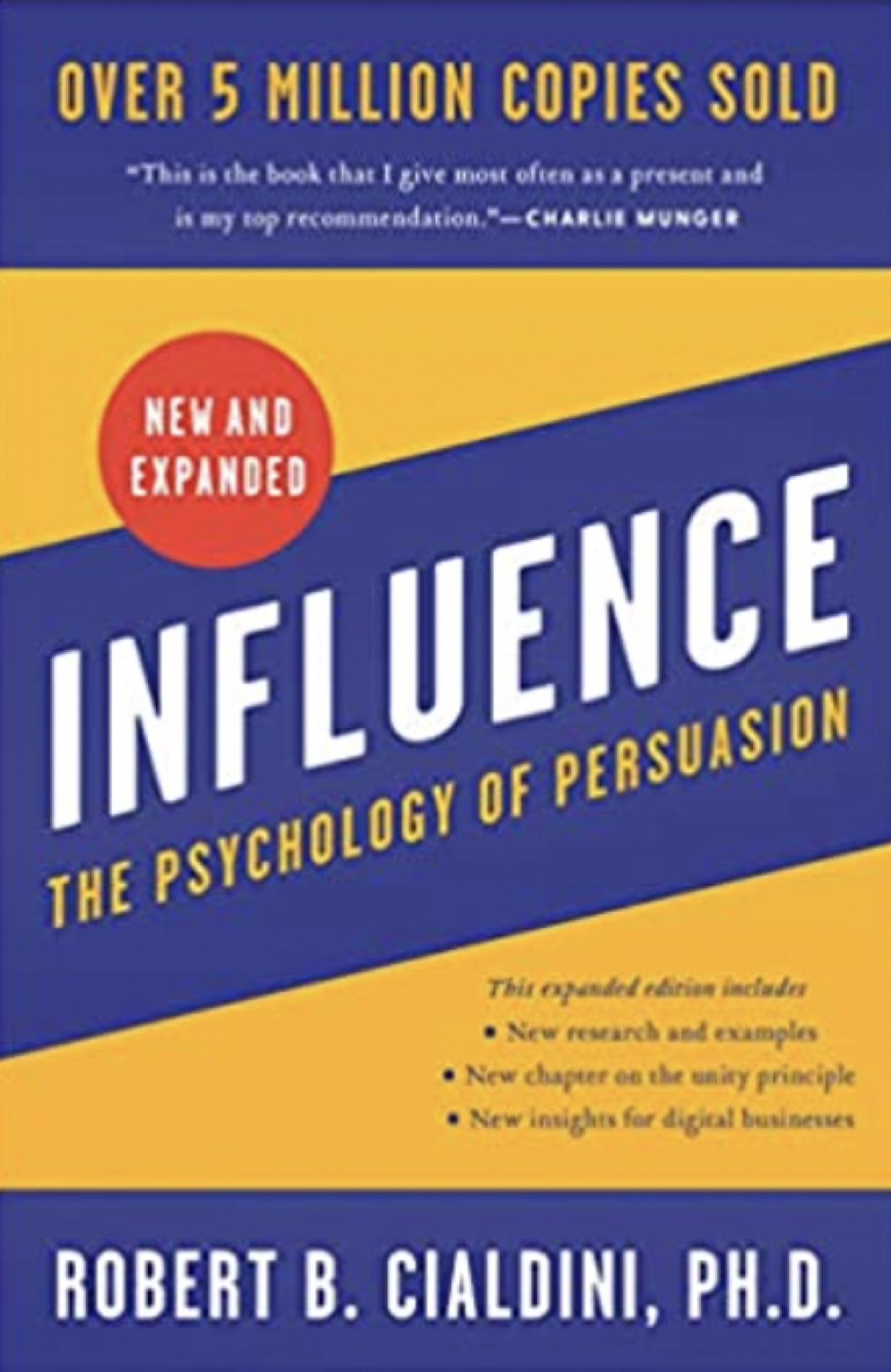
Influence: The Psychology of Persuasion by Robert Cialdini

Monday, July 24th, 2023

Influence
Influence: The Psychology of Persuasion by Robert Cialdini describes the psychological process in people when they say yes and explains how these insights may be applied. While it was written as a business book, it also applies to teaching and everyday life. Be sure to put a copy in your professional development library.

1. Levers of Influence: (Power) Tools of the Trade

  • Animals and people both have automatic behaviors that are set off by a single stimulus. For example, turkey mothers will care for an inanimate object if it makes the cheap sound of a baby turkey. Likewise, humans are much more likely to do a favor for a stranger if they are given a reason starting with the word because. Humans also think that expensive things are good as the word cheap is seen as inferior rather than inexpensive. Believing an expert is another automatic behavior. Life is complex and without our automatic rules of thumb, we wouldn’t get much done. It’s important, however, to realize when we have the time and the need to engage in more complex thinking.
  • The contrast principle tells us that how we perceive something depends in part on things we have recently perceived. When two hands placed respectively in hot and cold water are moved to room temperature water, the one that was in hot water feels cold and the one that was in cold water feels hot. Also, seeing highly sexually attractive people on TV may make our spouses seem less attractive. There are several other examples here dealing with selling strategies.

2. Reciprocation: The Old Give and Take

  • A basic norm of human culture is the obligation to somehow repay a person who gives or does something for you. Such future obligations often lead to continuing relationships. People can use this to their advantage by giving something before asking for something. Politicians do this and they are also easy to buy. So are scientists.
  • People can also ask for a more extreme initial concession prior to lowering the ask. This often works a we often see the lesser obligation preferable to the greater one. The trick is to make your first offer just high enough. This usually makes one feel more responsible and satisfied. If someone gives you something for free, be ready for them to ask for something. Consider denying these requests.

3. Liking: The Friendly Thief

  • We are more likely to say yes to someone we like. People who want something are therefore likely to do things to increase their likability. Being physically attractive is one way to increase likability. (Doug: This suggests that it’s a good idea to bet fit, well groomed, and well attired. In other words, dress for success.) We are also more likely to like people who are like us. Good salespeople also use this to their advantage. Associating something with someone famous has been shown to work.
  • Praise is also used to increase likability. Giving praise to a third party that you know will get back to the person your are praising is effective. You can also use praise to give a person a reputation to live up to. Repeated contact in positive situations helps. Persian curriers knew that baring bad news was risky and even life threatening as the ancient Persians did kill the messenger. In all occasions associate yourself with as many good things as possible and visa versa. We won, they lost. Be alert for situations where you are liking someone more than would be expected. In such cases separate your feelings about the requester from the offer itself.
Share this:
Share this page via Email Share this page via Stumble Upon Share this page via Digg this Share this page via Facebook Share this page via Twitter Share this page via Google Plus

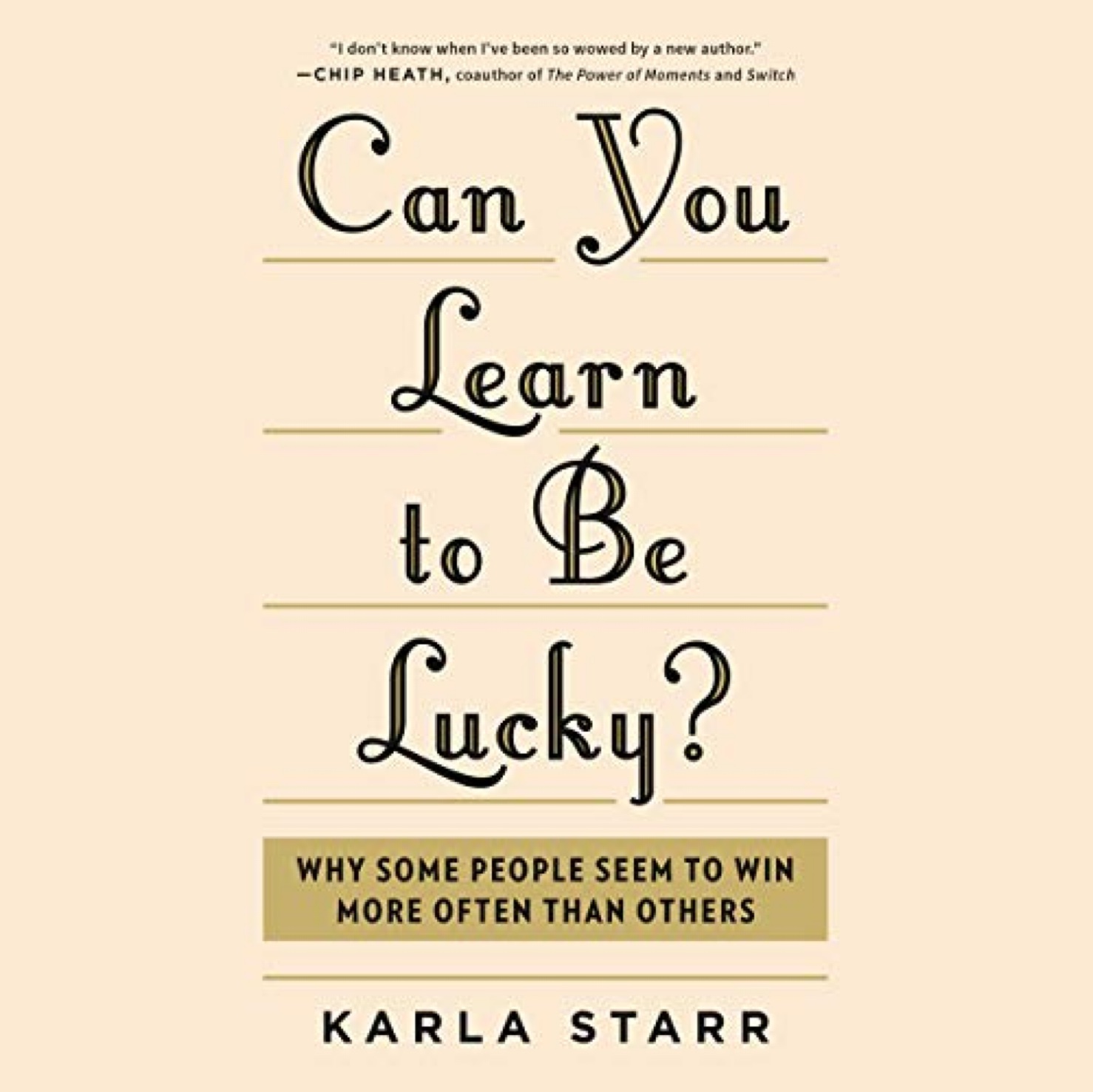
Can You Learn to Be Lucky? Why Some People Seem to Win More Often Than Others by Karla Staff

Wednesday, July 20th, 2022

Lucky
Can You Learn to Be Lucky? Why Some People Seem to Win More Often Than Others by Karla Staff explains in detail how you can increase your chances of being lucky and therefore successful. We all experience good luck and bad luck as we go through life, but with Karla’s help, we can make good luck more likely and take better advantage of it, and better survive and learn from our bad luck. This book belongs in every professional learning library.

Introduction

  • This book is about navigating life’s hidden patterns. While there is no way to account for every variable influencing our situation, this doesn’t make the world entirely unpredictable. We need to see the world as understandable and manageable. If you feel unsure about your ability to handle the future, anxiety will follow. Regardless of your merit, frugality, and faith, elements of chance will always be part of your life. This is where luck comes in. A bias toward action, however, can help as doing nothing can lead to learned helplessness. You can’t stumble on to something good by sitting down.

1. Best in Show: Why Lucky Timing Is out of Our Hands

  • Studies show that your chances of winning a subjectively scored event are better if you are judged near the end. They also show that prisoners get the best deals if they are judged right after lunch or a break. If you are part of a contest or are interviewing for a job, do what you can to be near the end of the process. Then do what you can to be memorable and emphasize what makes you special or unique. Frame losses as learning experiences and don’t take them personally. And if you want to score with the gender of your choice at a bar, stay until closing time.

2. The Charlie Brewer Principle: How That Warm, Fuzzy Feeling Leads to Luck

  • The focus is Charlie Brewer whose father and grandfather were star quarterbacks. Is it any wonder that the coach looked to him to be his next quarterback? If you have some advantage due to your family’s circumstances be sure to leverage it. However, if you are rich and good looking you might get away with being a dick, but it’s not a good strategy in the long run. Charlie’s story deals with confirmation bias. This is a concept you need to understand on the road to luck.
  • The other big idea here is availability. By consistently showing up you increase your chances to be lucky. If you are always there you will seem safe, which correlates with luck. The more people see you the more they are likely to like you as long as you are nice. Proximity counts. People who live on the bottom floor have more friends. Kids who sit in the middle of the room are more popular. Your attire is very important. For example, women who show up in a nightclub dress are not likely to be seen as highly capable. Make a good first impression and know that it takes time and effort to build a good reputation.

3. Bitches in Glasses: The Occasionally Unlucky Side of Intuition

  • We use our feelings to decide and rationalize our choices after the fact. There are things we can control like grooming, attire, facial expressions, posture, what we say, tone of voice, and body language. We have some control over our body shape and size. We have little control over the shape of our face and our height, and they both count for more than they should. Be sure to act in a friendly manner and smile when you meet someone. Act like you are happy to see them. This you can control and it will help make a good first impression.
  • We tend to map traits from people we know on to people we meet who look similar. The feelings we currently feel also impact our impression of the people we are with. Women who don’t smile are judged more harshly than men who don’t smile. People with square jaws and wider faces are more likely to be promoted. Life is indeed unfair. What you can do is throw your hat into the ring every chance you get, use an easy-to-pronounce version of your name, and avoid edgy jokes and weird online IDs.
Share this:
Share this page via Email Share this page via Stumble Upon Share this page via Digg this Share this page via Facebook Share this page via Twitter Share this page via Google Plus

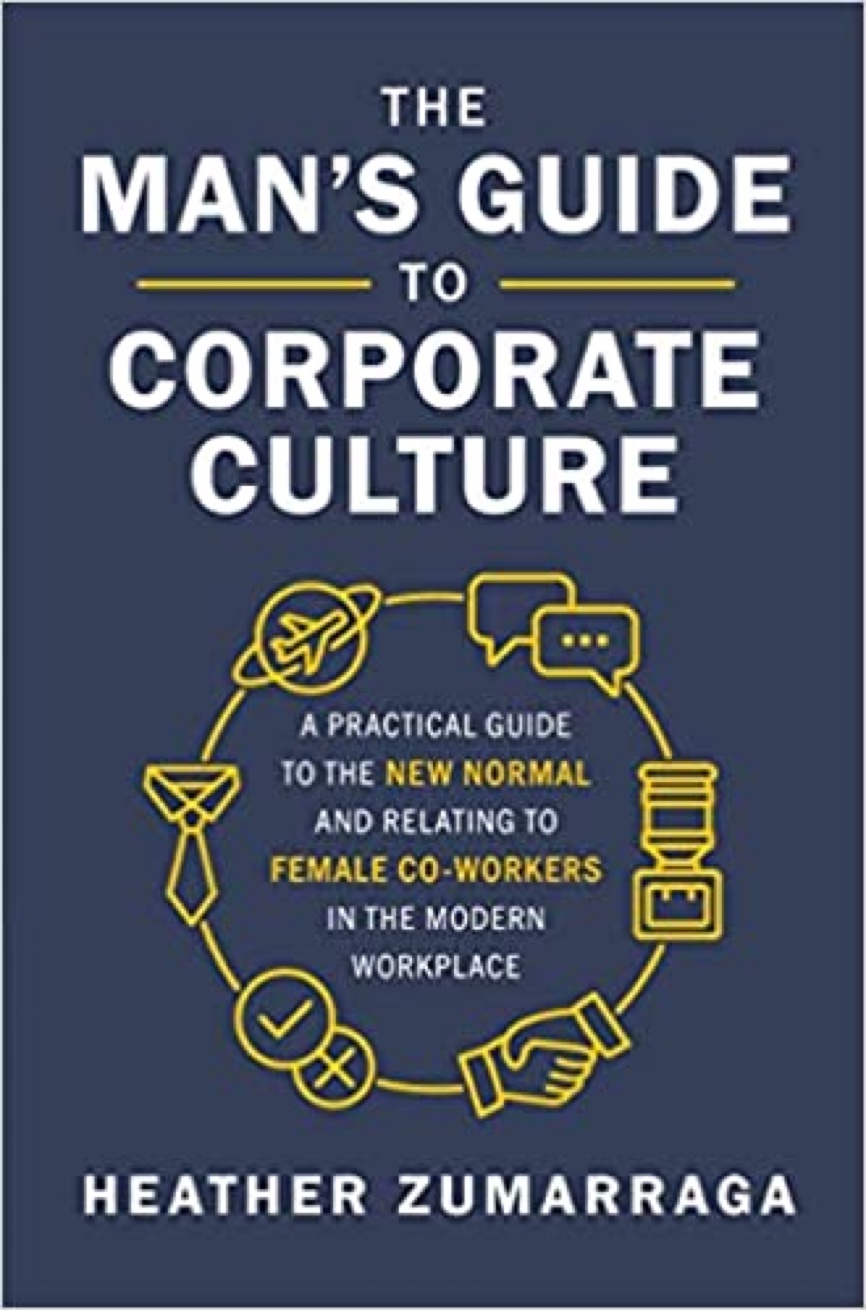
The Man’s Guide to Corporate Culture: A Practical Guide to the New Normal and Relating to Female Co-Workers in the Modern Workplace by Heather Zumarraga

Monday, May 2nd, 2022

The Man's Guide
The Man’s Guide to Corporate Culture: A Practical Guide to the New Normal and Relating to Female Co-Workers in the Modern Workplace by Heather Zumarraga explains how the modern workplace has evolved over time and how men (and women) can navigate it while staying out of trouble. Things like accusations of sexual harassment or worse can be real career enders so take Heather’s advice if you want to stay afloat in what can seem at times like a tsunami.

Who is This Book for and How to Read This Book/Introduction

  • This book is for men who work with women, corporations, small business employers, human resources departments, college students, and men and women couples. Here we find the chapters intended for men, corporations, and both men and women so you can skip around if you choose.
  • Sionce the national discussion of sexual harassment in the workplace has gone to a whole new level, many men have become fearful of the perceived power that women have. The big change is that women are no longer afraid to speak up and are often encouraged to do so. This book is designed to help men learn to collaborate and find synergies with female colleagues so that they can take advantage of the skills and qualities that women offer. You can only do your best if you feel comfortable and this book should help. It’s based on the author’s experience along with hundreds of interviews.

1. It’s a Woman’s World and You Are Just Working In It.

  • Women hold more jobs in the US than men and earn more college degrees at every level, which strongly correlates with higher incomes. Heather sites a number of successful female CEOs of some of the country’s largest companies. Yet 60% of male managers are not comfortable participating in normal workplace activities with women, such as mentoring and socializing. This serves to deprive their company of the talent of half of the population. The modern trend is for organizations to forbid romantic relationships in the workplace and even with customers and suppliers employees. Relationships that result in ex-lovers working together can create a hostile working environment. Many top-level executives have lost their jobs for inappropriate behavior and this list includes some women. The trend is finally toward a more ethical corporate governance.

2. How Did We Get Here?

  • In 1986 the Supreme Court ruled unanimously that sexual harassment that was sufficiently severe or pervasive created a hostile or abusive working environment. Prior to that women were limited to lawsuits when the harassment was part of a quid pro quo for promotion. Now the simple act of pervasive harassment is enough to sue in federal court. Derogatory remarks about physical appearances, unwanted flirtation, and touching are possible allegations. Courts use the reasonable person standard when deciding if the behavior amounts to sexual harassment. The genders of the people involved are not relevant.

3. The Pendulum Has Swung Too Far

  • As a result of this situation, many men worry about giving negative feedback to women. The media has created a world where some women are comfortable believing men are the enemy. The negative bias against men results from the movement going overboard. There are so many accusations it’s hard to know what to believe. A critical mass of accusations, however, makes it obvious that there is some truth to it as some recent high-profile cases have shown. False accusations or even misplaced suspicions, now have absurdly powerful repercussions. If you ever have to be deposed as part of a legal process, bring an attorney. Unfortunately, almost any behavior such as a shoulder pat can now be stretched into harassment. As a result, many men are reluctant to hire attractive women or hire women for jobs involving close interpersonal interactions. Also, the incarceration rate (90%+), the homicide rate (67%), and the homeless rate (70%) imply that men have a major crisis.

4. Let Mars Be Mars and Venus Be Venus.

  • There is an agreement in the literature that men and women are different. Women tend to have better verbal abilities like reading comprehension and writing. They are also better at retrieving information from long-term memory. Men are better at juggling things in working memory and have better visuospatial skills. Men are more visually oriented and have stronger responses to sexual stimuli. The advice here is that you have a frontal lobe so use it to self-regulate. Think of it as the brakes for your brain.
  • Women demonstrate more facial expressions than men and are better at reading them. Men will be distracted by bare skin, short dresses, and high heels. The lesson here is look at her face. You can compliment apparel but not physical appearance. Pay attention when women are talking and consider turning off your phone. Maintain eye contact, don’t interrupt, and paraphrase what is said. You really don’t have the luxury of not liking women or other men at work. If you do you will give it away somehow. Demonstrate you care by showing an interest in their personal life.
Share this:
Share this page via Email Share this page via Stumble Upon Share this page via Digg this Share this page via Facebook Share this page via Twitter Share this page via Google Plus

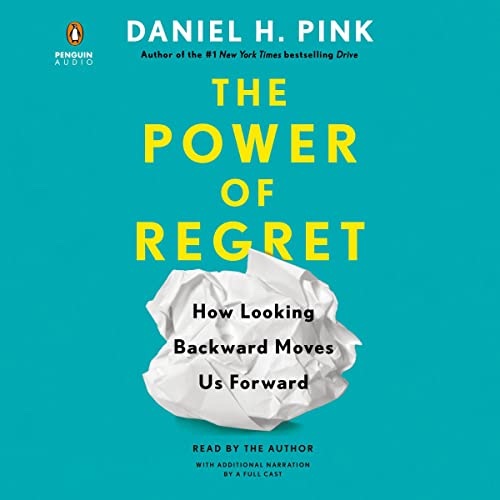
The Power of Regret: How Looking Backward Moves Us Forward by Daniel Pink

Saturday, April 23rd, 2022
The Power of Regret

The Power of Regret: How Looking Backward Moves Us Forward by Daniel Pink deals with the power we can draw from dealing with our regrets in a thoughtful manner. Regrets deal with things you can control so you need to take action when possible to make things better and move on from things that can’t be fixed. Research shows that people who do this are healthier and happer. Thanks, Dan for this vital life lesson.

Part One. Regret Reclaimed – 1. The Life-Thwarting Nonsense of No Regrets

  • Fron popular songs to literature to advice columns we hear over and over again about how successful people supposedly have no regrets. In this book, Pink shows not only that this is wrong-headed thinking, but when properly used, analysis of your regrets can serve to improve your life. We all have a portfolio of emotions and most of us try to have a bias in our lives for positive ones. That makes sense, but we also need to deal with negative emotions to help us avoid harm, be it physical or emotional. The purpose of this book is to show you how to use regret’s many strengths to make better decisions, perform better at work, and bring greater meaning to your life. Pink draws on his analysis of two massive surveys to accomplish this goal.

2. Why Regret is Human

  • Regret is the unpleasant feeling associated with some action or inaction a person has taken which has led to a state of affairs that the person wishes were different. It is more understood as a process than a thing. As we mature, our brains naturally develop to experience regret. It is associated with the orbitofrontal cortex. People with lesions in this area typically do not experience regret. The same is true for people with Huntington’s and Parkinson’s disease. Reget is the most common negative emotion as things you regret are your own fault. They are things where you had control and constantly involve some comparison.

3. At Least’s and If Only’s

  • These are two types of counterfactuals. When you think at least, you are thinking about how things could have been worse. When you think if only, you are thinking that an outcome could have been better if you had done something different. Most people engage in if only thinking much more than at least thinking. If only thinking degrades our feelings now, but it can improve our lives later. This is one way regret can help us do better tomorrow.

4. Why Regret Makes Us Better

  • If you actively regret something you are not likely to do it again. A central finding is that regret can deepen persistence, which almost always elevates performance. Even thinking about other people’s regrets may confer a performance boost. Regret, however, does not always elevate performance. Lingering on regret for too long can have the opposite effect. Setbacks can supply fuel for future performance. Making mistakes and learning from them via regret is a path to growth.
  • When it comes to things you regret it is key that you not wallow in them or dodge them altogether. Doing so will just make things worse. These feelings should result in thinking that results in future action that makes things better or avoids further pain. Think of this action as an evaluation that can be instructive. In short, if you make a mistake you need to ask yourself “what can I learn from it.” (Doug: This is a guiding principle for me.)
Share this:
Share this page via Email Share this page via Stumble Upon Share this page via Digg this Share this page via Facebook Share this page via Twitter Share this page via Google Plus

Summaries of Five Books by Chip and Dan Heath with Help from Karla Starr

Wednesday, March 16th, 2022

Heath Books
Yesterday (3/15/2022) I posted my summary of Making Numbers Count: The Art and Science of Communicating Numbers by Chip Heath and Karla Starr. Looking back in my book summary archives, which contains over 200 summaries of nonfiction books, I find that this is the fifth book Chip Heath has coauthored that I have summarized. The other four are by Chip Heath and his brother Dan. They all offer great advice for any educator, parent, or anyone who wants to have a more productive and happy life. Below you will find links to all of the summaries. Enjoy.

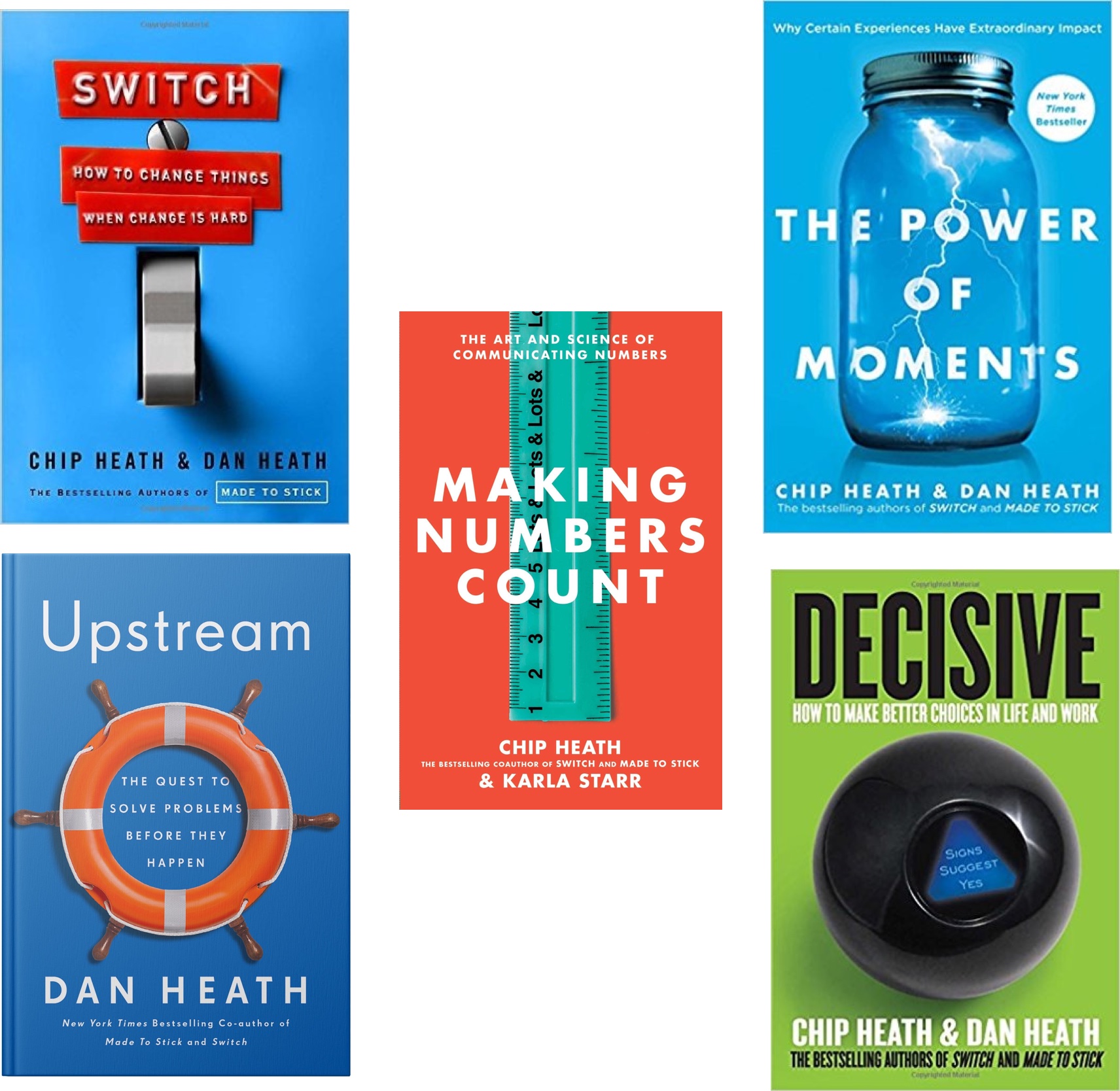
Making Numbers Count: The Art and Science of Communicating Numbers by Chip Heath & Karla Starr gives specific advice on how to frame numbers in a manner that your audience and make sense of and remember them long after hearing a presentation or reading an article. If you find that you have to use numbers to persuade people, read this book and share it with your kids and coworkers.

The Power of Moments: Why Certain Experiences Have Extraordinary Impact by Chip and Dan Heath makes the case that we all experience moments that make a huge difference in our lives and that there are things we can do to make them happen. You need to be aware of moments in your life and look for ways to make them happen again for yourself and those you serve. This is a must-read for any leader.

Switch: How to Change Things When Change is Hard by Chip and Dan Heath deals this one of the most important topics faced by any leader and everyone else. They believe that the primary obstacle comes from conflict built into our brains. They explore this conflict between our rational brain and our emotional brain that compete for control. This book will help your two minds work together. It draws on decades of research from multiple fields to shed new light on how you can affect transformative change. Discover the pattern they have found and use it to your advantage. Click below to purchase this important book.

Upstream: How to Solve Problems Before They Happen by Dan Heath deals with the notion of preventing problems before they happen rather than being stuck with constantly fixing things after they break. He discusses barriers to Upstream thinking and offers questions Upstream leaders need to address. Whether you are a leader in your organization or just an ordinary individual trying to reduce stress and live a happier life, this book is a must.

Decisive: How to Make Better Choices in Life and Work by Chip & Dan Heath shares research and cool stories that show how our decisions are disrupted by an array of biases and irrationalities. They go on to introduce a four-step process designed to counteract these problems. Their fresh strategies and practical tools will enable you to make better choices at work and beyond. If you want to increase your chances of making the right decision at the right moment, this book is for you. Click the icon at the bottom of any page to buy this important book for yourself and your key colleagues.

Share this:
Share this page via Email Share this page via Stumble Upon Share this page via Digg this Share this page via Facebook Share this page via Twitter Share this page via Google Plus