Archive for the ‘Business Books’ Category
Friday, September 2nd, 2011
When You Come to a Fork in the Road, TAKE IT: Inspiration and Wisdom from One of Baseball’s Greatest Heroes by Yogi Berra, with Dave Kaplan (©2001, Hyperon: New York, NY) is funny, insightful, and inspirational all at once. I have always been a big fan of Yogi as he seems like such an unlikely hero. He doesn’t look like a star athlete and at first, his speech doesn’t sound like it contains a lot of wisdom. He was the son of poor immigrants and dropped out of school after the 8th grade. In spite of this be became an MVP and winner of a record ten world series. He was a successful manager and many of his quotations have become known throughout our culture. As this book shows, they are not just amusing. The quotes along with Yogi’s philosophy contain a lot of wisdom mixed in with the humor. Many apply very well to the field of education as I try to show here. There are a lot of pages, but they are short and good.
When You Come to a Fork in the Road, TAKE IT!
- Throughout life you come to serious forks in the road – decisions. No matter what decision you make, taking a job, getting married, buying a house, whatever it is, you shouldn’t look back. Trust your instincts. I’ve always done things that feel right. Learn from the choices you make and don’t second guess yourself.
- On big life decisions get all the advice you can. Talk it over with parents, a mentor, a teacher, or a coach. They’ve had more life experience. They have more miles on them and can help you get on the right path. A teacher once asked me, “Don’t you know anything?” I said I don’t even suspect anything.
Enjoy The Moment
- Nobody can help but be nervous in the World Series or at a job interview, or giving a presentation, or when you’re called on in class. You have to channel that nervousness. Enjoy the moment and make it a great experience. You need to learn to relax. You can’t be afraid of making a mistake. There’s always the next inning or the next day. Life goes on.
Nobody Did Nothin’ to Nobody
- There were many times I had to help my teammates so that bad things didn’t happen. When you’re part of a team you stand up for your teammates. Your loyalty is to them. You protect them through good and bad because they’d do the same for you.
Tags: Yogi Berra
Posted in Book Summaries, Business Books, Education Books, Leadership Books | 2 Comments »
Monday, August 15th, 2011
Alone Together: Why We Expect More From Technology and Less From Each Other(© 2011, Basic Books: New York, NY) is Sherry Turkle’s third book that explores our lives on the digital terrain. Sherry has conducted hundreds of interviews to gather her data. She explores how the technology that lets us do anything anywhere with anyone can drain us as we try to do everything everywhere and are always on call. She looks at how relentless connections lead to a new solitude and impacts our emotional lives. She also sees hope as people seek to sustain direct human connection.
Tags: Alone Together, Sherry Turkle
Posted in Book Summaries, Business Books, Education Books, Leadership Books | No Comments »
Friday, July 29th, 2011
Always On: How the iPhone Unlocked the Anything-Anytime-Anywhere Future and Locked Us In by Brian X. Chen (© 2011, Da Capo Press: Cambridge, MA), is an insightful look at technology’s all-in-one revolution and its consequences. Will we give more control to individual companies and sacrifice privacy and freedom in the process? This is the first book to take on the possible future that products like the iPhone may portend. Brian writes the regular Apple column for Wired Magazine. In order to write this book, Chen interviewed many of the top technology thinkers, innovators, and researchers.
Tags: Always ON, Brian X. Chen, iPhone
Posted in Book Summaries, Business Books, Education Books, Leadership Books | 1 Comment »
Thursday, July 7th, 2011
Managing the Millennials: Discover The Core Competencies for Managing Today’s Workforce by Chip Espinoza, Mick Ukleja, & Craig Rusch is a must read for leaders, teachers, and parents who have to deal with a generation raised at a very different time. It is based on abundant research and a two-year study conducted by the authors.
Espinoza, Ukleja, and Rusch
- Chip Espinoza: CEO of GeNext Consulting – Leadership teacher at California State University, Long Beach
- Mick Ukleja, PhD: President of LeadershipTraQ and founder of Ukleja Center for Ethical Leadership at California State University, Long Beach
- Craig Rusch, PhD (in social networks): Professor of Anthropology at Vanguard University in Costa Mesa, California.
The Generations
- Before the boomers there were the builders. They were the generation who experienced the great depression and the second world war. They were the first generation to enter college in big numbers. Hard work, delayed gratification, and automatic respect for authority were common. They often spent their entire career at one company.
- Then came the baby boomers. They were born from 1946 to 1964 and number about 80 million. They grew up with the Vietnam War, the Cold War, the Civil Rights Movement and Women’s Liberation. They grew up with television and rock and roll and were the first with common access to recreational drugs. The moon landing gave them confidence that they could do what they set their minds to. Technology expanded, but they used it mostly to do more work, not less.
The Next Generations
- Generation X: Born between 1965 and 1977, this generation experienced a tripling of the divorce rate and both parents working. MTV, video games, and computers all made their mark. They used technology for a work-life balance and grew accustomed to moving around and autonomy. They could easily do their work on the beach.
- The Millennials (Generation Y): Born between 1978 and 1996, they make up more than 25% of the population and have been shaped by terrorism, cell phones, and social networking. Technology is an integral part of their lives and they crave instant feedback. They are use to parents who praise them and tend to abstain from sex and drugs more than Gen X. They work well in teams and like diversity.
Tags: Chip Espinoza, Craig Rush, Managing the Millennials, Mick Ukleja
Posted in Book Summaries, Business Books, Education Books, Leadership Books | No Comments »
Thursday, April 14th, 2011
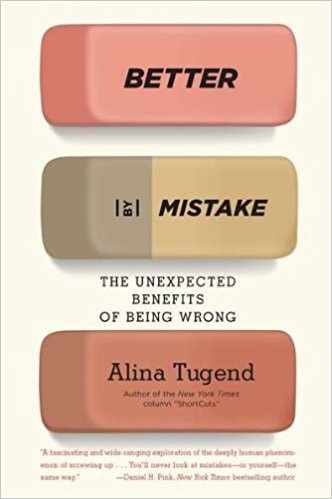
This eye-opening book features the big idea that embracing mistakes can make us happier and more productive in every facet of our lives. It examines the tension between the idea that we must make mistakes to learn, and the fact that we often get punished for them. © 2011, Riverside Books: New York, New York
Another Way of Learning
- My teacher said I learn by making mistakes. Since I didn’t make any today, I guess I didn’t learn anything. This story is followed by the notion that when people think they must do everything perfectly, they can spend energy blaming each other rather than finding a solution. It results in defensiveness and accusations rather than apologies and forgiveness. Mistake prevention gets in the way of daring and innovation. Most of us think that mistakes make us look stupid.
(Re)Defining Mistakes
- My teacher said I learn by making mistakes. Since I didn’t make any today, I guess I didn’t learn anything. This story is followed by the notion that when people think they must do everything perfectly, they can spend energy blaming each other rather than finding a solution. It results in defensiveness and accusations rather than apologies and forgiveness. Mistake prevention gets in the way of daring and innovation. Most of us think that mistakes make us look stupid.
Tags: Alina Tugend, Better By Mistake, Book Summary
Posted in Book Summaries, Business Books, Education Books, Leadership Books | No Comments »