Archive for the ‘Business Books’ Category
Tuesday, March 15th, 2022

Making Numbers Count: The Art and Science of Communicating Numbers by Chip Heath & Karla Starr gives specific advice on how to frame numbers in a manner that your audience and make sense of and remember them long after hearing a presentation or reading an article. If you find that you have to use numbers to persuade people, read this book and share it with your kids and coworkers.
Introduction
- We live in a world where our success depends on our ability to make numbers count. The goal of this book is to teach you how to translate numbers that lack meaning to most people into comparisons that do. For most humans, when you get past five or so all other numbers are just variations of lots. You can start by flipping through the book looking for boxes that contain a standard representation of a number and a translated version that is more understandable. There are over thirty translation techniques to choose from. If you, like most people, are not a numbers person, this book is for you.
Translate Everything, Favor User-Friendly Numbers
- If you don’t translate numbers for most people you might as well be speaking in a foreign language. Math is no one’s native language. The best translations of numbers are not numbers at all, but things you can visualize and stories you can remember. A gallon of water next to three ice cubes with water running off of them represents in order, the saltwater in the Earth’s oceans, the freshwater trapped in glaciers, and the freshwater we can drink. That image replaces four numbers.
- Try to avoid the big numbers like the points scored in a career and go with the per-game number of points. Rather than report the number of guns in the US, report the number per person. One game or one person demonstrates the power of one.
- If you want people to remember a number make sure you round when you can. It’s easier to remember 6 than 5.684. Also, use whole numbers rather than fractions, decimals, or percentages. Try 2 out of 3 rather than 2/3. Depending on your audience, you can break these rules. Baseball fans are fine with batting averages expressed to three decimal points for example.
To Help People Grasp Your Numbers, Ground Them in the Familiar, Concrete, and Human Scale
- A look at history shows us that all cultures use familiar things like the human body for measuring units. Your arms spread is a fathom. From your fingertips to your elbow is a cubit. One thousand steps is a mile. Use things in your environment that your audience knows well. A grape-sized tumor works better than a 3 cm tumor. While you might have to use multipliers sometimes, Pakistan = two Californias for example, smaller multiplies are better and the best multiplier is one.
- Pay attention to your geographic location and culture when selecting areas and items. Above all translate from abstract concepts to concrete objects. This will make your figures feel real. Infographics may be nice, but the brain is a pretty good graphic processor if given the right raw material. There are many examples here. A favorite is a model for our solar system and the nearest star, which are compared to two quarters lying on opposite goal lines.
- Another trick is to convert one type of unit into another. Time, for example, can be converted into money using a worker’s annual salary. Calories can be converted into distances you walk to burn them off. This doesn’t always work as a trillion one-dollar bills makes a 67-mile stack, a distance that few can quickly relate to.
- Always strive to translate numbers to a human scale. An example of shrinking turns the Earth into a basketball on the baseline and the moon into a baseball on the three-point line. The two-degree reentry window for a spaceship is now the thickness of a piece of paper. An example of magnification can be used to compare the speed of sound and the speed of light. If light from a new year’s fireworks display takes one second to reach you, the sound won’t arrive until January 10th.
Posted in Book Summaries, Business Books, Education Books, Leadership Books | No Comments »
Friday, February 4th, 2022
The Diffusion of Innovation (5th ed) by Everett M. Rogers is THE book for anyone who wants to understand this phenomena. This is the 2003 version, but it is still very current. I used this book a lot when I was doing my dissertation and revisit the concepts via this summary from time to time. This is my longest book summary so it may take more than one sitting to finish it. I think it will be work your time.
Chapter 1 – Elements of Diffusion
- Getting a new idea adopted, even when it has obvious advantages is difficult. Therefore, a common problem for individuals and organizations is how to speed up the rate of diffusion of an innovation. Diffusion is a process in which an innovation is communicated through certain channels over time among the members of a social system. A degree of uncertainty is involved and the process can be planned or spontaneous. It results in one kind of social change and leads to certain consequences.
Element 1
- 1) The innovation: It is an idea, practice, or object that is perceived as new. If it seems new, it is an innovation. The adoption process is an information seeking and processing activity in which an individual is motivated to reduce uncertainty about the advantages and disadvantages of an innovation. The characteristics of innovations, as perceived by individuals, help explain their different rates of adoption.
/li>
Element 2
- 2) Communication Channels: The essence of the diffusion process is the information exchange through which one individual communicates a new idea to others. Mass media channels are usually the most rapid and efficient means of informing an audience. Interpersonal channels involve face-to-face exchanges. A third form involves the interactions between individuals via the Internet.
Element 3
- 3) Time: The inclusion of time in diffusion research is one of its strengths. The five steps in the process are: knowledge, persuasion, decision, implementation, and confirmation. There are five adopter categories that are time-based. The first adopters are called innovators. They are followed in time by early adopters, the early majority, the late majority, and laggards. When the number of adopters is plotted over time, an S-shaped curve results.
Element 4
- 4) A Social System: This is a set of interrelated units that are engaged in joint problem solving to accomplish a common goal. Social systems have structure that gives regularity and stability to human behavior (norms). It allows one to predict behavior with some degree of accuracy. The communication in a system also has a structure. Knowledge of the system’s structure is necessary if one wishes to study diffusion within the system.
Some History
- A series of independent groups started this research in the 1940’s and 1950’s. Each group was invisible to the others and used different approaches. They all, however, found the diffusion followed an S-shaped curve and the innovators had higher socioeconomic status than did later adopters. By the late 1960’s the independent groups had come together as shown by the increase in cross-tradition citations.
Gabriel Tarde
- Tarde was a French lawyer and judge around 1900. He observed that for every ten new ideas that spread, ninety will be forgotten. He also observed that the rate of imitation usually followed an S-shaped curve and that the takeoff in the curve begins to occur when the opinion leaders in a system use a new idea. Forty years later his observations were put to the test by empirical research.
The Nine Major Diffusion Research Traditions
- 1) Anthropology – The study of how tribes or villages use technological ideas such as the steel ax, horses, and boiling water.
- 2) Rural Sociology – The study of how farmers in rural communities adopt agricultural ideas such as weed sprays, hybrid seed, and fertilizers.
- 3) Education – The study of school systems, teachers, or administrators as they adopt teaching/learning innovations like kindergarten, modern math, programmed instruction, and team teaching.
- 4) Public Health and Medical Sociology – The study of individuals or organizations such as hospitals and health departments as they adopt medical and health ideas like drugs, vaccinations, family-planning, and AIDS prevention.
- 5) Communication – The study of individuals and organizations as they adopt technological innovations and new communications technology.
- 6) Marketing and Management – They study of individual consumers as they adopt new products.
- 7) Geography – The study of individuals and organizations as they adopt technological innovations.
- 8) General Sociology – The study of individuals and other units as they adopt a wide variety of ideas.
- 9) Early Sociology – The study of communities or individuals as they adopt things like city manager government, postage stamps, and ham radios.
- Other traditions include economics, public administration, political science, psychology, industrial engineering, statistics, and others.
A Word About Education
- Unlike some fields, innovations adopted by education are done so by organizations rather than individuals. Early studies were carried out by Paul Mort at Columbia University. He found that the best single predictor of innovativeness was expenditure per student. The stereotype of the rich suburban school as highly innovative was largely confirmed. Mort found that considerable time lags were required. It took kindergartens about 50 years to be completely adopted. Driver training needed only 18 years while modern math needed only 5 years. Both were promoted by change agencies. The insurance companies and auto manufacturers in the case of driver training and the National Science Foundation for modern math.
Tags: Diffusion of Innovations, Everett M Rogers
Posted in Book Summaries, Business Books, Education Books, Leadership Books | 1 Comment »
Wednesday, August 18th, 2021
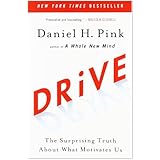
Drive: The Surprising Truth About What Motivates Us by Daniel Pink is a must-read for educators and parents alike. Dan summarizes current research and does a great job turning it into interesting and understandable prose that educators can apply to their practice. Every school should have this on the shelf.
Three Types of Motivation
- 1.0 – The basic motivations we need for survival
- 2.0 – Motivations based on direct rewards and punishments. Such carrots and sticks are typically financial in this context. They work for jobs that are routine, which are often the jobs that can be sent offshore or done by a computer.
- 3.0 – Intrinsic motivation, which is conducive to creativity. This allows you to do things for the satisfaction of doing them rather than any monetary reward. Examples include open source software, Wikipedia, learning to play a musical instrument, or doing a puzzle. It is important for nonroutine (heuristic) jobs. In these jobs rules are loosely defined, which requires creativity.
Carrots and Sticks Don’t Always Work
- Pink sites 128 studies that lead to the conclusion that tangible rewards tend to have a substantially negative effect on intrinsic motivation. This is one of the most robust findings in social science and one of the most ignored. (Doug: Educators should check out Alfie Khon’s 1993 book, Punished by Rewards.)
- Studies show that rewards and punishments can extinguish motivation and diminish performance. They focus behavior, which can crush creativity and they can crowd out good behavior. In some cases, they can lead to cheating, shortcuts, unethical behavior and lead to addiction. They can foster short-term thinking at the cost of long-term results.
Carrots and Sticks Aren’t All Bad
- Rewards do not undermine people’s intrinsic motivation for dull tasks where there isn’t any motivation to be undermined. To increase chances for success you need to: 1) Offer a rationale for why the task is important 2) Acknowledge that the task is boring 3) Allow people to complete the task their own way. Another way to offer extrinsic rewards for creative work is to give the reward after the job is finished. Care must be taken so that such rewards don’t become expected. In general, praise and specific positive feedback are less corrosive than cash and trophies (Doug: That means stickers for you elementary teachers)
Tags: Daniel Pink, Drive, Motivation
Posted in Book Summaries, Business Books, Education Books, Leadership Books | 1 Comment »
Thursday, July 1st, 2021
Think Again: The Power of Knowing What You Don’t Know by Adam Grant offers advice about rethinking that all of us can use at work and beyond. The key is to think like a scientist. This means you have to actively try to disprove your own ideas as a way of testing their quality. This would make a great text for any leadership course and an outstanding read for anyone seeking self-improvement. Make sure that there is a copy in your professional development library.
Prologue
- This book is about the value of rethinking your assumptions, instincts, and habits while keeping an open mind. It starts with a story about wildfire fighters who when trapped neglected at first to drop their heavy gear as it was part of their identity and dropping it would signal failure. One man started a fire that in effect burned a hole through the fire and saved his life. This required rapid rethinking as this technique wasn’t taught in fire school. Due to the pandemic, we have also seen many leaders being slow to rethink their assumptions. This book is an invitation to let go of knowledge and opinions that are no longer serving you well. A hallmark of wisdom is knowing when to abandon some of your most treasured tools as you seek new solutions to old problems.
Part I. Individual Rethinking – Updating Our Own Views
1. A Preacher, a Prosecutor, a Politician, and a Scientist Walk into Your Mind
- The big idea here is to think like a scientist rather than a preacher, a prosecutor, or a politician. This requires that you revisit your beliefs to see if new evidence has made them obsolete. The worst bias is thinking that you aren’t biased. Be careful to avoid confirmation bias where you only look for facts that support your beliefs and desirability bias where you see what you want to see. Scientists are actively open-minded searching for reasons why they might be wrong. Your IQ may work against you as smart people recognize patterns faster, which can lead to seeing more stereotypes. If you are trying to promote a change, reinforce the things that will stay the same.
2. The Armchair Quarterback and the Imposter: Finding the Sweet Spot of Confidence
- Here we meet two opposing syndromes. The Armchair Quarterback Syndrome happens when confidence is greater than competence. The Imposter Syndrome happens when competence is greater than confidence. Arrogance is ignorance plus conviction. Humility allows you to absorb life’s experiences and convert them into knowledge and wisdom. A mix of confidence and humility gives us enough doubt to reexamine our old knowledge and confidence to pursue new insights. Most effective leaders score high in both confidence and humility.
- Adam believes that there are benefits associated with the Imposter Syndrome. It can motivate you to work harder. It can allow you to work smarter as you question old assumptions. Finally, it can make you a better learner as you realize that you might have something you need to learn. You are more likely to seek other opinions. It can keep you on your toes as you never think you know it all. You maintain doubts as you know you are partially blind and committed to improving your sight. Each answer raises new questions and your quest for knowledge is never finished. Arrogance, however, leaves you blind to your weaknesses.
3. The Joy of Being Wrong: THe Thrill of Not Believing Everything You Think
- Most of us are wrong more often than we like to admit. Rather than being upset when you find that you are wrong about something, it’s better to tell yourself that it means you are now less wrong than before. You can even be joyful if you realize that it means you have learned something. Adam recommends that you allow learning from being wrong to let you detach from your past and to also live so that your opinions are detached from your identity. This will make it easier when a core belief is challenged.
- A study of professional forecasters showed that the most important driver of success was how often they updated their beliefs. The best went through more rethinking cycles. They have the confident humility to doubt their judgment and the curiosity to discover new information and rethink their predictions. You should view your opinions as hunches and know that something isn’t true just because you believe it. Emotions can also get in the way. When you feel strongly about something you are less likely to change your mind when new facts present themselves. This is why so many respected predictors failed to predict Trump’s victory in 2016.
4. The Good Fight Club: The Psychology of Constructive Conflict
- There are two kinds of conflicts. There are relationship conflicts where people essentially don’t like each other, and there are task conflicts where people disagree about how to do something. The former get in the way of success, while the latter usually helps people to work together successfully. Task conflict brings out the diversity of thought. It can help us stay humble, surface doubts, and make us curious about what we might be missing. It can lead us to think again moving us closer to the truth without damaging our relationships. What matters to children is not how little their parents argue, but how respectfully they argue.
- It’s possible to disagree without being disagreeable. Disagreement is key when it comes to task conflict. The trick is not let task conflict turn into relationship conflict. As a leader, you want to promote the idea that disagreement is necessary for growth and success. It’s also key that leaders show they believe and care about the people with who they disagree. This can make disagreement seem like a sign of respect. Try to frame disputes as debates. This signals that you are receptive to considering dissenting opinions and changing your mind. Don’t fall into the trap that some leaders fall into by surrounding yourself with agreeable people. They shield themselves from task conflict by eliminating boat-rockers and listening to boot-lickers.
Posted in Book Summaries, Business Books, Education Books, Leadership Books | No Comments »
Thursday, May 6th, 2021
Be Excellent On Purpose: Intentional Strategies for Impactful Leadership by Sanée Bell shares her experience and vision as a school leader. As someone who has taught leadership for aspiring principals, I find her advice to be totally on the money. This would be an excellent book for any school leadership course. It’s also good reading for teachers who don’t aspire to the principalship, but who nonetheless lead in their own way.
Introduction
- To be excellent on purpose you need to be intentional with your time, intentional with the company you keep, and intentional about where you focus your thinking and energy. This will allow you to set a standard for success and do what it takes to close the gap between where you are and what you are striving to become. Excellence is a journey that requires effort and energy. You will see barriers as obstacles that you can overcome. This book is designed to help you develop habits that will help you lead with excellence.
1. Own Your Excellence
- As a young girl, Sanée had a vision that she wanted to compete with the boys in her neighborhood. She was clear and intentional about what she wanted to accomplish and built the steps needed to get there. Her vision was the roadmap to the end. It was her strategy for success. Later she was able to generalize her playground success to the rest of her life.
- Start by thinking about what you want to achieve. Then identify the action steps you need to take. Identify the barriers and develop a plan to eliminate them. As you move forward monitor your progress. As you develop your vision be sure you know why. This is where you will summon your motivation. Your why is what gives your vision meaning and purpose. With your why firmly in place you next have to address how you are going to accomplish your goals. Along the way be honest with others and yourself. As you venture into the unknown try to develop a level of comfort with it and with your own vulnerability. Celebrate your accomplishments rather than feeling like an imposter.
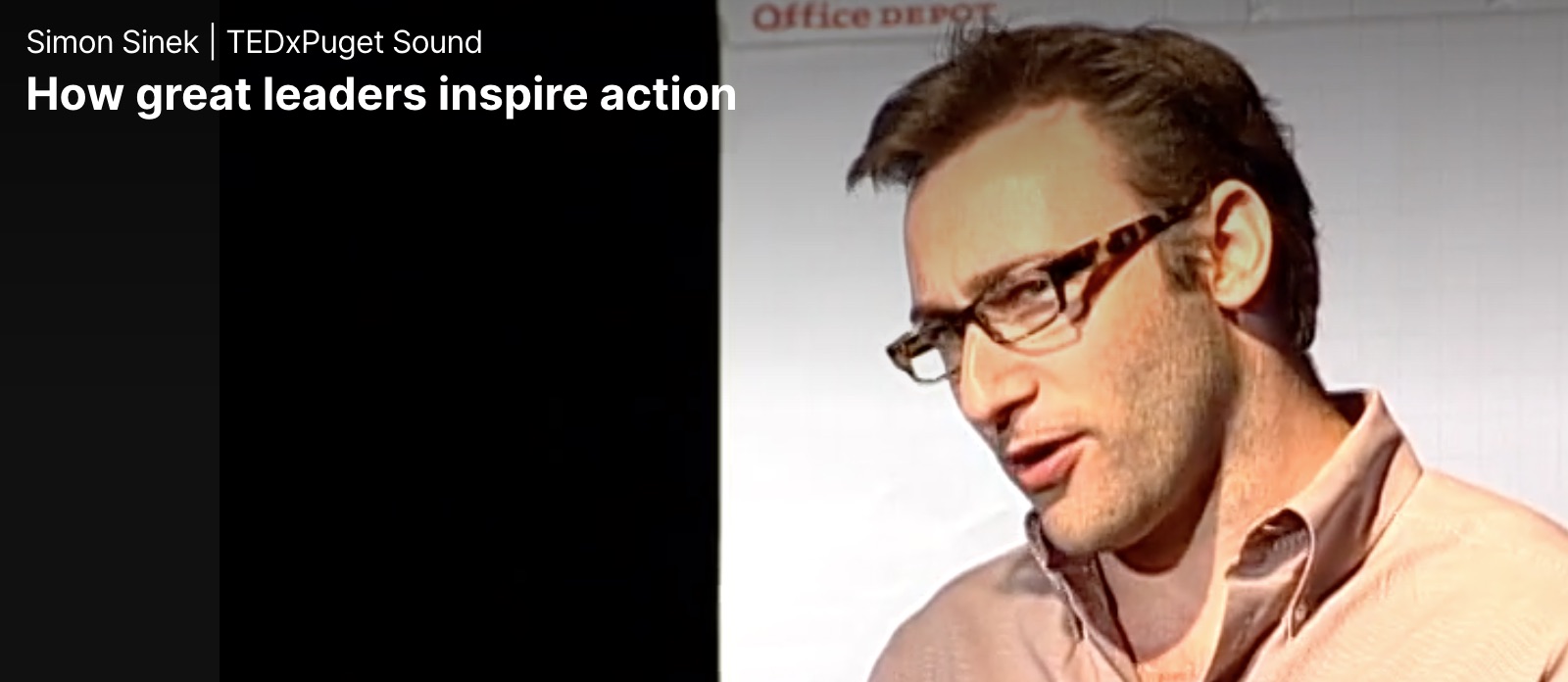
Sanée was inspired by Simon Sinek’s TED Talk How Great Leaders Inspire Action. Give it a look.
2. Understand the Power of Words and Actions
- Sanée’s mantra is “lead with purpose, intention, and excellence. Be excellent on purpose and strive for excellence in all we do.” Success is a result of intentional planning and hard work. Know that everything you do matters and that everyone is watching. Focus on what you can control. While culture work belongs to the group, the leader has the biggest responsibility. Your words need to match your actions. Work to get a commitment to continuous improvement. Ask “where can we continue to grow and improve?” Striving for excellence does not involve making excuses.
- Start with a focus on what’s strong rather than what’s wrong. Once you do this you can figure out how to make not-so-great areas better. It’s important to determine why what’s working is successful. Then it’s on to finding out why some things aren’t working well. You can give pep talks focused on your mission. Point out obstacles you overcame. Celebrate this achievement with the group and identify the challenges ahead. Speak from the heart and use emotion to inspire the group.
3. Expand Your Connections
- It is important that leaders use their abilities to connect. They need to broaden their network to include leaders outside of education and leaders around the world. This can greatly expand one’s learning. Think of it as your professional development network (PDL). This will also expose you to new opportunities. Look for people who push your thinking, not just people who always agree. Look for opportunities to meet people at conferences who you follow online.
- As you expand your virtual support team, be sure to prioritize local face-to-face connections. Sanée suggests that you schedule regular get-togethers with people who can support your work as you support theirs. You also need to manage by walking around. As you do so, check in with the people you lead. Be sure to ask “how are you doing” and as they say “I’m doing fine,” watch their body language to see if it sends the same message or a different one. Ask questions like why and don’t tell them how you solved their problems. Take time to be alone to think and write. Be sure to share what you write, which is easy today thanks to blogs like mine where you can guest post.
Posted in Book Summaries, Business Books, Education Books, Leadership Books | No Comments »