Archive for the ‘Business Books’ Category

Uncharted: Big Data as a Lens on Human Culture by Erez Aiden & Jean-Baptiste Michel

Saturday, January 25th, 2014

Uncharted: Big Data as a Lens on Human Culture by Erez Aiden & Jean-Baptiste Michel (© 2013, Riverside Books: NY, NY) explains how they use Google’s repository of 30 million digitized books to investigate human culture. Their analytical tool lets them see how words and phrases have come and gone over the years and what these trends can tell us about ourselves. As more data becomes available they see many positive and negative possibilities. This is one book you don’t want to miss. Click at the bottom of any page to get a copy of this important book.

Erez Aiden and Jean-Baptiste Michel

  • Erez has a PhD from Harvard and MIT. After stints at Harvard and Google he joined the faculty of Baylor and Rice were he directs the Center for Genome Architecture. In 2009 he was named as one of the world’s top innovators under 35 and has received the Presidential Early Career Award for Scientists and Engineers.
  • Jean-Baptiste is a French and Mauritian entrepreneur and scientist and the founder of Quantified Labs. He is an associate scientist at Harvard and a former visiting faculty member at Google. He has a PhD from Harvard, is a TED Fellow, and one of Forbe’s “30 Under 30” winners.
Share this:
Share this page via Email Share this page via Stumble Upon Share this page via Digg this Share this page via Facebook Share this page via Twitter Share this page via Google Plus

My Best Eleven Book Summaries from 2013

Monday, December 30th, 2013

Since starting my blog in 2009, I have summarized 97 books. I do this to help you with purchase decisions, and to help people review the key concepts after they have read the book. Today I am posting links to my favorite summaries from 2013. My focus is education, but I find that there are many books from the world of business that offer great advice for educators, parents, and students. All 97 summaries are still available so dig in and be sure to purchase those that appeal. Thanks again for your wonderful support and Happy New Year.

Little Bets: How Breakthrough Ideas Emerge From Small Discoveries by Peter Sims explains the qualities that set innovative people apart from the pack. He summarizes a great deal of research that makes his points convincing. While this is an ideal book for high school and college students, it’s never too late for adults to take advantage of these valuable lessons.

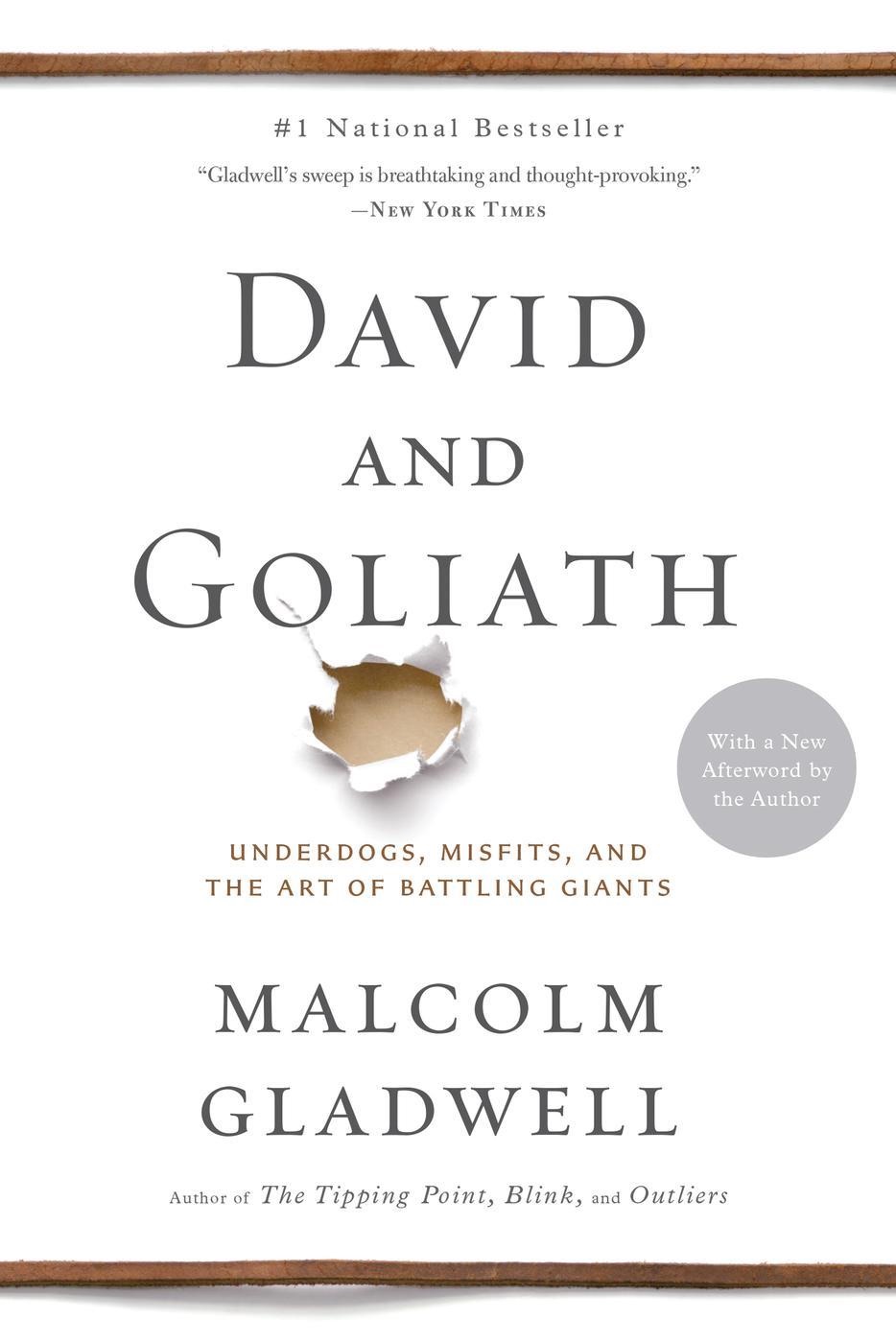
David and Goliath: Underdogs, Misfits, and the Art of Battling Giants is Malcolm Gladwell’s fourth best selling book to be summarized here. I’ve been a big fan ever since I summarized The Tipping Point.

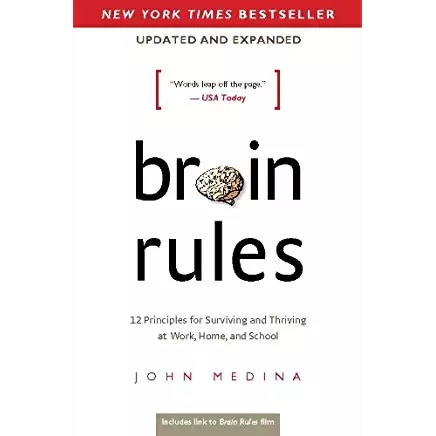
Brain Rules: 12 Principles for Surviving and Thriving at Work, Home, and School by John Medina tells how what we know about brain science can be used to positively influence our daily lives. This book is vital for educators, policy makers, and anyone who wants to get more out of their gray matter.

Why Students Don’t Like School? by Daniel T. Willingham answers questions about how the mind works and what it means for the classroom. The focus here is how do students’ minds work, and how you can use this knowledge to be a better teacher.

Adapt: Why SUccess Always Starts with Failure by Tim Harford offers an inspiring and innovative alternative to traditional top-down decision making. Tim deftly weaves together psychology, evolutionary biology, anthropology, physics, and economics along with compelling stories of hard won lessons from the real world. He makes a passionate case for the importance of adaptive trial and error to deal with problems both global, personal, and everything in between

Decisive: How to Make Better Choices in Life and Work by Chip & Dan Heath shares research and cool stories that show how our decisions are disrupted by an array of biases and irrationalities. They go on to introduce a four-step process designed to counteract these problems. Their fresh strategies and practical tools will enable you to make better choices at work and beyond. If you want to increase your chances of making the right decision at the right moment, this book is for you.

Bull Spotting: Finding Facts in the Age of Misinformation by Loren Collins will help you spot and avoid lies in a world with more accessible truth and lies than ever. Learn how to use the tools of critical thinking to identify the common features and trends of misinformation campaigns. Loren will help you tell the difference between real conspiracies and conspiracy theories, real science from pseudoscience, and history from fantasy. This is a book everyone needs to consider.

Hacking Your Education: Ditch the Lectures, Save Tens of Thousands, and Learn More Than Your Peers Ever Will by Dale J. Stephens is a handbook for people of any age who wants to take control of their own learning. Dale suggests actions you can take now and explores how school has failed almost everyone in some way. You will still need hard work and determination to thrive in the real world as this book offers an alternate approach to learning rather than an easy solution. Dale offers lots of valuable advice and many inspirational stories of success by unschoolers.

To Sell Is Human: The Surprising Truth About Moving Others by Daniel Pink is a fresh look at the art and science of selling, which is something we all do. If you want to better understand others’ perspectives, make your message clearer and more persuasive, and much more, click below to purchase this book. It is purposeful and practical, and may change how you see the world as it transforms what you do at work, at school, and at home.

The Element: How Finding Your Passion Changes Everything by Ken Robinson deals with the point where natural talent meets personal passion. Ken explores the conditions that lead us to live lives filled with passion, confidence, and personal achievement. The stories about people from a wide variety of fields entertain and inspire. The book is a classic.

The Little Book of Talent: 52 Tips for Improving Your Skills by Daniel Coyle is a bit over 100 pages and offers specific tips for developing talent. Daniel relies on abundant research to help you copy the techniques used by the top performers in many fields. In addition to growing your own talents, this book will help parents, educators, and coaches increase the success rate of their students. Every home should have a copy.

Share this:
Share this page via Email Share this page via Stumble Upon Share this page via Digg this Share this page via Facebook Share this page via Twitter Share this page via Google Plus

Little Bets: How Breakthrough Ideas Emerge From Small Discoveries by Peter Sims

Saturday, November 16th, 2013

Little Bets: How Breakthrough Ideas Emerge From Small Discoveries by Peter Sims explains the qualities that set innovative people apart from the pack. He summarizes a great deal of research that makes his points convincing. While this is an ideal book for high school and college students, it’s never too late for adults to take advantage of these valuable lessons. Click at the bottom of any page to purchase copies for yourself and people you work and live with.

Peter Sims

  • Peter is the founder of BLK SHP Enterprises, which works with Fortune 250 organizations. He is a former teacher at Stanford Business School where he established a popular program in collaboration with the School of Design. He is also a former venture capital investor with Summit Partners in the US and UK. With Bill George his is the author of True North: Discover Your Authentic Leadership. He worked with General Electric, Innosight, and his own Fuse Corps to grow entrepreneurial leaders and promote their service to grassroots projects.

Introduction

  • Anyone can spend a portion of their time and energies using little bets to discover, test, and improve new ideas. This is at the heart of this book. From comedians to big companies, success is preceded by many survivable small failures. While some prodigies can create something that works, the rest of us can use little bets to unlock creative ideas. Most successful entrepreneurs don’t begin with brilliant ideas, they discover them along the way. As examples Peter points to companies like Google and Amazon. In both cases, their exploratory mentality spawned continual breakthroughs. These people are less likely to try to avoid errors or surprises and more likely to be poised to learn from them. As far as Peter can see, the essential concepts spelled out in this book generalize to just about any field.
Share this:
Share this page via Email Share this page via Stumble Upon Share this page via Digg this Share this page via Facebook Share this page via Twitter Share this page via Google Plus

David and Goliath: Underdogs, Misfits, and the Art of Battling Giants by Malcolm Gladwell

Sunday, November 3rd, 2013

David and Goliath
David and Goliath: Underdogs, Misfits, and the Art of Battling Giants is Malcolm Gladwell’s fourth best-selling book to be summarized here. I’ve been a big fan ever since I summarized The Tipping Point. If you like to give books as gifts, please click below and get copies for yourself and your favorite bookworms.

Why Goliath was the Underdog

  • In the story of David and Goliath, it turned out that it was Goliath’s size that made him a better target for David’s sling. Warfare of the time featured cavalry, infantry, and a third group that fired projectiles like arrows and rocks. The infantry represented sitting ducks as they were relatively stationary compared to the cavalry. The humble infantryman, however, had better odds taking on a charging horse with a spear to the belly. Calvary could take on the projectile boys as they were moving targets that were much harder to hit. This is like a game of rock, paper, scissors were the odds depend on the matchup. For Goliath, facing a slinger like David was like facing a modern rival with a handgun.

Use Your Assets, Hide Your Weaknesses

  • Gladwell uses the David and Goliath story as a metaphor for how we should not always assume that the people who seem to have the upper hand really do. He tells a number of stories of how people who didn’t seem to have a chance won the day. One features a man from India who decided to coach his daughter’s basketball team. His girls were not especially tall or skilled, but he changed the odds by changing how the game was played. He realized that the other teams didn’t defend over half the court. When he put in a full-court press that lasted the entire game, he found that there were enough turnovers which lead to easy baskets to allow his team to triumph over superior talent.
  • There is also the story of Lawrence of Arabia whose troops were successful because they took advantage of their main asset, which was speed. This showed that material resources are not always an advantage. Rather than trying to improve on your weaknesses, sometimes it is better just to hide them.
  • Even wealth can be a disadvantage when it comes to raising kids. Malcolm tells the story of a successful businessman who worked in his father’s scrap metal yard. It was hard, dirty work and it made him realize that he needed to work hard to make sure he would enjoy a better future. It was his family’s very lack of wealth that gave him the qualities that allowed him to be wealthy today. Ironically, he now has a problem as his kids want for nothing. He fears they won’t develop the qualities that made him successful. While poverty can be stressful and debilitating, it seems that just enough wealth can make you relatively happy while still letting you develop desirable qualities. The same also seems to work for class size as classes that are too big or too small have their own downsides.
Share this:
Share this page via Email Share this page via Stumble Upon Share this page via Digg this Share this page via Facebook Share this page via Twitter Share this page via Google Plus

Brain Rules: 12 Principles for Surviving and Thriving at Work, Home, and School

Sunday, October 13th, 2013
Brain Rules

Brain Rules: 12 Principles for Surviving and Thriving at Work, Home, and School by John Medina tells how what we know about brain science can be used to positively influence our daily lives. This book is vital for educators, policy makers, and anyone who wants to get more out of their gray matter. Click at the bottom of any page to purchase this essential book.

Dr. John Medina

  • John is a developmental molecular biologist focused on the genes involved in human brain development and the genetics of psychiatric disorders. Most of his life has been spent working in the biotechnology and pharmaceutical industries. He teaches at Seattle Pacific University where he is the director of the Brain Center for Applied Learning Research. He also teaches in the bioengineering department at the University of Washington. His other books include Brain Rules for Baby, The Genetic Inferno, as well as books on Alzheimer’s, depression, and AIDS.

The Brain is an Amazing Thing

  • The human brain is easily the most sophisticated information-transfer system on Earth. As you read this, it sends jolts of electricity crackling through hundreds of miles of microscopic wires in less time than it takes to blink. Brain scientists have a lot to learn, but they rarely have conversations with educators and business people. This book is meant to fill this communications void. Each of the 12 rules here are supported by research that has been replicated, and John focuses on how what we know can be applied to our daily lives.
Share this:
Share this page via Email Share this page via Stumble Upon Share this page via Digg this Share this page via Facebook Share this page via Twitter Share this page via Google Plus