Archive for the ‘Education Books’ Category

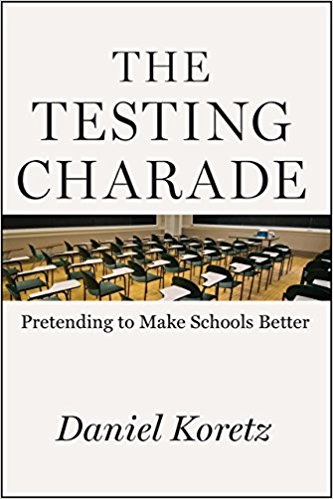
The Testing Charade: Pretending to Make Schools Better by Daniel Koretz

Tuesday, January 2nd, 2018

Testing Charade

The Testing Charade: Pretending to Make Schools Better by Daniel Koretz covers the unintended negative consequences of the test-based school and teacher accountability system forced on schools by federal legislation. In addition to outright cheating, he also points out how test prep leads to bad teaching and how non tested subjects are given short shrift. As policymakers remain in denial about the failure of this system, it is works like this that give us hope.

1. Beyond All Reason

  • Pressure to raise scores on achievement tests dominates American education today. In this book Daniel Koretz shows how it has lead to cheating, cutting corners with test prep that features bad instruction, and failure. Teacher evaluation is a mess with some teachers being judged by scores from students they didn’t teach. Test prep has lead to score inflation that is not echoed on NEAP tests. NCLB was a train wreck waiting to happen and it’s replacement, ESSA, is only a small step in the right direction. This book should help us all redouble our efforts to fight a system that has had a large negative impact on our national education system.

2. What Is a Test?

  • Achievement tests are like political polls in that they only test a small portion of the domain represented by the course or grade level. Most of the domain remains untested. Tests focus on factual knowledge as it is easy to test. Some things like critical thinking and problem-solving can be assessed, but not by standardized tests. Sampling content to be tested has three consequences. First is the error or uncertainty of the resulting scores. This can result in scores varying wildly from year to year for a given teacher. Second is that the sample skills tested are not fully representative of the entire domain.
  • The final and biggest consequence is that even the test makers warn that test scores should only supplement all of the other assessments teachers use. Unfortunately, such warnings are ignored by policymakers or never heard in the first place. This leads to many teachers only teaching the tested content while depriving students of other useful instruction.

3. The Evolution of Test-Based “Reform”

  • In 1983 the National Commission on Excellence in Education published A Nation At Risk, that viewed our education system as containing a rising tide of mediocracy noting short school years, a weak teaching force, and undemanding curricula. This seems to have initiated the push toward state-mandated testing. This shifted the focus away from holding students accountable for scores to using students’ scores to hold educators accountable.
  • In the 1990s the pay-and-punish approach became popular where schools were rewarded or punished as a result of test scores. In 2002 NCLB made this system national in scope. Schools were required to make Adequate Yearly Progress for all student groups of significant size. Obama’s administration made things worse by tying test scores to teacher evaluations. Due to gridlock in Washington, NCLB wasn’t updated until 2015 with the Every Student Succeeds Act (ESSA). This gives states more flexibility, which may make things better at least in some states. The focus on test scores will most likely remain.
  • The system fails for three reasons. 1) It focuses on a narrow slice of practice and outcomes. 2) It is a very high-pressure system. 3) There is no room for human judgment. Teaching is far too complex a job to evaluate without any judgment, and many things we value in schools aren’t captured by tests. If expectations were too low prior to 1983, it’s clear that today expectations are unrealistic for many of the students the laws were designed to help.
Share this:
Share this page via Email Share this page via Stumble Upon Share this page via Digg this Share this page via Facebook Share this page via Twitter Share this page via Google Plus

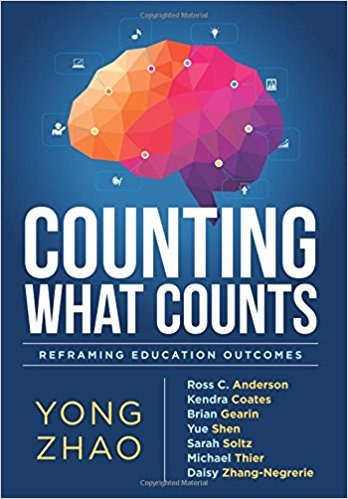
Counting What Counts: Reframing Education Outcomes by Yong Zhao & Friends

Tuesday, December 19th, 2017
Counting

Counting What Counts: Reframing Education Outcomes by Yong Zhao and friends takes on the current system with its focus on standardized tests and their sole focus on cognitive skills. Chapters are devoted to defining a variety of non-cognitive skills that are connected with success in life and the current status of how to assess them. They make a case for a new paradigm that would move the system towards more personalized learning and assessment with more focus on non-cognitive skills. Be sure to add this fine book to your professional development library.

Introduction – The Danger of Misguiding Outcomes: Lessons From Easter Island – Yong Zhao

  • Yong uses the story of how the natives of Easter Island overexploited the resources in a race to build ever bigger statues. He compares this to the current race to produce students with excellent tests scores. Here he makes the case that the obsession with test scores has and will continue to damage our education ecosystem. It has resulted in cheating, teaching to the test, focusing on students on the pass/fail border, and limiting the focus on subjects not tested. We are destroying teacher autonomy as we ignore real challenges like poverty, unsafe neighborhoods, and unequal access.
  • We are striving to produce a homogeneous population rather than supporting diverse talents. Routine knowledge and skills are stressed and they can easily be outsourced or automated. There are many negative side effects that are not considered unlike drug companies that must evaluate and publish side effects of their products. Creativity and non-cognitive skills are ignored. Students good at taking tests might not be good at anything else.

1. Numbers Can Lie: The Meaning and Limitations of Test Scores – Yong Zhao

  • Humans are too complex to be reduced to a single number, and such numbers should not be used to make life-changing decisions. Research indicates that IQ tests have limited predictive power. Personality variables like high and stable self-esteem appear to be decisive for life success. SAT and ACT tests are much less predictive of college success than a student’s high school GPA. After many years, the Common Core Standards don’t appear to make students college ready, while motivation, time management skills, and awareness of postsecondary norms and culture do.
  • A look at international tests shows that U.S. students have been bad at test taking for a long time. Such scores would suggest that by now the U.S. would be an economic backwater, but the facts suggest otherwise. It’s possible that countries that obsess about tests more than we do have discouraged the cultivation of creative and entrepreneurial spirits.
Share this:
Share this page via Email Share this page via Stumble Upon Share this page via Digg this Share this page via Facebook Share this page via Twitter Share this page via Google Plus

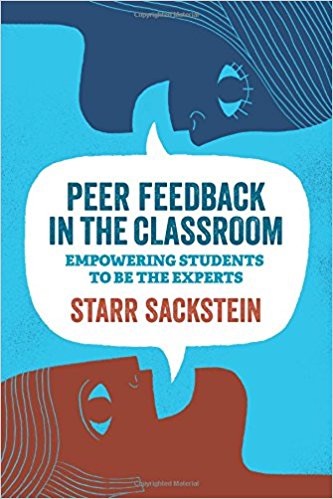
Peer Feedback in the Classroom: Empowering Students to be the Experts by Starr Sackstein

Friday, November 10th, 2017
Peer Feedback in Class

Peer Feedback in the Classroom: Empowering Students to be the Experts by Starr Sackstein tells the story of how she introduced peer feedback and all of its benefits into her classroom and how it can be applied in other subjects. If you try this, not only will your students develop knowledge and skills better, they will also learn vital collaboration and social skills. Buy one for your school now.

Part 1: The Power of Feedback – 1. The Rational for Teaching Students to Provide Peer Feedback

  • Every student has the potential to be an expert in something. Step one is to get to know the students so you can identify and expand their strengths. This can allow the students to share their strengths, perspective, ideas, and preferences. This shows students that there is no one right way to learn or teach. Today it is common for students to know more about some topics than teachers do. This should be exciting as students can share expertise. Technology is an area where this often happens.
  • The big idea here is to build trust and enthusiasm, which may not be easy and will take time. A key is to teach students self-advocacy. This will make it easier to address specific needs as students will bring them to you. This should start in kindergarten. This will also serve students throughout their lives. In short, students need to know when they need help and how to get it. Asking peers to help can be a great way to grow. Like all chapters, this one ends with reflection questions for teachers.

2. Developing a Supportive Classroom Culture

  • Your initial focus is to develop a welcoming respectful learning environment that supports risk-taking and honest sharing. Students need to be comfortable sharing their work and gain confidence in providing feedback. You have to know your students if you are going to develop rapport so start by finding out what you can about their lives and outside interests as you share some of yourself. Respect can’t be assumed; it must be taught explicitly and modeled continuously. Starr suggests you use surveys to learn about students and provides some samples.
  • Rituals and routines are essential to developing rapport. You don’t want to be too flexible and you must establish clear expectations. It might help to have students produce things that are intentionally inferior. They should feel safe correcting these items and see that it’s ok to be wrong. The teacher needs to model feedback intentionally so students can see what is expected. This will include praise and questions that should prompt students to think about how to improve their work. Be sure to share errors you have made. Once your rituals are in place you can give students more control as you facilitate from the side. Starr gives examples from her student newspaper class and another teacher’s fifth-grade class.

3. What Meaningful Feedback Looks Like

  • Step one is to set clear goals and criteria for success. For each assignment, you need to ask is this worthy of feedback? Use questioning activities and discussions and connect work to prior and future learning. Align learning objectives with standards and the big picture of the lesson. Make sure students see exemplars so they know what mastery looks like, but not ones that are identical to the current assignment.
  • Feedback needs to be specific, timely, and delivered in a way that works for the receiver. Focus on one or two points at a time. Rather than saying good job, let them know how they have improved their ability to do something specific. When you are critical, provide suggestions for how to improve something. Limit your feedback to the material covered. Avoid giving feedback too soon as you will end up owning the work yourself. Feedback from teachers should be private. Look for nonverbal cues as you give feedback and adjust your tone accordingly. If a student is shutting down say something encouraging and revisit the issue later.
Share this:
Share this page via Email Share this page via Stumble Upon Share this page via Digg this Share this page via Facebook Share this page via Twitter Share this page via Google Plus

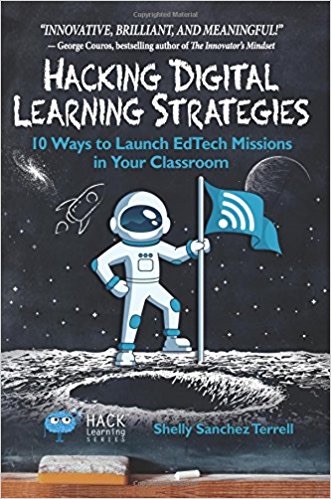
Hacking Digital Learning Strategies: 10 Ways to Launch EdTech Missions in Your Classroom by Shelly Sanchez Terrell

Saturday, November 4th, 2017
Hacking Digital Education

Hacking Digital Learning Strategies: 10 Ways to Launch EdTech Missions in Your Classroom by Shelly Sanchez Terrell offers specific lesson plans for integrating technology and engaging students in real-world activities. This book has everything you need including cautions that can help you avoid unexpected problems. Every school should grab a copy to pass around. Then get one for each teacher.

Introduction: Mission-based learning to inspire students

  • Technology has empowered our students, who now have the potential to learn anything in exciting ways. Students like to connect and share and now they can. They can also do scary things such as bullying and posting inappropriate images. While they navigate the digital world it’s time to guide them to make more meaningful choices. This book outlines ten missions to inspire students to reflect on their responsibilities as citizens navigating the digital and physical worlds. We should tie school lessons and activities to meaningful purposes that go beyond making good grades or passing tests.

Mission 1. Design a Game Walkthrough: Create a tutorial and teach others how to play.

  • Shelly starts with a story of how she decided to let her ESL students teach the world’s religions to each other. She knew they knew more than she did. It was totally hands-on as the students dressed in customary attire, played music, and showed artifacts. They practiced dances, learned songs, and participated in rituals. Everyone learned so much, including Shelly! She learned that learning is more powerful when students take the reins. Unfortunately, traditional teaching doesn’t work this way.
  • For this mission, your students will create a video tutorial about one of their favorite activities – playing games. Producing a video walkthrough develops students’ reading
    and writing skills with digital media. Students learn how to write simple, clear, and concise instructions. Like all of the missions in this book, Shelly provides plenty of detail so teachers should be ready to go. Teachers should have some exemplars to show students, involve students in giving and receiving feedback, and the idea that they can always make their work better. She recommends posting student work online and like all missions provides potential obstacles such as complaints from parents and administrators.

Mission 2. Go on a Selfie Adventure: Define yourself through images.

  • Taking selfies is an important part of a student’s sense of self, self-belief, and self-esteem. When students post selfies, they realize that their peers will perceive and rate them. Selfies they take often focus on their physical features and fail to capture their
    important moments, experiences, struggles, and successes. To complete this mission, students must take selfies that meet different challenges. Each challenge shows students how to capture better selfies that more effectively tell the stories of their lives. Each selfie also guides young content creators to build a strong digital identity.
  • Provide at least five criteria for this selfie mission. Possible challenges include taking a selfie with a pet, a favorite book, a favorite teacher, a hobby, or a favorite food. Instruct students to take selfies at different times of the day, in different environments, and engaged in different learning experiences. They will then create a digital story that they can share with the class. Ideally, the mission will motivate kids to reflect on what makes them unique and to experience life as individuals no matter how their peers perceive them. Depending on the class, teaching photography concepts may be necessary.

Mission 3. Create a Fictional Social Media Profile: Manage your digital footprint more purposefully.

  • Many schools filter and ban social media to avoid having students encounter the dark side of the internet on their watch. This means our learners are navigating the vast digital world with no guidance or support. For this mission, students create a social media profile for an historical figure and manage the posts, shares, and exchanges for at least five days. Their choices will either enhance or sully the credibility and reputation of their historical figures. After this experiment, students determine if their shares, posts, reactions, and behavior hindered their historical figures’ contributions to the world.
  • Based on what they learned, the class can come up with a list of social media best
    practices to protect their digital footprints and manage their digital reputations. This requires that they know the history surrounding their person as they apply it to the social media footprint. It also requires critical thinking as they evaluate their effort. Be sure that administrators and parents know what is going as some schools and parents don’t want kids on social media let along using it as a learning tool.
Share this:
Share this page via Email Share this page via Stumble Upon Share this page via Digg this Share this page via Facebook Share this page via Twitter Share this page via Google Plus

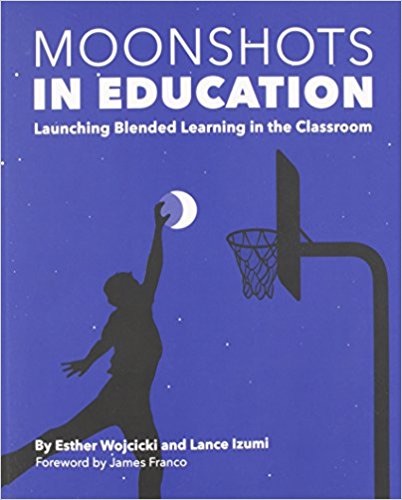
Moonshots In Education: Launching Blended Learning in the Classroom by Esther Wojcicki and Lance Izumi

Tuesday, October 17th, 2017
Moonshots in Education

Moonshots In Education: Launching Blended Learning in the Classroom by Esther Wojcicki (Woj), Lance Izumi, et. al. explains how technology can be blended with more traditional teaching methods to allow students to have some control of their learning content, style, place, time, and pace. It shines a light on innovative schools and countries, and generally ineffective teacher training. This belongs in every school and every parent’s hands.

Forward by James Franco

  • The power of online learning is due to immediate feedback, the student owning some of the learning, and the teacher playing a less central role. Blended learning is online learning used in conjunction with classroom learning. There is some element of student control over time, place, path and pace. According to Woj, the opportunity for blended learning is now. This is a moonshot moment!
  • The key ingredient for this kind of change is courage on the part of teachers and administrators. They need to trust students as they traditionally haven’t. Too many teachers today are scripted and teach to the tests. Parents are also overly protective of children and seldom even let them play outside unsupervised. Even when computers are used they often provide electronic worksheets, and many districts block rich learning resources like YouTube. Classroom whiteboards serve to reinforce the central position of the teacher as the “sage on the stage.” We need to teach students to search intelligently and understand the results of their searches. They must determine the credibility of the information they find and separate fact from opinion.

Part 1 – 1. The Online Learning Revolution

  • Three things make it powerful. They are: 1) there is immediate feedback 2) the students own the learning 3) the teacher does not play the central role. Blended learning involves online learning in conjunction with classroom learning. The online part allows for some element of student control over time, place, path or pace. Woj feels that the opportunity for blended learning is now and it is a moonshot moment.
  • School cultures need to change and it will take courage for teachers and administrators to make the necessary changes. It requires more trust in students and not scripting teacher behavior on a daily basis. Keep in mind that culture change is the hardest thing to do.

2. What is a Moonshot?

  • Moonshots involve goals that are difficult to achieve, perhaps seemingly impossible. The main goal of this book is to help teachers “shoot for the moon.” To quote JFK, “We choose to do this not because it’s easy, but because it’s hard”.
Share this:
Share this page via Email Share this page via Stumble Upon Share this page via Digg this Share this page via Facebook Share this page via Twitter Share this page via Google Plus