Archive for the ‘Education Books’ Category
Friday, March 4th, 2016
1. Classroom Management Essentials
- Your attitude underpins everything you do. It determines the way you speak to students, the type of activities and tasks you offer them, the amount of time you allocate to building relationships with them, and everything else. Student behavior is more often a cry for help than a personal attack. I you can feel empathy, you will see a total change in the way you view young people and a total change in your attitude towards them. When teaching, be constantly on the move, teach from each corner of the room, and use a calm, matter-of-fact approach, which is far more effective than shrieking
- The law of least intervention states that we should always use the least intrusive or least disruptive method of dealing with a student so that we don’t disturb and/ or attract the attention of other students in the room. You have to be consistent in every aspect. You can’t use your system one day and not the next. You can’t apply them to one student and not his friend. Rather than talk to a student so others can hear, ask certain students to join you outside the room for a corridor meeting where you can address their concerns. Make regular positive contacts with parents to get them on your side.
2. Establishing routines
- Rob believes that routines are important for an orderly class. One way you can maximize participation in your routines is to involve the students in the creation of them. Spend a few minutes on a one-to-one basis with some of the ringleaders in the group and explain how important it is to you, and the rest of the group, to have their cooperation. This chapter also provides a list of things a teacher needs to do to avoid avoidable disruptions during class.
Posted in Book Summaries, Education Books, Leadership Books | 1 Comment »
Wednesday, February 3rd, 2016
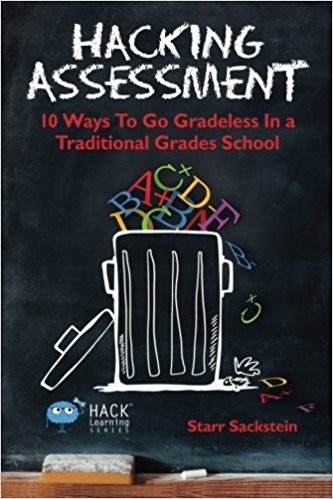
Goodbye, Grades; Hello, Growth
- When she started her new system, Starr found that her lower-level students liked the idea of not being judged as they lacked success with the traditional system. Rather than assigning additional nightly homework, students just continue working on the projects they were working on in class. Top students had to realize that top grades had little to do with learning and were more about their need to feel smart. Portfolios of work are key here and you can make YouTube videos to display student work. When grades are required, you can let the students work with you to determine grades together. More important is ongoing feedback from the teacher and other students.
Hack 1: Shift the Grades Mindset
- Changing how students think won’t be easy and will take time. Starr teaches seniors who have been living in a grading culture for a long time. In essence, you need to promote a growth mindset. For more on this topic see my summary of Carol Dweck’s Mindsets. Expect ongoing discussions and be ready to redirect the conversation to remind students that learning has no grades. Ask “what did you learn, what can you do now you couldn’t do before, and how do you know.” Be sure to make the standards clear, give examples of mastery, and use frequent feedback. Students should submit reflections and self-evaluations about what they learned compared to the standards. Eventually Starr’s students stopped worrying about grades and became more excited and eager to try things as they had been when they were younger.
Hack 2: Promote Buy-In
- Throwing out grades is a big change. Many people won’t get it right away so get ready for a lot of push back. You need to reach out to administrators first to get their support. Next you need to set up sessions to roll the idea out to other teachers and perhaps look for a beta team to roll it out with you. If that works you can later look to expand the effort to the entire school. Parents are next at the same time you work on changing student thinking. You should be able to find parent leaders who can be a big help once you persuade them. In addition to your own written and spoken explanations, you can provide links to articles by others who have tried it. Starr includes some in this book. Don’t expect the push back to stop and there are sure to be stakeholders who you don’t win over.
Hack 3: Rebrand Assignments as Learning Experiences
- You need to avoid assignments and tests that don’t allow for creativity and student growth. Chances are that some or most of your old lesson plans will have to be overhauled or discarded. Assignments need to allow students to show depth of learning. Allow for student autonomy and avoid single paths. Students should be able to modify the teacher’s assignments or create their own. All assignments should allow for revision (iteration). The lack of grades makes this possible. Expectations need to be tailored to each student so that all are capable of success. Try to find out what students are interested in or passionate about and try hard to fit that in. Try to connect everything to content and skills previously experienced. What’s the point of learning something if you don’t use it? When students have something ready to show, be sure that everyone can see it. This will help convince skeptics.
Hack 4: Facilitate Student Partnerships
- When the teacher is the only one in the room giving feedback, students miss opportunities for growth. Also, teaching what you know demonstrates a high level of mastery. These are two very compelling reasons to promote student collaboration. You need a plan to teach students how to be peer reviewers. This should involve encouraging them to model your behavior when it comes to giving feedback. Give student groups the chance to become experts in an area that each can share with others. If students post work on a blog, make sure that others leave comments. Student feedback probably won’t be of high quality at first, but encourage them to work on getting better at it. At the end of the chapter Starr tells how this works in her journalism class.
Hack 5: Digitize Your Data
- Starr believes that many teachers spend too much time collecting data which leaves too little time for using it in a meaningful way. She recommends that you create digital forms for students to fill out so that they essentially do the work of data collection. This sounds like an efficient way to find out where each student is in the learning process. With this data in hand you can adjust your instruction. Starr includes sample form. Secondary teachers can share student data with other teachers who have the same students. Students should periodically update their data. By the end of the year you can use this data for final evaluations.
- Starr also uses her smart phone to capture pictures and short videos of students in action that can be shared with students. You should consider using a classroom Twitter hash tag which can help students and parents see what is happening. She recommends that you take a look at Google forms.
Hack 6: Maximize Time
- Time is a problem for all teachers so if it is important to coffer with each student you need to extend yourself beyond class time. Starr has students complete conference forms before she meets with them and reviews student feedback as well. Students should also have questions for the teacher ready to go. You can use an app like Voxer, which allows conversations to extend over time. In-class conferences can take place while students are working on projects. Conferences should be tightly scheduled and last 3 to 5 minutes. You can follow up electronically as needed. You may need to see some students for additional time after class. With social media, students can often get questions answered by other students.
Hack 7 Track Progress Transparently
- Starr uses a spreadsheet with column headings like assignment, feedback, standards addressed, and strategy. Students are responsible for maintaining the chart which shows transparently what they have accomplished. If you are still in the middle of a traditional grading process you can try a test run and refine as you go. Parents can view the forms the students fill out to track progress as well. The focus should be on students demonstrating how they have grown with a critical eye for where they need to go next. Starr uses the text messaging app Remind to send general announcements and after class public praise to highlight examples of student learning. Formative assessment tools like Socrative and Kahoot help to check for understanding, provide feedback, and course correct. Students also complete a weekly self-reflection Google Form so students can engage in meta-thinking.
Hack 8: Teach Reflection
- Metacognition, or thinking about your own thinking, has been a hot topic in education literature, but not often stressed formally in the classroom. In a no-grades classroom, students replace grades with their own evaluation of their learning through reflection. Questions the teacher should consider are: 1) What did I do to succeed with this task? 2) How did I overcome the challenges I faced? 3) What evidence do I have that I have met some standards? 4) What do I still need to work on? 5) How might I do it differently? You can ask them at the end of each class to consider what they have learned, and be sure to model the process for them. Part of the process should focus on how what they are doing now connects with previous learning and the real world. Teachers need to provide feedback on students’ written reflections. Students may see this as extra work and push back, so be ready to convince them how this process makes their learning more effective. (Doug: Reflection requires recall, which is more effective in building long term memory than further study.)
Hack 9: Teach Students to Self-Grade
- It is vital to include students in the evaluation process as it shows what they really know. Understanding the level of mastery achieved is the goal and each student must decide if they achieved mastery. Forms containing rubrics connected to the standards will help as will checklists. If final grades are still necessary, have each student provide and defend their grade with the teacher. (Doug: I did this when I taught leadership courses for teachers working on administrative certification.) Use the grade determined during this conversation so there are no surprises. If there is disagreement, continue the conversation. Starr is inclined to err on the side of the student’s opinion as she doesn’t think grades matter very much. Although you might think this process would lead to grade inflation, that’s not what Starr has experienced. For the most part, students work to defend their proposed grade and that only serves to increase what they learn.
Hack 10: Cloud-Based Archives
- Report cards don’t tell you much about what a student knows and can do, but portfolios of their best work do. Contributions will be more frequent and contain much more detail. They are also a tool for growth and student reflection. If a teacher can see a student’s portfolio from the previous year, they are in a good position to know what to expect next. It is also important that students share their best work with a broader audience. Starr suggests that students do class presentations on completed projects and that parents be invited. Some class time should be devoted to project work due to its importance. The work also needs to be digitized in some fashion for storage, future reference, and possible sharing on the Internet. When it’s time for college applications, you will find that admissions offices are more use to viewing portfolios than ever. (Doug: My daughter was an art major so for her the portfolio was essential. Let’s hope it becomes essential for all majors.)
Starr Sackstein
- Starr is a high school English and Journalism teacher at World Journalism Preparatory School in Flushing, NY. She is also the author of Teaching Mythology Exposed: Helping Teachers Create Visionary Classroom Perspective. She does a blog for Education Week called Work in Progress in addition to her personal blog at StarrStackstein.Com where she discusses all aspects of being a teacher. She moderates #jerdchat and #sunchat and contributes to #NYedChat. If you are looking for an energetic, high quality speaker on the subjects of blogging, journalism education, and bring your own device (BYOD), contact her at twitter (@mssackstein) or FaceBook.
Posted in Book Summaries, Education Books, Leadership Books | No Comments »
Monday, November 9th, 2015
Staying Sharp: 9 Keys for a Youthful Brain Through Modern Science and Ageless Wisdom by Henry Emmons and David Alter offers advice that all of us can use to live a longer, healthier, and more fulfilling lives. Use this summary to see how you are doing and where you might need to improve. Then click at the bottom to purchase the book for the necessary details.
Henry Emmons and David Alter
- Henry is a psychiatrist who integrates mind-body and natural therapies, including mindfulness and compassion practices into his clinical work for Partners in Resilience in Minneapolis. He is also the author of The Chemistry of Joy and The Chemistry of Calm, and a popular workshop and retreat leader for both healthcare professionals and the general public.
- David is a psychologist with thirty years’ experience in health, psychology, neuropsychology, and clinical hypnosis, which he integrates in his work. He is a sought-after speaker, teacher, and trainer offering talks, workshops, and retreats to general and professional audiences. He is a cofounder of Partners in Healing, a center for holistic health in Minneapolis, and conducts his practice there.
Introduction
- Before the authors get to their Nine Keys to a Youthful Brain, they offer three chapters that discuss how the brain works and what happens as it naturally ages. Even though it does slow down, new neurons do form and new connections can be made. We also have less ability to pay attention, find learning more challenging, and take longer to retrieve information.
- They also focus on the concept of mindfulness, which deals with what you consciously do with your brain as you navigate your environment. This is called purposeful attention. There is nothing to stop you from being emotionally aware and cultivating a more joyful life. In addition to mind, we are also body and spirit.
The Nine Keys to a Youthful Brain
- 1. A Youthful Brain Loves Movement. Lack of movement is a strong reason behind many modern chronic health problems. Movement exercises the body and the brain. Exercise also helps reduce stress. There is lots of specific advice here and it’s never too late to start.
- 2. A Youthful Brain Is Well Rested. It is well established that sleep and other forms of rest are good for brain health. It also promotes good mood, memory, and healing. Short naps during the day also seem to be beneficial as long as you are sleeping well at night. If you are having trouble sleeping you might find the cause here along with tips for improving your sleep experience.
- 3. A Youthful Brain Is Well Nourished. This should be obvious. We generally eat too much, not enough fiber, and too much sugar. The authors suggest you try to eat unprocessed foods, emphasize plants and healthy fats, shift some protein away from meats, reduce sugars, drink more water, get more fiber and probiotics, and drink alcohol in moderation. There are good specifics on each of these issues along with tips to eat more mindfully.
- 4. A Youthful Brain Cultivates Curiosity. Curiosity activates the reward centers deep within the brain. It is a whole brain exercise that integrates the knowledge circuits of the left brain with the pattern-seeking circuits of the right brain. It will keep you fresh and lead to a longer, healthier, and more fulfilling life. If you cultivate your own curiosity, the world will be a more beautiful place and boredom will fade. If you seek out novelty you will become a constant learner. Get the book to learn how.
- 5. A Youthful Brain Stays Flexible. This runs counter to nature’s design, but has more to do with fear than destiny. If you respond more flexibly to change, life can become more enjoyable, rewarding, and fulfilling. One way to do this is to spend more time thinking about thinking (metacognition). The other keys contribute to your flexibility as will advice in this chapter.
- 6. A Youthful Brain Is Optimistic. Our brains are hardwired to be optimistic and you can increase your optimism with practice. It evolved to keep us engaged when logic suggests we give up. It’s benefits can be measured in terms of physical and mental health criteria. It will certainly make you more resilient as you age.
- 7. A Youthful Brain Is Empathic. Empathy arises from brain regions that regulate the quality of our relationships. You should practice empathy to help regulate your mind and behavior. This is how you influence the brains you interact with. Practicing empathy can make you more calm, content, and satisfied. Parents need to promote this quality in their children. One focus here is active listening, which is an important leadership skill.
- 8. A Youthful Brain Is Well Connected. The brain needs connection to others. Forming strong bonds early has a lasting impact. We need to learn how to create, grow, and maintain healthy social connections. This is very important as we age. Physical and mental health are necessary for positive social connections. If you do this right you will feel loved, respected, and listened to. This relates to Howard Gardner’s inter-personal intelligence. Even if you aren’t a natural connector, you can become one.
- 9. A Youthful Brain Is Authentic. No one wants to live someone else’s life. This key requires that you listen to yourself and live a life true to who you are. If you pull this one off, you should feel more confident and self-assured. This relates to Howard Gardner’s intra-personal intelligence and it can be increase with intent. Meditation can help.
Conclusion
- Even though I strongly suggest you purchase and read this entire book, this summary can act as a self-test that can help you see where you stand. While I’ve read most of this advice elsewhere, this book does a great job of pulling it all together. I was happy to see that I have already been following these keys. In my case, this book served to reinforce my approach to life, which has served me well. I’ve never missed a day of work due to illness, and don’t find life stressful. I enjoy the world and the people I meet, and people often tell me that I don’t look like I was born in 1947. I hope you are in the same boat, but if not, see what you can do to take the advice given here. You will also find tips here you can share with others at work or in your personal life. Good luck.
Posted in Book Summaries, Business Books, Education Books, Leadership Books | No Comments »
Tuesday, November 3rd, 2015
That’s Special: A Survival Guide to Teaching by Dan Henderson tells the story of a special education teacher who is still surviving in spite of some pretty wacky student behaviors he has faced along the way. Dan follows real stories in each chapter from this career with tools that other teachers can use to survive in difficult situations. If you click at the bottom of the page and buy the book, 10% will go back to local schools.
Still Surviving
- When educators tell real stories of what students do and how they deal with it, they are often told by the listener that they should write a book. Dan Henderson is one of those teachers who followed through. In addition to helping rookie and veteran teachers alike, this book will help parents understand what teachers have to deal with when faced by troubled students. In Dan’s case he was given the most troubled and thanks to his persistence and some trial and error, he is still surviving.
- The special children Dan deals with are the one’s who have not fully accepted social behavioral norms. While most are eventually classified for special education services, some are not. The trick is to socialize these students so they can learn and prosper rather than dropping out or being suspended. While Dan’s experience is limited to elementary school, I can assure you that much of it certainly applies to older students as well.
- Each of the ten chapters starts with a real story about a student Dan has worked with. While they can tear at your heart, Dan tries to see the humorous sides of their stories. When I dealt with difficult kids I tended to do the same thing, and I know it helped me survive. I can fully relate to Dan’s stories as I was a principal in a school where 20% of the students received special education services and many exhibited behaviors that would make them candidates for this book. Following the stories, Dan offers what he calls tools. This is advice will help teachers deal with and prevent the kind of behaviors described in his stories as they promote their own sanity and survival.
The Tools
- Tool 1 Conduct a student survey. This is perhaps my favorite tool. It suggests that you start the year by conducting a student survey. The goal is to find out as much as you can about a student like their interests, what they like about school, and what they don’t like. If possible find out what makes them angry and how they calm themselves down. Dan offers some specific questions you can use.
- Tool 2: Create a Behavior Management System. Dan recommends that rather than taking something away that you refuse to give them something. For these kids it is essential to take breaks that feature physical movement. (Doug: I’ve posted many pieces of advice along this same line.) Like others, Dan knows that exercise will improve mental performance. When you threaten consequences, you must follow through, but you also need to give kids a chance to redeem themselves. This allows a chance for self-regulation. Try to reinforce positive behavior and let students know that what they do is their choice.
- Tool 3: Build Routines and Respond to Needs. Dan believes that routines are important for the students he serves. He also has a system, which includes a request box, that allows students to let him know what their needs are. He even has an emergency signal for students to use. Needless to say, the routine allows for lots of movement and brain breaks and this type of student needs routines.
- Tool 4: Positive Reinforcement: Here Dan gives eight methods he uses. You might not agree with all of them, but I’m sure you will find some good ideas here.
- Tool 5: Tracking Data: Teachers need to keep track of what students know and can do. Dan recommends pretests so you know where students are starting. Your data sheets should be organized by standards. There is no mention of state test data here which makes sense as I don’t find it very useful.
More Tools
- Tool 6: Creating Centers or Stations: Centers allow kids to move and can be rigged to differentiate instruction. They also allow more time for individual and small group instruction. Technology can be involved here with computer activities, assessment, and direct instruction via videos.
- Tool 7: Differentiate Your Instruction: This is the holy grail for teachers. Ideally each student gets instruction at their own level. In addition to his centers, Dan gives many ideas here about how to reach this goal including multiple lesson plans or multiple approaches within the same lesson.
- Tool 8: Check for Understanding: If you lose a student early on, the rest of what you do is not likely to succeed. As you find out which students understand each item, it will inform your efforts to differentiate as you move forward. It is also necessary to know which students have the necessary prerequisite skills and knowledge.
- Tool 9: Higher-Order Thinking: Just because students have a special education tag doesn’t mean they can’t engage in real thinking. Open-ended questions can help. Projects can elicit thinking as well. In some cases letting students to work on projects together works.
- Tool 10: Make Your Lessons Fun! Look for good learning games and try to inject music when possible. Real-world connections can also make things fun and interesting. Make sure that students believe that their intelligence is not fixed and that you care about them personally. Be sure that the students’ best work is on display in school and on the classroom blog.
Reflections
- If you were considering a career in teaching special education students and read Dan’s stories, you might think twice. After reading about his tools, however, you should see how it can be a rewarding option thanks to his tools and your own hard work and caring. If you know anyone working with these types of students or considering it, see that they get a copy of this book.
Posted in Book Summaries, Education Books, Leadership Books | No Comments »
Monday, October 19th, 2015
Fixing Special Education: 12 Steps to Transform a Broken System by Miriam Kurtzig Freedman ©2009 should be included in all teacher preparation programs and placed in the hands of policy makers who can address Miriam’s 12 transformative steps. It can also serve as an excellent resource for parents. Be sure to click at the bottom of any page to get copies. Also see my Ed Week post Why Does Special Education Have to be Special?
Miriam Kurtzig Freedman
- Miriam is an attorney and former teacher who works with people who want better schools. As an immigrant to America at elementary-school-age, she was empowered by public schools and works to help educators teach all children. She works for the Boston firm of Stoneman, Chandler, & Miller where she gives lively and practical presentations, training, and consultations. She co-founded Special Education Day, authored eight books, has written for many national publications.
Summary
- Miriam starts with a mention of the 1975 Individual’s with Disabilities Education Act (IDEA) and how it forced schools to offer appropriate education for all students with disabilities (SWD). As a result, all students with disabilities have access to education. She also notes that it has spawned a system that is too often focused on legal procedures rather than educational outcomes. It has become dysfunctional, producing a huge bureaucracy and warring stakeholders. The amount of litigation and fear of litigation is huge, which points to a system that is clearly broken. This book will not only help you understand this field better, it will also suggest 12 necessary steps for systemic reform. They aren’t all easy, but they are necessary. The key vision is to free schools from the bureaucratic stranglehold and fear of litigation so that we can get back to focusing on teaching and learning.
The Good News
- Miriam highlights the idea that thanks to IDEA, schools can no longer turn students away just because they have high needs. We now have an inclusive approach and believe that all children can learn. Now nearly 14% of students in the US receive special education services. About 90% of the children served are not considered severely disabled, and it is this group that is the focus of this book.
- The rates of growth in the cost and the number of SWD have outgrown the rates for regular education. The process of identification and the creation of individual education plans (IEPs) is slow and expensive and has become ever more complex and out of sync with reality. Since these services are required by law, they are paid for first and what’s left is used for everything else. As special education has expanded, so have unintended consequences as we deal with excesses of the civil rights movement. Even President Ford realized at the time of the law’s passing that it was promising more than it could deliver, and promised a ton of administrative paperwork. Now Miriam urges us to fix the system.
Posted in Book Summaries, Education Books, Leadership Books | No Comments »