Archive for the ‘Education Books’ Category

Growing Up Global: Raising Children to Be At Home in the World – Book Summary

Monday, May 28th, 2012

Growing Up Global: Raising Children to Be At Home in the World (©2009, Ballantine Books: New York, NY) by Homa Sabet Tavangar will help you prepare children for today’s increasingly interconnected world. This is a hands-on, one-of-a-kind parenting toolbox that will give children a vital global perspective. This is a book that parents, grandparents, and educators can turn to again and again for inspiration and motivation as they strive to open the minds of children everywhere. It will also help adults gain global awareness as becoming a world citizen is a lifelong process. As it’s never too late to get started, you can start by clicking below to purchase this outstanding resource from Amazon. Every school and home should have one.

Share this:
Share this page via Email Share this page via Stumble Upon Share this page via Digg this Share this page via Facebook Share this page via Twitter Share this page via Google Plus

Quiet: The Power of Introverts In a World That Can’t Stop Talking

Thursday, April 19th, 2012

Quiet Book

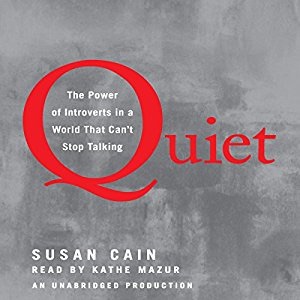
QUIET: The Power of Introverts In a World That Can’t Stop Talking by Susan Cain (© 2012, Crown Publishers: New York, NY) tells the story of how being introverted has its advantages and how the extrovert ideal is overrated. Learn how forced collaboration can stand in the way of innovation, and how the leadership potential of introverts is often overlooked. This book is passionately argued and draws on cutting-edge research in psychology and neuroscience. Leaders, educators, and parents need to pay attention to Cain’s findings. Also check Susan’s TED talk.Click the icon below to purchase this vital book from Amazon.

Susan Cain

  • Before she became a writer for outlets like the New York Times, Susan practiced corporate law for seven years, representing clients like JP Morgan and General Electric, and then worked as a negotiations consultant, training all kinds of people, from hedge fund managers to TV producers to college students negotiating their first salaries. Her clients have included Merrill Lynch, Shearman & Sterling, One Hundred Women in Hedge Funds, and many more. She is an honors graduate of Princeton University and Harvard Law School.
  • She prefers listening to talking, reading to socializing, cozy chats to group settings, and likes to think before she speaks (softly). She has never given a speech without being terrified first and explores this paradox in this book.

Rosa Parks Was an Introvert.

  • If Rosa Parks wasn’t an introvert, she may not have made such a big stride for racial equality. Susan starts with this story that shows how the extrovert Martin Luther King was able to use Parks’ example. Studies tell us that 1/3 to 1/2 of Americans are on the introvert side of this spectrum. There is no such thing as a pure introvert or a pure extrovert. Unfortunately, we live in a value system she calls the Extrovert Ideal. This results in parents apologizing for shy children who feel there is something wrong with them. In addition to Parks, Cain lists many other famous introverts.

Basic Descriptions

  • Extroverts tend to tackle assignments quickly. They make fast (sometimes rash) decisions and are comfortable multitasking and risk-taking. They enjoy the thrill of the chase for rewards like money and status.
  • Introverts often work more slowly and deliberately. They like to focus on one task at a time and can have mighty powers of concentration. They are relatively immune to the lures of wealth and fame. They prefer environments that are not overstimulating and 70% are also sensitive. They may be shy, which is a painful condition, but introversion is not. Cain provides a 20 item true/false test so you can determine where you are on this scale. I answered 16 items on the introvert side, which helps explain why I love doing DrDougGreen.Com.
Share this:
Share this page via Email Share this page via Stumble Upon Share this page via Digg this Share this page via Facebook Share this page via Twitter Share this page via Google Plus

SMART Strengths: Building Character, Resilience, and Relationships in Youth

Tuesday, April 3rd, 2012
Smart Strengths

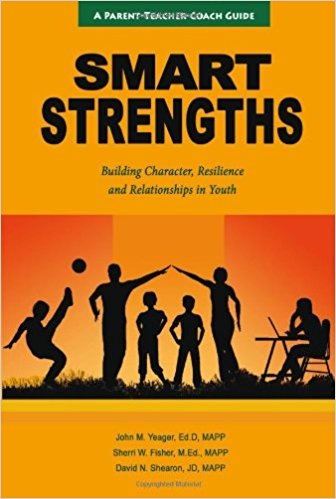
Smart Strengths: Building Character, Resilience, and Relationships in Youth by John M. Yeager, Sherri W. Fisher, and David Shearon (©2011, Kravis Publishing: Putnam Valley, NY) introduces the SMART model for changing a school one person at a time. It’s about bringing positive education to students and maximizing the students’ inherent strengths to foster character and achievement. It is research-supported and loaded with activities, resources, and real-life examples. Any school looking to improve should seriously consider the advice in this important book. Click the icon below to purchase one or more copies from Amazon.

The Authors

  • John M. Yeager, EdD is a nationally known consultant on strengths in schools. He is the Director of the Center for Character Excellence at the Culver Academies where he launched a model program on the integration of character strengths among the entire school community.
  • Sherri W. Fisher, MEd is an education management consultant, worksop facilitator, and coach specializing in creating learning, productivity, and change solutions for students of all ages, their families, and their schools. She is a founder of Flourishing Schools and her Student Flourishing education management practice.
  • David N. Shearon, JD is an expert in public education policy and leadership. For more than two decades he has lead Tennessee’s mandatory professional development program for lawyers. He works with Flourishing Schools on behalf of K-12 education and trains teachers in how to teach resilience to students in programs around the world.

The Big Idea

  • The key idea is that adults and youth need to shift from concentrating on improving weaknesses to focusing on assets. This needs to start with the adults learning about their own strengths, which makes it easier to identify strengths in others. Strengths are natural abilities or assets. They are all good, although they can be used badly as the explanation of strength buttons demonstrates. Strengths are measurable, subject to numerous influences, and some are more malleable than others. Research shows that people who use their strengths are more engaged in their life and work, are happier, and are more productive. You should start by taking the free 20-25 minute Values in Action (VIA) Signature Strengths Test. There is also a version for children 10-17 that you can access with your free adult account.
  • SMART stands for Spotting, Managing, Advocating, Relating, and Training. These are the five steps the authors include along with worksheets in each chapter to help you nurture your strengths and the strengths of those you work with.

Just What are the 24 Strengths in the VIA?

  • When I took the VIA, I found that my five top strengths were: curiosity and interest in the world; love of learning; judgment, critical thinking, and open-mindedness; self-control and self-regulation; and creativity, ingenuity, and originality. I hope this sounds like the right strengths for the work I do on this blog.
  • Here is a list of the other 19 strengths. When you take the VIA you will get this list sorted from top to bottom according to your strengths. Remember all strengths are good and that everyone has a list sorted from 1 to 24. All lists are equally good.
  • Forgiveness and mercy; Industry, diligence, and perseverance; perspective (wisdom); gratitude; hope, optimism, and future-mindedness; humor and playfulness; leadership; caution, prudence, and desecration; honesty, authenticity, and genuineness; fairness, equity, and justice; zest, enthusiasm, and energy; bravery and valor; kindness and generosity; social intelligence; citizenship, teamwork, and loyalty; appreciation of beauty and excellence; capacity to love and be loved; modesty and humility; spirituality, sense of purpose; and faith.
Share this:
Share this page via Email Share this page via Stumble Upon Share this page via Digg this Share this page via Facebook Share this page via Twitter Share this page via Google Plus

The Connected Educator – Book Summary

Tuesday, April 3rd, 2012

The Connected Educator: Learning and Leading in a Digital Age by Sheryl Nussbaum-Beach and Lani Ritter Hall, ( © 2012, Solution Tree Press: Bloomington, IN) introduces the concept of Connected Learning Communities as a three-pronged approach to effective professional development. This is valuable resource that all schools need to make available to teachers and teacher support staff. It contains step-by-step instructions, real-life examples, comprehensive research, a detailed glossary, and helpful hashtags and links.

Share this:
Share this page via Email Share this page via Stumble Upon Share this page via Digg this Share this page via Facebook Share this page via Twitter Share this page via Google Plus

Kindergarten: A book for teachers and parents

Tuesday, January 17th, 2012

KINDERGARTEN: Tattle-Tales, Tools, Tactics, Triumphs, and Tasty Treats for Teachers and Parents by Susan Case(©2011, AWOC.Com Publishing: Denton, TX) is full of great advice for educators and parents dealing with this critical age group. If you believe that getting preschool and kindergarten right is important, this book is for you. It has many endearing stories and will give you hundreds of ideas and websites to help with behavior, reading, disabilities, science experiments, and cooking. Click the icon below to purchase a book for yourself and your favorite kindergarten teachers and parents.

Share this:
Share this page via Email Share this page via Stumble Upon Share this page via Digg this Share this page via Facebook Share this page via Twitter Share this page via Google Plus