Improving Your School One Week at a Time: Building the Foundation for Professional Teaching and Learning by Jeffrey Zoul (© 2006, Eye On Education: Larchmont, NY) offers a year’s worth of practical and specific advice one Friday at a time. It is the kind of book that lets a principal provide the type of leadership that research sees as a solid way to support student achievement. It also helps a school community engage in continuous improvement. If you purchase the book, you can download each chapter and modify it to suit the purposes of your school. Click the icon below to order the book today.
Archive for the ‘Education Books’ Category
Improving Your School One Week at a Time – Jeffrey Zoul
Tuesday, January 10th, 2012Finnish Lessons – What We Can Learn
Wednesday, December 28th, 2011Finnish Lessons: What Can the World Learn from Educational Change in Finland by Pasi Sahlberg (© 2010, Teachers College Press: New York, NY) is the story of Finland’s extraordinary reforms and one that should inform policymakers and educators around the world, most of whom are on the wrong track. Sahlberg has lived and studied these reforms for decades and is a clever and engaging story teller. Click below to purchase this book today, and share with your colleagues.
Pasi Sahlberg, PhD
- Pasi is Director General of the Center for International Mobility and Cooperation at the Finnish Ministry of Education and Culture (CIMO) and a member of the board of directors of the Association for Supervision and Curriculum Development (ASCD). For the last two decades has analyzed education reforms and worked with education leaders around the world. He trains teachers and leaders as an adjunct professor at the University of Helsinki and the University of Oulu in Finland.
Forward by Andy Hargreaves
- Over the last 25 years the performance of American schools has steadily declined relative to international benchmarks. Meanwhile, reformers keep doing the same things. Force, pressure, shame, top-down intervention, competition, standardization, tests of dubious validity, easier passage into teaching, closure of failing schools, firing teachers and principals, and fresh starts with young teachers in new schools. Given this, there is no reason to expect Obama’s Race to the Top to succeed.
- Hargreaves warns us not to dismiss Finland’s success by using the excuse that we aren’t like Finland. He notes that in addition to being the leading authority on Finnish education, Sahlberg is also a world-ranking scholar with a world view developed by working at the World Bank and schools from many countries. It might be hard for some Americans to admit that someone else does education better, but they would all be wise to seriously consider the possibility.
Over Schooled But Under Educated – Why treat adolescence as a disease.
Friday, December 16th, 2011Over Schooled but Under Educated: How the Crisis in Education is Jeopardizing our Adolescents by John Abbott with Heather MacTaggart (© 2010, Continuum: London, UK) claims that by failing to keep up with appropriate research, the current educational systems continue to treat adolescence as a problem rather than an opportunity. Anyone dealing with the age group should read this thought provoking effort.
Thinking Fast and Slow How Your Brain Thinks
Friday, December 2nd, 2011
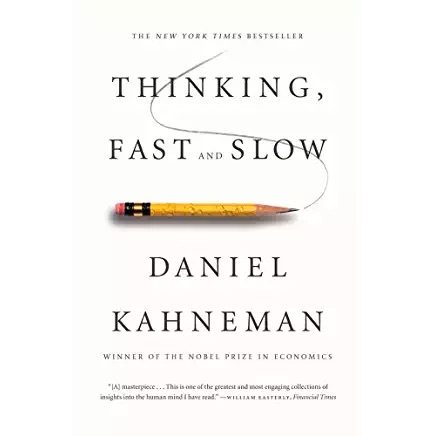
Thinking Fast and Slow: How the Brain Works by Noble Prize winner Daniel Kahneman takes us on a groundbreaking tour of the mind and explains the two systems that drive the way we think. The fast system is intuitive and emotional, The slow system is more deliberative and more logical. This highly anticipated book can help you better understand your own thinking and make better decisions.
Daniel Kahneman
- Daniel is the Eugene Higgins Professor of Psychology Emeritus at Princeton University and Professor of Psychology and Public Affairs Emeritus at Princeton’s Woodrow Wilson School of Public and International Affairs. He won the Nobel Prize in Economic Sciences in 2002 for his pioneering work with Amos Tversky (1937-1996) on decision making. The prize was awarded for his seminal work in psychology that challenged the rational model of judgment and decision-making. His ideas have had a profound impact on the fields of economics, medicine. and politics. He remains the only non-economist to win the Nobel in economics.
Introduction
- Daniel’s aim is to improve our ability to identify and understand errors of judgment and choice in others, and eventually ourselves. To do so he provides a richer and more precise language to discuss them. He uses the term System 1 to refer to fast thinking. This includes both variants of intuitive thought, the expert and the heuristic or rule of thumb system nonexperts use. It also includes the entirely automatic mental activities of perception and memory. System 1 turns out to be more influential than one’s experience suggests and is the secret author of many of the choices and judgments we make. System 2 is the slow, more deliberate, and more effortful system. It involves the choice to use it and concentration. System 2 is in charge of self-control. Together the form two characters that inhabit your mind.
Relationship between 1 and 2
- Daniel sites the Invisible Gorilla experiment (Check Dr. Doug’s Book Summaries for a summary of the book by Chabris and Simmons http://bit.ly/supqh7) as an example of how we can be blind to the obvious and blind to our blindness when we miss obvious things while engaged in deep System 2 thinking. System 2 is too slow and inefficient to substitute for System 1. This makes it hard to avoid mistakes but easier to stop the mistakes of others. Errors of intuitive thought are often difficult to prevent and biases are difficult to avoid.
- Both systems are active whenever we are awake. System 1 runs automatically, which means we can’t turn it off, while System 2 is normally in a comfortable low-effort mode. When System 1 runs into difficulty, it calls on System 2. System 2 is also activated when events violate the model of the world System 1 maintains.
When System 1 Has the Upper Hand
- Chapter 2 describes an experiment you can do that shows how your pupils dilate as you engage in demanding System 2 activity.
- In chapter 3 we find that System 1 is more influential on behavior when System 2 is busy. You are more likely to give in to temptation. A few drinks or a sleepless night will also impact self-control. Physical and emotional effort also tilt the control towards System 1. Fatigue and hunger cut into System 2’s effectiveness. (Dr. Doug: Would it help to let students take in sugar during a test?) Studies show that self-control and intelligence are correlated.
Now You See It by Cathy Davidson
Tuesday, November 8th, 2011Now You See It: How the Brain Science of Attention WIll Transform the Way We Live, Work, and Learn by Cathy N. Davidson (© 2011, Viking Penguin: New York, NY) shows how the phenomenon of attention blindness shapes our lives, and how it has led to one of the greatest problems of our historical moment. Many of us toil in schools and workplaces that were designed for the last century. Cathy believes we will find the answers we need in places where disruption and distraction are producing exciting results. She paints a picture of the future of work and education as she introduces us to visionaries whose ideas will effect us all. Drawing from the fields of brain science, psychology, education, management science, technology, and more, she presents a picture of an interactive world where each of us can make a valued contribution.