Archive for the ‘Education Books’ Category

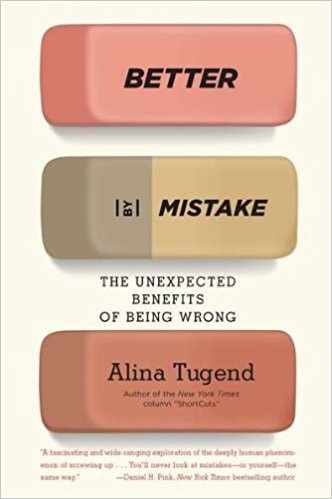
Better By Mistake – Improve your life and performance by Alina Tugend

Thursday, April 14th, 2011
Mistake

This eye-opening book features the big idea that embracing mistakes can make us happier and more productive in every facet of our lives. It examines the tension between the idea that we must make mistakes to learn, and the fact that we often get punished for them. © 2011, Riverside Books: New York, New York

Another Way of Learning

  • My teacher said I learn by making mistakes. Since I didn’t make any today, I guess I didn’t learn anything. This story is followed by the notion that when people think they must do everything perfectly, they can spend energy blaming each other rather than finding a solution. It results in defensiveness and accusations rather than apologies and forgiveness. Mistake prevention gets in the way of daring and innovation. Most of us think that mistakes make us look stupid.

(Re)Defining Mistakes

  • My teacher said I learn by making mistakes. Since I didn’t make any today, I guess I didn’t learn anything. This story is followed by the notion that when people think they must do everything perfectly, they can spend energy blaming each other rather than finding a solution. It results in defensiveness and accusations rather than apologies and forgiveness. Mistake prevention gets in the way of daring and innovation. Most of us think that mistakes make us look stupid.
Share this:
Share this page via Email Share this page via Stumble Upon Share this page via Digg this Share this page via Facebook Share this page via Twitter Share this page via Google Plus

The World Is Open – Curtis Bonk

Wednesday, March 30th, 2011

The World Is Open: How Web Technology Is Revolutionizing Education by Curtis Bonk tells the story of the ten openers that allow the Internet to change the face of education. Bonk builds on the work of Thomas Friedman’s The World Is Flat to explain how anyone can learn anything, anytime, anywhere. He uses abundant stories and examples to make his point. As you read you will want to check out places on the Web he mentions. Any educator, parent, student, or citizen should be familiar with Bonk’s Ten Openers. © 2009, Jossey Bass: San Francisco, CA.

Share this:
Share this page via Email Share this page via Stumble Upon Share this page via Digg this Share this page via Facebook Share this page via Twitter Share this page via Google Plus

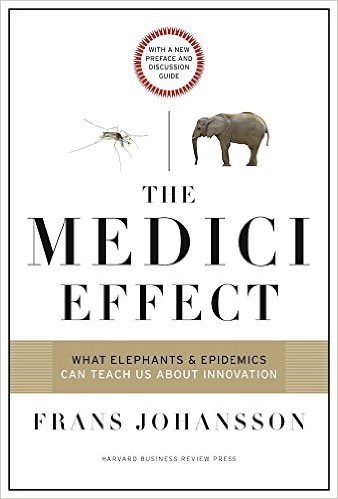
The Medici Effect: What Elephants and Epidemics Can Teach Us About Innovation

Friday, March 18th, 2011
Medici

This book by Frans Johansson looks at breakthrough insights at the intersection of Ideas, concepts, and cultures. He recommends that you expose yourself to a range of cultures, learn differently, reverse your assumptions, and take on multiple perspectives. The tips on brainstorming research are worth the price alone. Johansson is a writer and consultant who lives in New York City.

Cultures Are Different

  • How different cultures view a grasshopper? USA – pest, China – pet, N. Thailand – appetizer
  • How different cultures view the color yellow? USA – cowardice, Malaysia – royalty, Venezuela – lucky underwear

Why Study Multiple Cultures

  • Exposure to multiple cultures gives you more ways to look at an issue. Cultures can be ethnic, class, professional, or organizational in addition to geographic. This promotes open, divergent or even rebellious thinking. One is more likely to question rules, traditions, and boundaries. Languages codify concepts differently. Fluency in another language can promote varied perspectives during the creative process.

Learning Lots on Your Own

  • Broad education and self-education are two keys to learning differently. Most fundamental innovations are achieved by people who are either very young or very new to the field. Learning fields on your own increases the chance of approaching them from different perspectives. Darwin: “all that I have learned of any value was self-taught.”

Prepare Your Mind

  • Louis Pasteur found a forgotten culture of chicken cholera bacteria. When chickens were injected with it they got sick but recovered. These same chickens when injected with a fresh culture survived. Pasteur realized that the chickens had been immunized and that his old culture served as a vaccine.
Share this:
Share this page via Email Share this page via Stumble Upon Share this page via Digg this Share this page via Facebook Share this page via Twitter Share this page via Google Plus

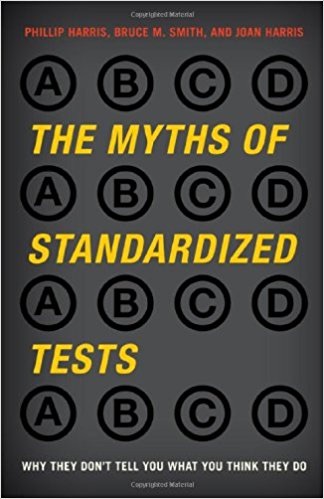
The Myths of Standardized Tests: Why They Don’t Tell You What You Think They Do

Saturday, February 26th, 2011
Myths

The Myths of Standardized Tests: Why They Don’t Tell You What You Think They Do by Phillip Harris, Bruce M. Smith, and Joan Harris (with a little help from ten of their friends) is a MUST read for anyone fighting the current testing system.

Phillip Harris

  • Phillip is executive director of the Association for Educational Communications & Technology. He was a faculty member of the faculty of Indiana University for twenty-two years in Psychology and Education.
  • Bruce M. Smith was a member of the editorial staff of the Phi Delta Kappan for 27 years and he retired as editor-in-chief in 2008.
  • Joan Harris has taught grades one through three for 25 plus years. In 1997 she was recognized by the National Association for the Education of Young Children as the outstanding teacher of the year.

The Myths They Debunk

  • High test scores at a school means it has high achievement. Test scores provide objective achievement information. Rewards and punishments based on tests motivate. Improved test scores imply improved learning. All valuable content is tested. Standardized test scores are the best form of assessment. If you move to a district with high scores you will do better.

It’s An Emergency

  • The authors believe that our schools are under attack by the tests that continue to seep into our schools. They sap the energy and enthusiasm of educators and drain the life from children’s learning. Some of the motivation is commercial and some is caused by “the tyranny of good intentions.” In this book they hope to persuade you of their case and arm you with some basic understanding of standardized tests and the mythical assumptions that underlie them that are used to make policy and drive practice. The lives of our children and our future is at stake. Our schools do have problems, but they won’t be fixed by another truckload of test scores.
Share this:
Share this page via Email Share this page via Stumble Upon Share this page via Digg this Share this page via Facebook Share this page via Twitter Share this page via Google Plus

Reach – Building Communities & Networks for Professional Development

Monday, February 21st, 2011

This book by Jeff Utecht is a great place to start for anyone who wants to join the growing community of tech savvy educators, parents, and citizens. Jeff is an international educator and technology consultant. He has taught in the U.S., Saudi Arabia, China, and is a Technology & Learning Coordinator at the International School in Bangkok Thailand. His global experience is key to understanding how the Internet is changing education. He also has a learning disability, so this book and his career are amazing accomplishments. Read it to gain a sound understanding of topics like Web 2.0, Communities and Networks, RSS feeds, Blogs, Wikis, Twitter, Facebook, Skype, and Google Buzz.

Click here for my summary of Reach.