Archive for the ‘Leadership Books’ Category

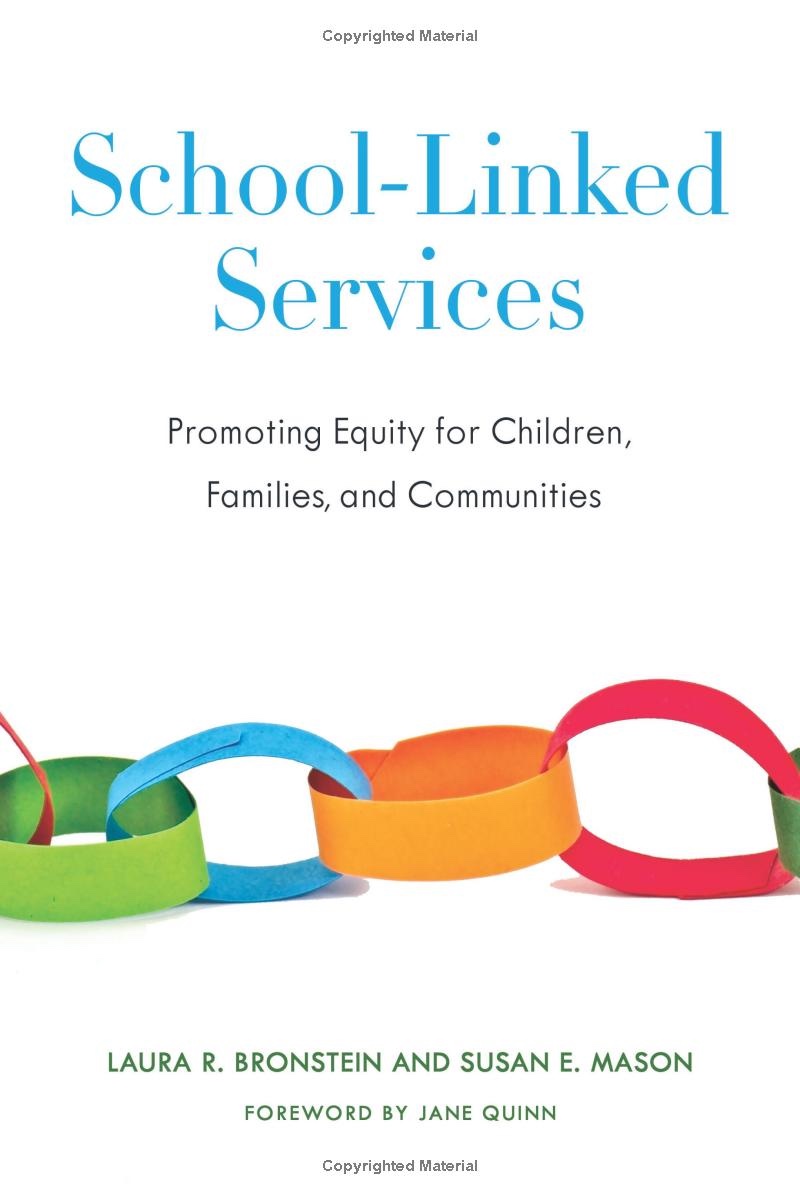
School-Linked Services: Promoting Equity for Children, Families, and Communities by Laura Bronstein and Susan Mason

Monday, October 9th, 2023

School
School-Linked Services: Promoting Equity for Children, Families, and Communities by Laura Bronstein and Susan Mason contains extensive advice for anyone interested in linking a school with one or more other service providers in their community. It offers summaries of successful programs and demonstrates how schools with linkages out perform schools with similar demographics that lack linkages in many ways. This is a must-read for leaders of any organization that serves schools.

Introduction

  • This book consolidates the available literature on this topic along with a wide range of conversations with diverse key informants. In doing so it illustrates how partnerships between schools and communities support educational success. It covers a wide range of types of school-linked services and how they can break the cycle of poverty.
  • They aim to provide enrichment activities that are often only available at schools serving wealthier populations. The services include after-school and summer programs, early childhood education, health and mental health services, family engagement, youth leadership programs, and others.

1. Making the Case for School-Linked Services

  • A teacher’s ability to teach can clearly be hampered by issues outside their control. We must not view a student’s academic struggles in isolation from external factors. Low academic achievement is highly correlated with poverty. Distracted, hungry, worried, and ill children have a more difficult time learning. Absenteeism and mobility add to these problems. Partnerships must be fruitful, as schools cannot afford to spend resources just to have a partner.
  • The Center for Disease Control has a model called Coordinated School Health (CSH) that integrates health promotion efforts across: health education, physical education, health and nutrition services, counseling, psychological and social services, safe school environments, staff wellness, and family and community involvement. These partnerships are progressive as they aim to do more for students who need more.

2. The School

  • Although state aid to schools serves to reduce unequal funding, the decentralized system in the US results in kids in poor school districts having fewer resources, less experienced teachers, and greater teacher turnover. While teachers and other school personnel are trained to teach and do other jobs, they are not trained to deal with issues that children face beyond school. This needs to be part of their professional development. Administrator vision is vital.
  • Since students are the ones with the most to gain or lose, their voices should be heard when it comes to decisions that will reform what schools do. If you are a school leader, you need to do what you can to create trust with poor and minority families. (Doug: I did this by hiring as many Black people as I could, especially for support staff positions.) Make sure that all of your families know that their input is welcome. Kids only spend about 10% of their time from birth to age 18 in school.

3. School-Linked Services Today

  • The authors start by discussing the nature of school-based health centers, family resource centers, partnerships with businesses, expanded school mental health services, and finally, full-service community schools, which offer all of the other services. Such full-service schools can grow out of nonprofit organizations, school/city districts, or counties. In all cases, it is necessary to rethink how a school is managed, funded, and staffed. It’s important to see community members as customers and to involve students in community projects. Businesses are usually involved as well.
  • The rest of the chapter (64 pages) contains details of three nonprofit initiatives, three school district/city-lead initiatives, and one county-wide initiative. Anyone thinking of starting or expanding a full-service school can draw on this information for ideas and guidance. As each of these exemplars are different from each other, so you should expect yours to be different as well as you strive to meet the unique needs of your community. Flexibility should also act as a guidepost. I suggest you start by reading each of the brief overviews and funding sources for ideas.
Share this:
Share this page via Email Share this page via Stumble Upon Share this page via Digg this Share this page via Facebook Share this page via Twitter Share this page via Google Plus

Bad at Math: Dismantling Harmful Beliefs That Hinder Equitable Mathematics Education by Lidia Gonzalez

Monday, September 11th, 2023

Math
Bad at Math: Dismantling Harmful Beliefs That Hinder Equitable Mathematics Education by Lidia Gonzalez points out the fact that most people in our society are comfortable at saying they are bad at math. This certainly implies that there is something wrong with how we present and teach math in general. She also points out that the math achievement gap between poor and minority kids and wealthier children is likely an opportunity gap that perpetuates the problem. While you may not be able to solve this problem, you should do your part by starting conversations with parents, teachers, administrators, and policy makers and by sharing this important book.

Introduction

  • It is somewhat alarming that most of our population is comfortable admitting publicly that they are bad at math. This behavior is also accepted by our culture and the media. This tells us that the way we conceptualize and teach math has to fundamentally change. What is needed is a growth mindset that tells you that you can get better at anything with effort. It’s vital that teachers have growth mindsets. This chapter will help.
  • It is clear that existing reforms have fallen short. We also know that Black and Hispanic students struggle more with math than their white and Asian counterparts. This feeds and extends existing inequalities. It is important, therefore, to improve the mathematical experience of typically marginalized students. The main goal of this book is to tell us how to do this.

1. What Does It Mean to Be Good at Math?

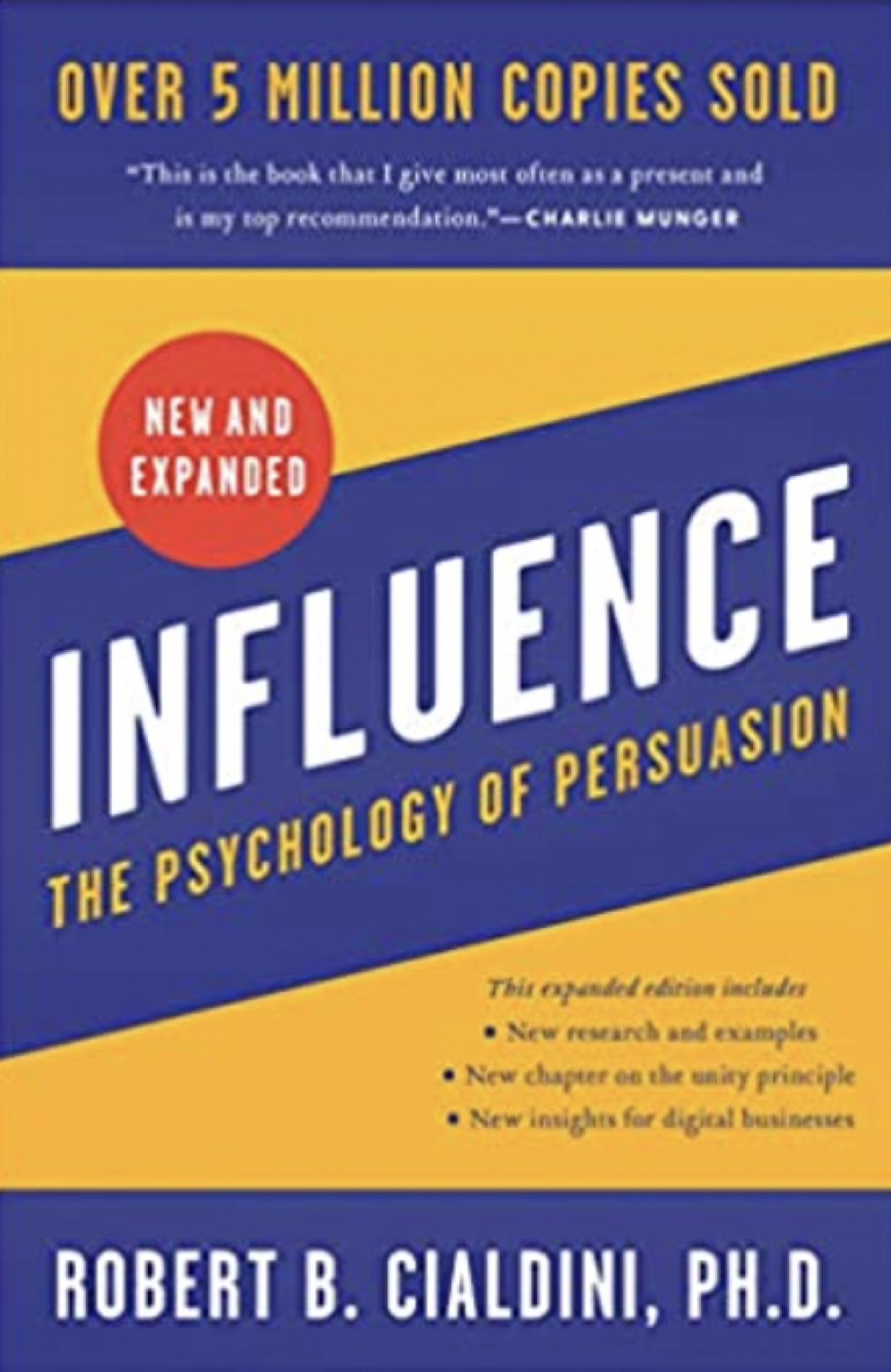
Influence: The Psychology of Persuasion by Robert Cialdini

Monday, July 24th, 2023

Influence
Influence: The Psychology of Persuasion by Robert Cialdini describes the psychological process in people when they say yes and explains how these insights may be applied. While it was written as a business book, it also applies to teaching and everyday life. Be sure to put a copy in your professional development library.

1. Levers of Influence: (Power) Tools of the Trade

  • Animals and people both have automatic behaviors that are set off by a single stimulus. For example, turkey mothers will care for an inanimate object if it makes the cheap sound of a baby turkey. Likewise, humans are much more likely to do a favor for a stranger if they are given a reason starting with the word because. Humans also think that expensive things are good as the word cheap is seen as inferior rather than inexpensive. Believing an expert is another automatic behavior. Life is complex and without our automatic rules of thumb, we wouldn’t get much done. It’s important, however, to realize when we have the time and the need to engage in more complex thinking.
  • The contrast principle tells us that how we perceive something depends in part on things we have recently perceived. When two hands placed respectively in hot and cold water are moved to room temperature water, the one that was in hot water feels cold and the one that was in cold water feels hot. Also, seeing highly sexually attractive people on TV may make our spouses seem less attractive. There are several other examples here dealing with selling strategies.

2. Reciprocation: The Old Give and Take

  • A basic norm of human culture is the obligation to somehow repay a person who gives or does something for you. Such future obligations often lead to continuing relationships. People can use this to their advantage by giving something before asking for something. Politicians do this and they are also easy to buy. So are scientists.
  • People can also ask for a more extreme initial concession prior to lowering the ask. This often works a we often see the lesser obligation preferable to the greater one. The trick is to make your first offer just high enough. This usually makes one feel more responsible and satisfied. If someone gives you something for free, be ready for them to ask for something. Consider denying these requests.

3. Liking: The Friendly Thief

  • We are more likely to say yes to someone we like. People who want something are therefore likely to do things to increase their likability. Being physically attractive is one way to increase likability. (Doug: This suggests that it’s a good idea to bet fit, well groomed, and well attired. In other words, dress for success.) We are also more likely to like people who are like us. Good salespeople also use this to their advantage. Associating something with someone famous has been shown to work.
  • Praise is also used to increase likability. Giving praise to a third party that you know will get back to the person your are praising is effective. You can also use praise to give a person a reputation to live up to. Repeated contact in positive situations helps. Persian curriers knew that baring bad news was risky and even life threatening as the ancient Persians did kill the messenger. In all occasions associate yourself with as many good things as possible and visa versa. We won, they lost. Be alert for situations where you are liking someone more than would be expected. In such cases separate your feelings about the requester from the offer itself.
Share this:
Share this page via Email Share this page via Stumble Upon Share this page via Digg this Share this page via Facebook Share this page via Twitter Share this page via Google Plus

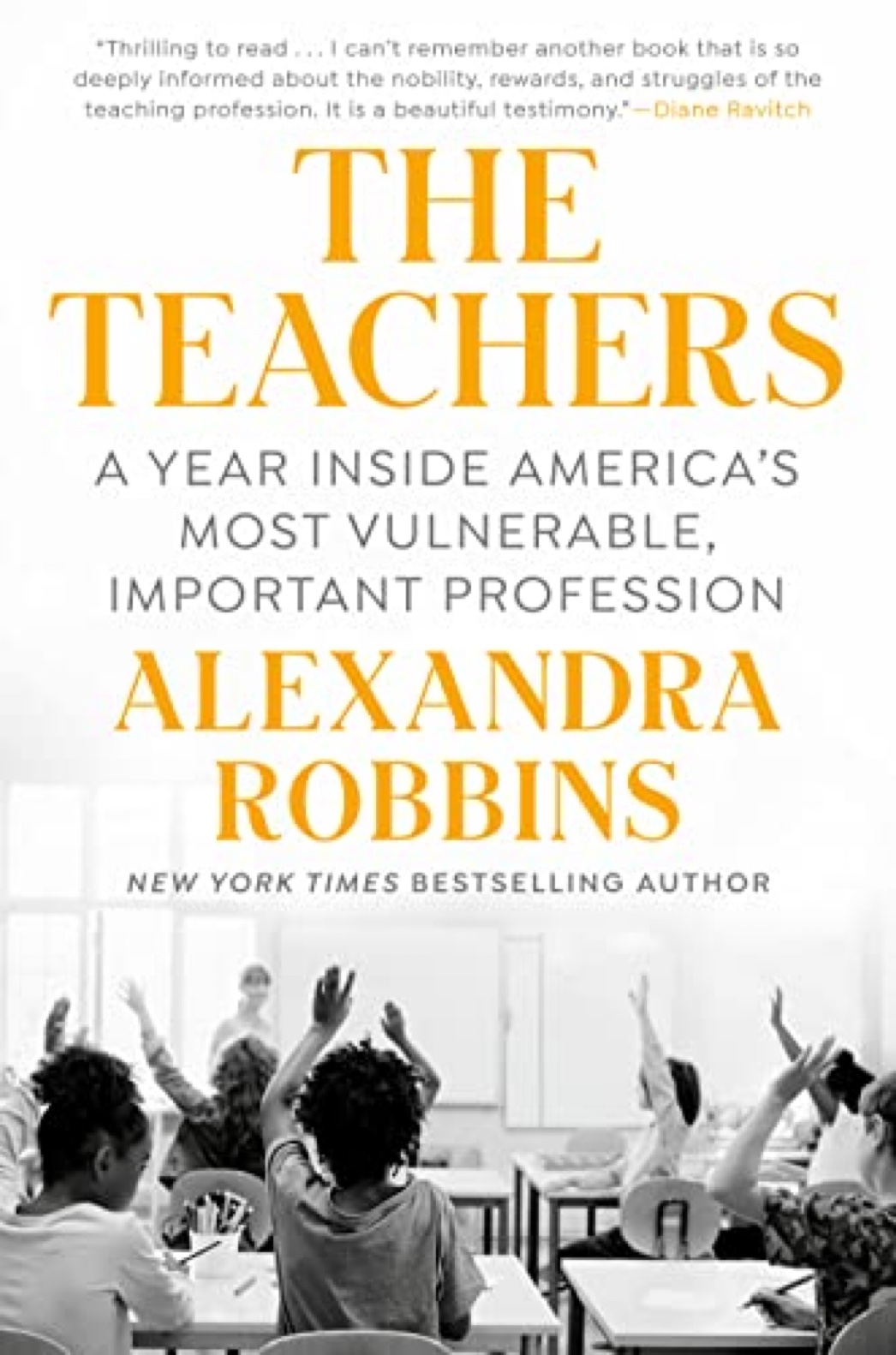
The Teachers: a Year Inside America’s Most Vulnerable, Important Profession by Alexandra Robbins

Friday, June 9th, 2023

The Teachers
The Teachers: a Year Inside America’s Most Vulnerable, Important Profession by Alexandra Robbins is a fine piece of qualitative research that uses three year-long case studies and hundreds of interviews as data. It details the many difficulties that teachers may face. Even though we don’t know the percentage of teachers facing each difficulty, we do know that they the are somewhat common. (Doug: I’ve seen them all.) This should gain more respect for the profession. I only wish every journalist, pundit, and parent could read it. Get your copy today.

Prologue

  • To gain the expertise necessary to write this book, Alexandra conducted case studies of three teachers over an entire school year. She conducted hundreds of interviews with other teachers. She also did some substitute teaching and a semester of long-term substitute work. Each chapter contains stories from the three teachers she studied for a year including aspects of their private lives. They all appear to be outstanding teachers. Penny teaches 4th Grade, Rebecca teaches 6th grade math, and Miguel is a middle school special education teacher. The final section of each chapter contains anecdotes and generalizations from the remainder of her research.

1. August: Introduction: “It Makes My Soul Happy”: What Teachers Endure and Why They Stay

  • Here we meet the three teachers Alexandra studies along with some of their issues. While many think that teachers have the summer off, they are often required to attend professional development sessions that vary widely in quality and effectiveness. Funding is often short for supplies so they often purchase what they need themselves. Leaders are often a source of frustration as they can’t reliably find the money for supplies or substitutes and require teachers to cover additional classes.
  • Teacher salaries seem to be the biggest problem today as they haven’t kept up with inflation. (Doug: My starting salary of $8,500 in 1971 would be over $63,000 today.) Nationally they make 23% less than the average professional with comparable training, and up to 30% less in some states. The real reason for teacher shortages is mostly poor compensation. By some estimates 70% of teachers work a second job during the school year and most get summer jobs. They are vital, but not generally highly respected.

2. September: “STOP TOUCHING MY CAR”: Parent Aggression and the Culture of Teacher Blaming

  • This book focuses on anecdotes that make for a great series of case studies, but do not feature much quantitative data to support generalizations. The main theme is that parents often blame the teacher for the shortcomings and misbehavior of their children. They often send emails when grades are an issue and expect teachers to change them. Administrators aren’t always supportive of their teachers. There are many anecdotes here that seem believable to me.
  • Another theme deals with how teachers have to contend with special ed students and gifted students in the same class. Special education students in general education classes often get sent back to the room of their special education teacher. Ironically, this may seem like a reward. There are good tips here for how to deal with situations where teachers overreact to student behavior.

3. October: “I Would Have Done It for Any Child”: Teachers Are Heroes – but They Shouldn’t Have to Be

  • Here we learn that Penny the 6th grade math teacher left an abusive husband and was mostly shunned by a teacher clique where she taught. (Doug: I’ve seen such cliques.) The middle school special education teacher Miguel suffers from bad administrators who want to mainstream all special ed students without planning, training, or support staff. Mismanagement has impacted his health.
  • Rebecca the fourth grade teacher teaches students about mindsets. (Doug: See my summary of Mindset by Carol Dweck.) She wishes that she could differentiate (individualize) learning more as a one-size-fits-all lesson plans only work well for the kids in the middle. Like many, the amount of paperwork leaves little time for her own life.
  • Alexandra finds that most teachers will do anything they can for students in need. She cites one teacher who adopted a student and another who donated a kidney. Most teachers (94%) spend their own money on supplies and personal times for students and families. While 44% leave by five years, districts with strong mentoring programs do much better. While cliques are an issue, teachers do a lot to support each other in their buildings and beyond via conferences and online resources (Doug: Like this blog for example.)
Share this:
Share this page via Email Share this page via Stumble Upon Share this page via Digg this Share this page via Facebook Share this page via Twitter Share this page via Google Plus

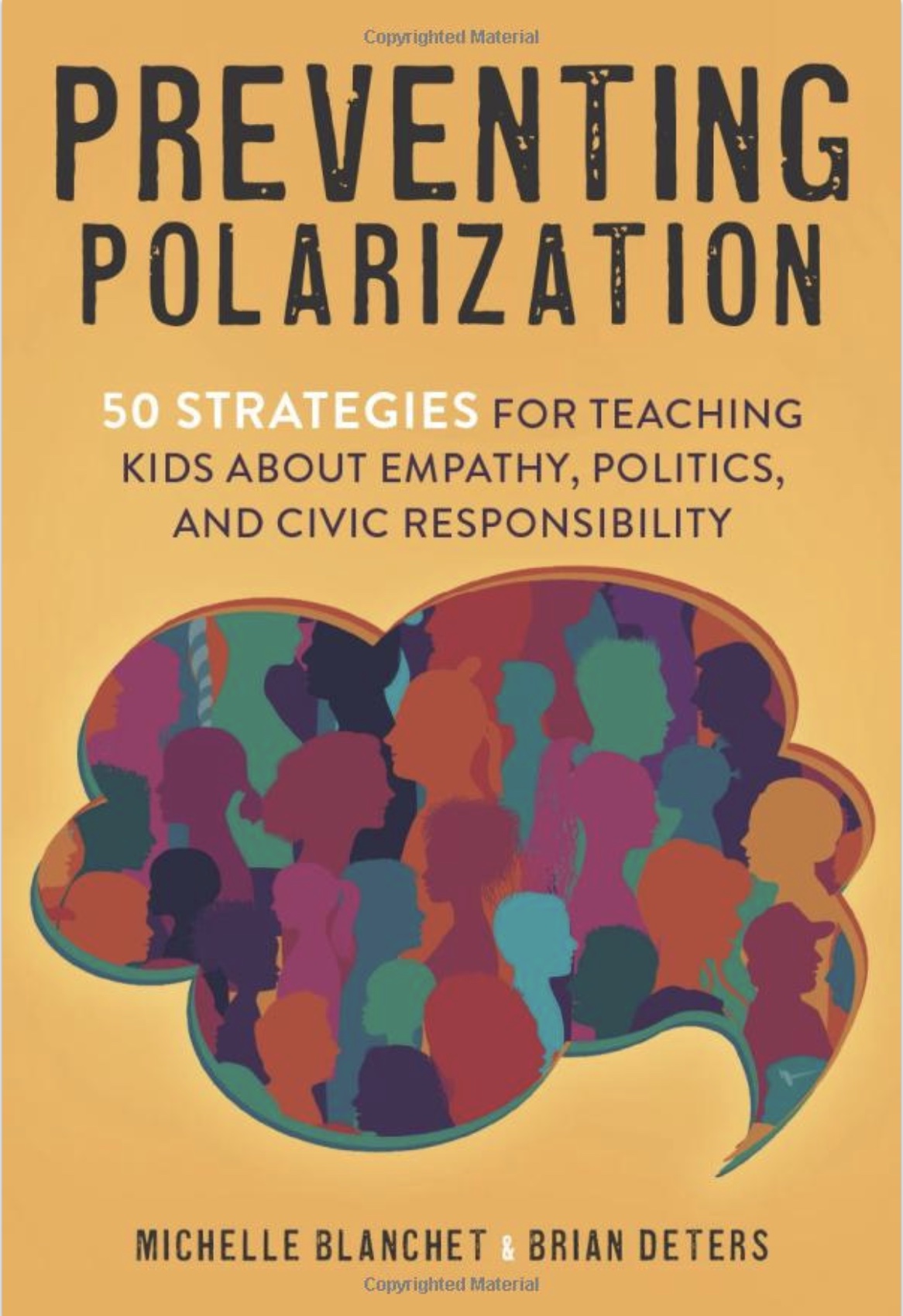
Preventing Polarization: 50 Strategies for Teaching Kids About Empathy, Politics, and Civic Responsibilty by Michelle Blanchet & Brian Deters

Monday, April 10th, 2023

Polarization
Preventing Polarization: 50 Strategies for Teaching Kids About Empathy, Politics, and Civic Responsibilty by Michelle Blanchet & Brian Deters is aimed at social studies (civics) teachers but is also a fine resource for teachers and parents of students in upper elementary school on up. We need to encourage students to take on controversial topics by gaining knowledge of all sides of each argument. They should also be allowed to engage in open-ended problem-solving, creative hands-on activities, collaboration, and community service.

Introduction: Why we need to stop avoiding civics and politics

  • Not being able to talk about politics is a communications failure. We all need the same things and we all most likely want what’s best for everyone. The authors hope to help teachers and parents open communication on political problems so that they can be better solved, which won’t happen if they are ignored. Learn how to teach the 4 Cs: critical thinking, collaboration, creativity, and communication.

1. Practice Sense-Making

  • Try to let students experience the world as much as possible, and let them try to make sense of what they experience. People learn best when they are actively involved, and what may seem like play can often be active learning. Ask more how and why questions and fewer what questions. Ask how something works using the examples the authors give.
  • As for politics, beware of supporting a candidate based on their identity rather than their policies. Make sure they understand how the actions of the government impact their lives and encourage them to get involved. Polarization happens in times of rapid change.

2. Keep Asking Questions

  • Children are very curious as they try to figure out how the world works. As we age, however, we become less curious as we no longer think we need to understand more. The trick, therefore to becoming a lifelong learner is to stay curious. You do this by questioning everything. It’s the teacher’s job to ask a lot of questions to encourage critical thinking and to encourage students to ask questions themselves. Teachers can use question quotas and other techniques included here.

3. Cultivate Humility

  • A wise teacher once told me “Dr. Green, you have to keep your ego out of it.” The other thing you need to do is to help students do the same. For this you need an open mind, be ok with being wrong, and learn from mistakes. Learning how to manage your own emotions is vital if you want to model this behavior. A respectful disagreement involves being hard on the problem and easy on the other person.
  • You want kids to be confident, but not overconfident. Be certain not to embarrass anyone for being wrong. Finally, the authors suggest conducting structured debates where students make statements, present data, explain how the data supports their statement, prepare for rebuttal, and present a conclusion.
Share this:
Share this page via Email Share this page via Stumble Upon Share this page via Digg this Share this page via Facebook Share this page via Twitter Share this page via Google Plus