Archive for the ‘Leadership Books’ Category

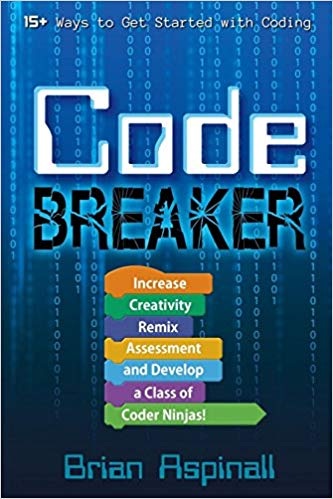
Code Breaker: Increase Creativity, Remix Assessment, and Develop a Class of Coder Ninjas! by Brian Aspinall

Tuesday, October 16th, 2018
Code Breaker

Code Breaker: Increase Creativity, Remix Assessment, and Develop a Class of Coder Ninjas! by Brian Aspinall shares his experiences and those of some colleagues in the process of teaching coding from kindergarten to high school. It deals with computational thinking which is a fundamental skill at the heart of engineering and mathematics. It includes coding and much more, and can even happen without technology. Make sure your school has a few copies.

Preface

  • We live in an era of access as answers to knowledge-based questions can be quickly retrieved. As for coding, we have been teaching that in many forms since the 1960s. Like many, Brian is a self-taught coder. He offers ten reasons for teaching coding. They include building self-confidence, allowing students to create, self-expression, teaching storytelling, opportunities for risk-taking, reinforcing math principles, and teaching problem-solving. It is required for many future jobs, developing teamwork, and helping humanity.

1. The Clarity of Poop

2. A Wing and a Papert

  • Here we get some learning theory. Assimilation happens when you incorporate new things into your current understanding. Accommodation happens when you learn new things and have to change what you currently understand. People learn best when they are involved in making or constructing things in the real world. To do this you need some control over your own learning. Learning should be concrete and computers are a good way to teach this. Computational thinking is a fundamental skill and it is at the heart of engineering and mathematics.
  • Coding Rock, Paper, Scissors to Teach Probability
  • Indigenous Trail: Trees and Coding a Micro:Bit Compass
  • What Is Computational Thinking? Computational Thinking can take on a variety of forms.
Share this:
Share this page via Email Share this page via Stumble Upon Share this page via Digg this Share this page via Facebook Share this page via Twitter Share this page via Google Plus

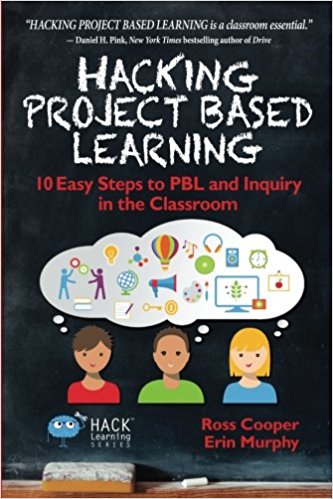
Hacking Project-Based Learning: 10 Easy Steps to PBL and Inquiry in the Classroom by Ross Cooper and Erin Murphy

Wednesday, October 3rd, 2018
Hacking PBL

Hacking Project-Based Learning: 10 Easy Steps to PBL and Inquiry in the Classroom by Ross Cooper and Erin Murphy is a must read for any teacher interested in this mode of teaching. Their ten hacks provide a path for more student-centered learning in any classroom. Be sure to get some copies for teachers you know.

Introduction

  • Project-Based Learning (PBL) is messy. The authors have done everything in their power here to de-clutter and tidy up the mess to make it as approachable as possible. PBL may not happen overnight in you classroom or school, but it won’t happen if you don’t get started. Ross and Erin started doing PBL as teachers and now support it as administrators. They will help you set the stage for students to thrive in a culture of inquiry and creativity with these ten hacks. Keys are to make student work public and for them to reflect on their work. The role of feedback is also vital.

Hack 1: Develop a Space That Promotes Risk-Taking

  • Schools are designed to fill kid’s heads with information. Student questioning diminishes. The assembly line is populated by robots. We need students who can think and solve problems. They need to be driven by their curiosities. Teachers need to do what they can to bring in materials from garage sales or anywhere. They should post failed ideas. They also need to develop relationships. Make sure that things are designed for student learning rather than teacher convenience. The walls should contain student work. Bring in the real world.

Hack 2: Teach Collaboration Skills

  • Starting group work without first teaching collaboration skills is a mistake. Working with others requires dialog and productive struggle. Students should know this. They should understand that collaboration is working with others in order to achieve or do something. A good way to teach collaboration is to search the Internet for collaborative experiences. Look for discussion skills, body language, transitions, and organization strategies. Students can also visit other classrooms and watch collaboration in action.
  • A big focus should be on the idea that it’s possible to not like someone else’s idea without disliking the person. After early collaboration activities, students should debrief and discuss what went well and what didn’t.
Share this:
Share this page via Email Share this page via Stumble Upon Share this page via Digg this Share this page via Facebook Share this page via Twitter Share this page via Google Plus

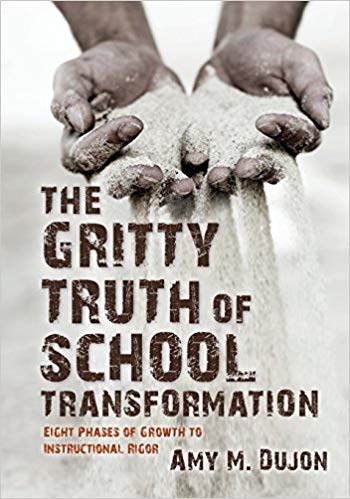
The Gritty Truth of School Transformation: Eight Phases of Growth to Instructional Rigor by Amy M. Dujon

Wednesday, August 22nd, 2018

The Gritty Truth

The Gritty Truth of School Transformation: Eight Phases of Growth to Instructional Rigor by Amy M. Dujon tells the story of how, as principal, she lead her school from one that was teacher-centered to one that is now student-centered with rigor. This is a book that every principal and teacher leader should read. It can also help parents become better teachers at home. Make sure that your school has a copy.

Why This Book?

  • The goal is to tease out what school leaders, in partnership with district leaders and teachers, can do to transform the instructional culture of their schools and to promote more rigorous learning. One discovery is that transformation needs to be sustained and not static and their vision is focused on the future. There is a concern about the defenders of the status quo and a recognition that traditional pedagogies are not likely to prepare students for the world they will enter.
  • The concept of productive struggle is at the heart of this work. This means engaging in an effort, thinking, and learning that is just beyond one’s current ability. It is akin to the idea of deliberate practice (K. A. Ericsson, 2003). The goal is to stretch each aspect of learning capacity without having it be eclipsed by a focus on acquiring knowledge and completing tasks. Several chapters contain QR codes that take you to additional resources.

Part I The Productive Struggle – Phase 1. Setting the Vision

  • The story here revolves around the school where Amy became principal in 2013. The demographics had changed and results declined. Traditional teaching that had been good enough needed to change. What was needed was second-order change rather than first-order change where teachers essentially went through the motions. Second-order change requires deep reflection, a substantive rethinking of philosophy and practice, and significant changes to school culture. The first key is to understand the importance of shared vision, mission, and core values. If you want to get at a root cause, try the Five Whys Protocol.
  • The goal is to shift from instruction where the teacher does most of the talking and tells students what they need to know to one where the students talk to each other more as they make connections and draw conclusions. The idea of student autonomy is central here. To make this type of second-order change happen a leader needs to find and support first followers. These first followers will show others that the leader is not there to judge but to help them grow. This will attract new followers.

Phase 2. The Deconstruction

  • One step in moving from teacher-centered instruction is to tell students only to raise hands to ask questions. You still need to know what they are thinking, but having one student give an answer doesn’t tell you much. As a leader, you will have to change too. Doing observations where you compliment a teacher on something and then give them something to work one should stop. Focus on what students are doing and if they are thinking. Try to be nonjudgemental. Focus public praise on changes in student behaviors and outcomes. Treat teachers and staff as equals or thought partners.
Share this:
Share this page via Email Share this page via Stumble Upon Share this page via Digg this Share this page via Facebook Share this page via Twitter Share this page via Google Plus

Future Driven: Will Your Students Thrive In An Unpredictable World? by David Geurin

Wednesday, August 1st, 2018

Future Driven

Future Driven: Will Your Students Thrive In An Unpredictable World? by David Geurin encourages teachers to look to the future as they design lessons to excite their students. To make students future ready you need lessons connected with reality, projects, collaboration, and tolerance for risk. Although we can’t predict the future, we need to adopt a futurist vision and be adaptable and mentor adaptable learners. After you read this fine book be sure to get a copy into the hands of any educational leaders you know.

1. Shaping the Future

  • Too many classrooms don’t look or function much differently than they did decades ago. Nonetheless, educators need to look forward as they prepare their students for an uncertain future. For most of us, there were parts of our education that were timeless. There were also probably too many that were needlessly passive. The idea that we should help students find and explore their passions is relatively new.
  • One thing that is apparent is that we need to create adaptable learners as adaptable learners will own the future. The key is to develop skills that are transferable to unknown situations rather than reducing a student’s achievement to a few numbers. The need to adapt is not new. People with adaptive ability have been more successful in the past and this skill is more important as change accelerates.

2. The Unexpected

  • Everyone encounters the unexpected in life. Rising to unexpected challenges is essential to success. Students should know this. We can expect, however, millions of jobs to be replaced by automation. We can also expect new jobs related to technology. Knowing this should help educators be more forward-thinking and future driven. It’s also a safe bet that hard work will still have great value in the future as it has in the past.
  • To think like a futurist teachers should 1) Be willing to challenge how they are doing things now 2) Read the news with an eye to the future 3) Reflect on ways to help students be adaptable 4) Share ideas with students and colleagues about what the future may demand 5) Embrace the future even when it’s difficult.

3. What If Schools Were More Like Google or Starbucks?

  • Here David provides the names of successful companies who are very innovative along with companies that have failed for failing to innovate. Unfortunately, many schools are happy with traditional teaching methods where there is a lack of student input and collaboration and a focus on test prep. Such schools will not thrive in the future. Some schools are looking to innovative companies that turn employees loose to innovate and tailor products and services to individual needs.
  • Schools need to personalize instruction, which is easier to do if every student has a laptop. Student voices need to be heard and students need to have some choice in regard to what they study. The students should function like a think tank, which will promoter ownership. Classrooms should be flexible (including standing desks) so that furniture can be rearranged to allow for various sized student collaboration groups. Students should also have a say in classroom decoration and design. Innovative companies want employees with the ability to learn and who know when to lead and stand back. School libraries should feel like Starbucks.

4. Connect, Grow, Serve

  • Like many other authors in the modern education field, David feels that student relationships are the most important thing that educators should work on. He tells how what he has done as a principal to get to better know more of his students. Strong relationships are the foundation of one’s ability to lead and influence. For this reason, schools must teach and model interpersonal skills. Teachers need to be aware that many of their students will suffer physical and emotional problems outside of school and be prepared to offer empathy.
  • The next big idea is to make sure that you take care of your own physical and emotional needs so you will be fit enough to help others. Ideas for connecting include attending student extracurricular activities and sending positive handwritten notes to students and parents. David even devotes part of a faculty meeting for note writing.
  • David thinks that schools put too much emphasis on student weakness and remediation and not enough focussing on student strengths. The chapter ends with ten things you should say more often like I believe in you, I’m here to help, and I’m listening.
Share this:
Share this page via Email Share this page via Stumble Upon Share this page via Digg this Share this page via Facebook Share this page via Twitter Share this page via Google Plus

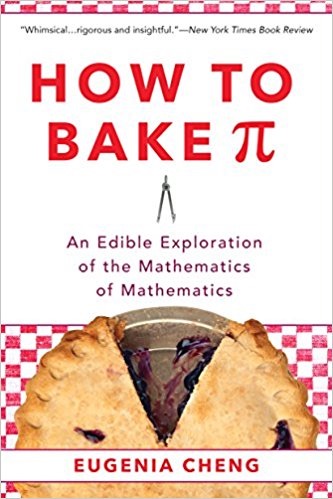
How To Bake ∏: An Edible Exploration of the Mathematics of Mathematics by Eugenia Cheng

Tuesday, June 5th, 2018

How to Bake Pie

How To Bake ∏: An Edible Exploration of the Mathematics of Mathematics by Eugenia Cheng uses classic baking recipes to illuminate many math concepts. It helps take math into the real world as it helps to make some math seem easier to its readers. At the very least, it should find its way into the hands of every math teacher and serious math students.

Part I: Math – 1. What Is Math?

  • Like all chapters this one starts with a recipe since like recipes math has both ingredients and methods. In math, however, the method being used is probably more important than the ingredients. Once you find a technique in math you can always find more things to study with it. The two key concepts here are abstraction and generalization. Math is abstract in that it studies ideas of things, rather than real things. The invention of numbers to represent things was perhaps the first-ever process of abstraction.

2. Abstraction

  • To do math you have to step away from reality. This is where math finds its strength. The idea that two things cost twice as much as one thing applies to all things, for example. Here we have a process that generalizes. Maps are abstractions of reality. The key for map makers is to find the most appropriate level of abstraction for the given moment. There are a number of math problems here that show how procedures work regardless of the specific numbers involved.

3. Principals

  • When making any recipe, it helps to understand the principals of the ingredients and finished products you are working on. Understanding the principles allows you to take shortcuts and substitute ingredients without ruining everything. Recipe books, however, rarely explain such principles. Understanding is power in cooking and in math. At the heart of math is the desire to understand things rather than just knowing them. The chapter goes on to spell out the principals for the natural numbers we use for counting.

4. Process

  • Flour, butter, water, and salt can make a delicious puff pastry, but only if you follow a specific method. Math requires the proper method also and further requires that almost nothing is basic or given. The rules of logic must be followed. Eugenia shows how you can make two mistakes in math and still get the correct answer. At the heart of math is the need to understand things rather than just knowing them. In other words, the means justifies the end.
Share this:
Share this page via Email Share this page via Stumble Upon Share this page via Digg this Share this page via Facebook Share this page via Twitter Share this page via Google Plus