Archive for the ‘Leadership Books’ Category
Wednesday, December 14th, 2022

Dear Math: Why Kids Hate Math and What Teachers Can Do About It by Sarah Strong & Gigi Butterfield shows how teachers can use students’ “Dear Math” letters to get to know their students better and draw them into learning. There is an emphasis on creating a community of mathematicians in a project-based environment. Be sure to get a copy for any math teacher you know. Thanks, Sarah and Gigi.
1. Dear Math, You Are Dreadful
- Start by telling students that you need to get to know them as mathematicians so you can design and facilitate their math lessons. They will all write “Dear Math Letters” for you to read. To help them get started, give them one of the ten prompts listed on pages 25 and 26. For example, what is one way that math has helped you grow? As you read the letters, be prepared for a large dose of negativity, as math is not the favorite subject of most students.
- As you read the letters, give feedback and look for connections and commonalities. As you teach, mention things from letters anonymously. Consider having students read each other’s letters. This will help develop empathy between students. Weekly letters should help you determine what was valuable and what wasn’t.
2. Dear Math, You Are Hierarchical
- The hierarchy here comes from the natural sorting of ability from high to low that happens in classes generally and perhaps more often in math classes. The goal, then, is to disrupt any existing hierarchy or prevent it from happening. Disruption of this metaphor begins with forming close relationships with others. People with close relationships are not likely to compare themselves to each other. Being better connected also improves the quality of group work.
- Sara’s main tool is what she calls “Belongigness Buddies,” although you can call it something else. Buddies check in on each other daily in person and using social media tools. While the check-ins largely involve content, students are encouraged to include feelings. The teacher also buddies with students who have attendance issues. Absent students can use FaceTime or Zoom to attend class virtually.
3. Dear Math, You Are Unnecessary
- Teachers, in general, need to be prepared for the “why do we have to know this?” question. Use Internet search if you need to, and it’s ok to say, “I don’t know, but think of this concept as a puzzle that will be good for your ability to solve real problems.” Knowing why they need to learn something adds to a greater sense of agency, the ability to construct new knowledge, and the ability to look critically at new information.
- Math isn’t pointless and shouldn’t feel that way. Sarah likes to start classes with an image of some sort. She also makes use of story problems, also known as word problems but with more captivating stories. After they read the story, she asks, what is this story about? What are we trying to solve for? What might a potential answer look like? (estimation)
4. Dear Math, You Are Intimidating
- The three sources of intimidation or anxiety are home, society, and classrooms. Often times a parent’s doubt about their own math skills can contribute to a student’s feelings. Similar messages are also found in our media. Teachers and faster learners are also a source and these are feelings that lead to lower performance.
- The goal is to design class activities to disrupt intimidation. Sarah describes a “Daily Discourse” activity designed to do this. It’s a ten to fifteen-minute activity led by students, with all students taking turns leading the discourse and taking notes. Gigi reminds us that the opposite of intimidation is encouragement.
Posted in Book Summaries, Education Books, Leadership Books | No Comments »
Monday, August 22nd, 2022
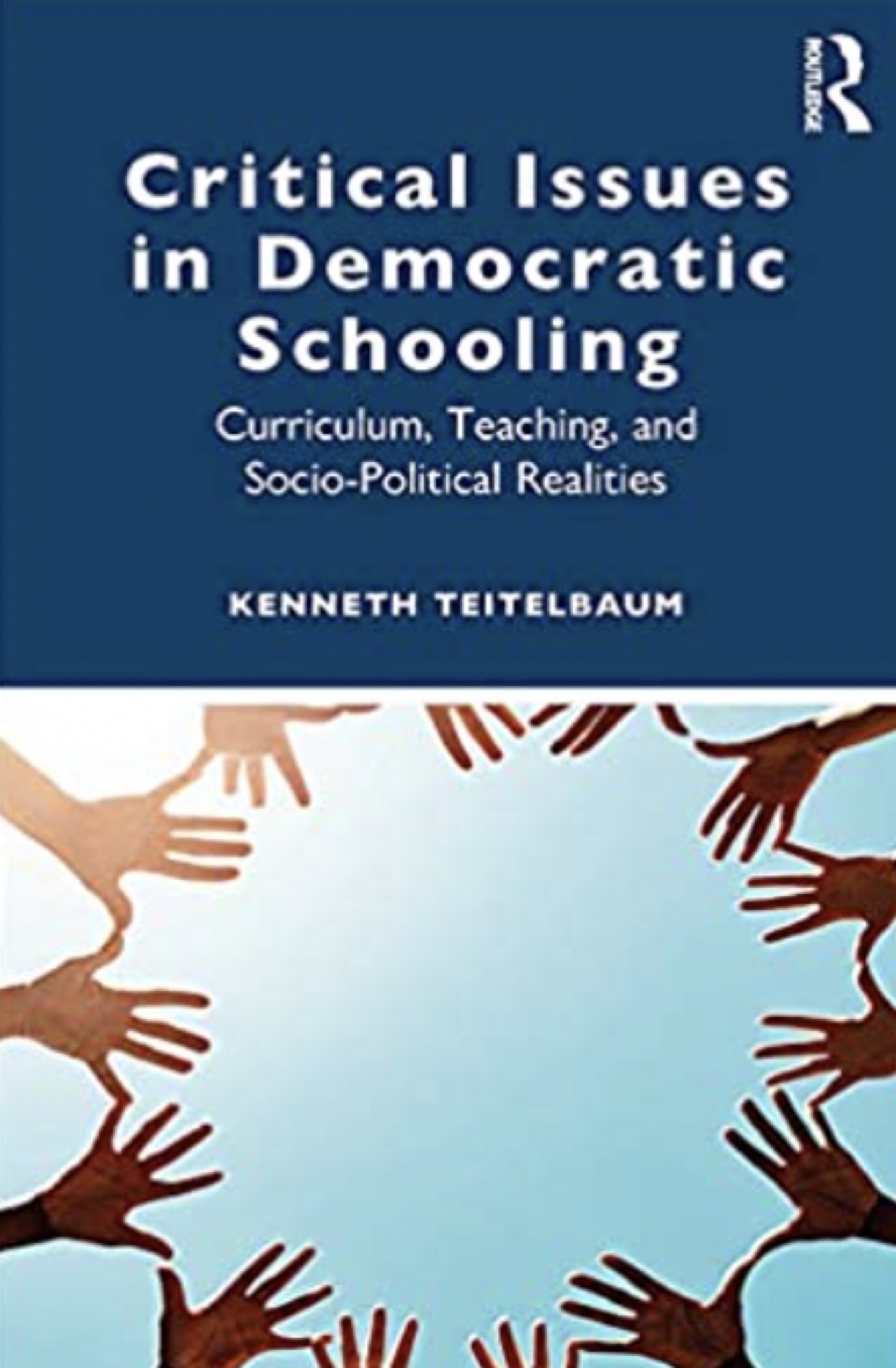
Critical Issues in Democratic Schooling: Curriculum, Teaching, and Socio-Political Realities by Kenneth Teitelbaum is an ideal textbook for undergraduate and graduate teacher education programs. Each chapter can easily form the basis for whole class and small group engaging conversations on topics that prospective teachers need to confront. It’s also a great book that will allow practicing teachers and administrators to question their practices. If you are looking for a book to give all of the teachers in your building for professional development, look no farther.
Part I: Teaching and Teacher Education
1. Teaching Has Its Own Rewards
- Teaching is a profession for those who want to create and inspire, for those who love learning, for those who care about our future, and for those who like to watch young people develop. Students don’t reveal what they are thinking or learning. The most important learning is difficult to capture and may not be known until much later. Likewise, the rewards of teaching are also difficult to measure. (Doug: Like Ken, positive feedback from former students and parents always makes my day.)
2. Despite What Some Think, Teaching Isn’t Easy
- This thinking emanates from the fact that mostly women taught in the last 150 years. A child’s education begins at home so all parents are essentially teachers. Stresses faced in the home and elsewhere outside of school impact behavior in school add difficulties when it comes to dealing with emotional issues and evolving subject matter. The questions of who selects the content and what content to select are also central. Decisions regarding how to deliver content seem endless as are the roles that teachers are expected to play. Time may be the biggest constraint. Teachers, therefore, need proper support and compensation.
3. Reasons to be a Teacher
- It certainly is not the money. Ken’s research and my own show that teacher salaries have not kept up with inflation since I started in 1970. There has also been some erosion in benefits and loss of autonomy due to test-driven expectations and their repercussions. Many teachers work well beyond the 40-hour work week and most will tell you that students have become more unruly over the years. This may have caused fewer people to prepare for a career in teaching, but the current shortage should make jobs easier to find.
- Ken finds seven reasons that still draw people to the profession. 1) Independence and Collaboration: To some extent, teachers are free to decide how they will present the desired content. They should also be able to work with other teachers, although the time available to do so depends on leadership. 2) Lifelong Learning: If teachers seek excellence, they are always thinking about how to improve. As lifelong learners, they will enjoy learning and improving daily. 3) Creative Imagination: Taking reasonable creative risks will make teaching more fun for all. This will help you avoid getting stuck in a rut but consider discussing such risks with your supervisor. 4) Forever Young: Lighting fires in young people is exhilarating and revitalizing. It keeps you stay hip and young at heart. 5) A Noble Profession: In spite of the fact that the media often bashes schools, teaching is widely considered a noble profession by the public. 6) Helping to Create a Better World: Teaching is a profession of hope, and even though you won’t know exactly how you made the world better, you will believe that you did. 7) Student Growth: We all have stories about teachers who made a difference in our lives. You may not see incremental growth daily, but it’s there.
4. “Work With What You’ve Got”
- If you see oppression or injustice in any form be sure to speak up. If you see that school practices or policies at any level are ineffective say so. You may not have all the autonomy you want, but work with what you have. You have to believe that schools can change over time for the better. You may have to make some small compromises, but they are probably worth it.
5. Lessons from Alternative (Progressive) Schooling
- These schools are mostly private so the students are more likely to have more means and skills than typical public school students. Ken has worked in, visited, and read about such schools. In essence, the students are much more in control of what they study, the teacher talks less, and usually intervenes when students need help with skills necessary to pursue their chosen learning. Students are essentially self-directed learners, which requires skills that poor students may not have.
- While such schools are not noted for the longitudinal follow-up that can determine how their students did, the data available suggests that the students do fine and tend to be happier and more self-confident. The atmosphere of trust found at these schools could account for that. Creativity, problem-solving, and project-based learning are seen throughout the day. Ken hopes to see more of this in public schools in spite of the roadblocks created by standardized curriculum and testing.
Posted in Book Summaries, Education Books, Leadership Books | 1 Comment »
Wednesday, July 20th, 2022
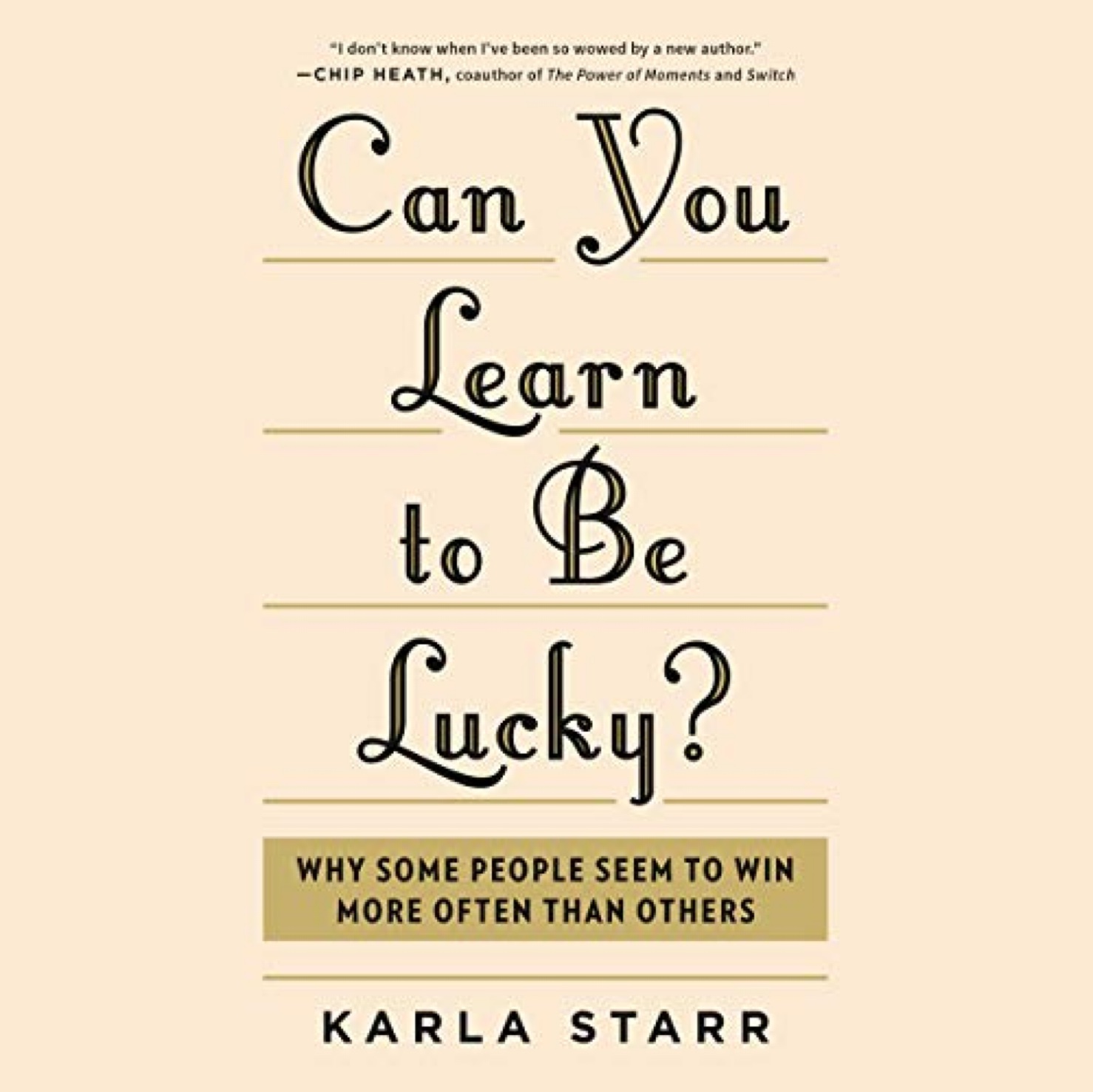
Can You Learn to Be Lucky? Why Some People Seem to Win More Often Than Others by Karla Staff explains in detail how you can increase your chances of being lucky and therefore successful. We all experience good luck and bad luck as we go through life, but with Karla’s help, we can make good luck more likely and take better advantage of it, and better survive and learn from our bad luck. This book belongs in every professional learning library.
Introduction
- This book is about navigating life’s hidden patterns. While there is no way to account for every variable influencing our situation, this doesn’t make the world entirely unpredictable. We need to see the world as understandable and manageable. If you feel unsure about your ability to handle the future, anxiety will follow. Regardless of your merit, frugality, and faith, elements of chance will always be part of your life. This is where luck comes in. A bias toward action, however, can help as doing nothing can lead to learned helplessness. You can’t stumble on to something good by sitting down.
1. Best in Show: Why Lucky Timing Is out of Our Hands
- Studies show that your chances of winning a subjectively scored event are better if you are judged near the end. They also show that prisoners get the best deals if they are judged right after lunch or a break. If you are part of a contest or are interviewing for a job, do what you can to be near the end of the process. Then do what you can to be memorable and emphasize what makes you special or unique. Frame losses as learning experiences and don’t take them personally. And if you want to score with the gender of your choice at a bar, stay until closing time.
2. The Charlie Brewer Principle: How That Warm, Fuzzy Feeling Leads to Luck
- The focus is Charlie Brewer whose father and grandfather were star quarterbacks. Is it any wonder that the coach looked to him to be his next quarterback? If you have some advantage due to your family’s circumstances be sure to leverage it. However, if you are rich and good looking you might get away with being a dick, but it’s not a good strategy in the long run. Charlie’s story deals with confirmation bias. This is a concept you need to understand on the road to luck.
- The other big idea here is availability. By consistently showing up you increase your chances to be lucky. If you are always there you will seem safe, which correlates with luck. The more people see you the more they are likely to like you as long as you are nice. Proximity counts. People who live on the bottom floor have more friends. Kids who sit in the middle of the room are more popular. Your attire is very important. For example, women who show up in a nightclub dress are not likely to be seen as highly capable. Make a good first impression and know that it takes time and effort to build a good reputation.
3. Bitches in Glasses: The Occasionally Unlucky Side of Intuition
- We use our feelings to decide and rationalize our choices after the fact. There are things we can control like grooming, attire, facial expressions, posture, what we say, tone of voice, and body language. We have some control over our body shape and size. We have little control over the shape of our face and our height, and they both count for more than they should. Be sure to act in a friendly manner and smile when you meet someone. Act like you are happy to see them. This you can control and it will help make a good first impression.
- We tend to map traits from people we know on to people we meet who look similar. The feelings we currently feel also impact our impression of the people we are with. Women who don’t smile are judged more harshly than men who don’t smile. People with square jaws and wider faces are more likely to be promoted. Life is indeed unfair. What you can do is throw your hat into the ring every chance you get, use an easy-to-pronounce version of your name, and avoid edgy jokes and weird online IDs.
Posted in Book Summaries, Business Books, Education Books, Leadership Books | No Comments »
Monday, May 2nd, 2022
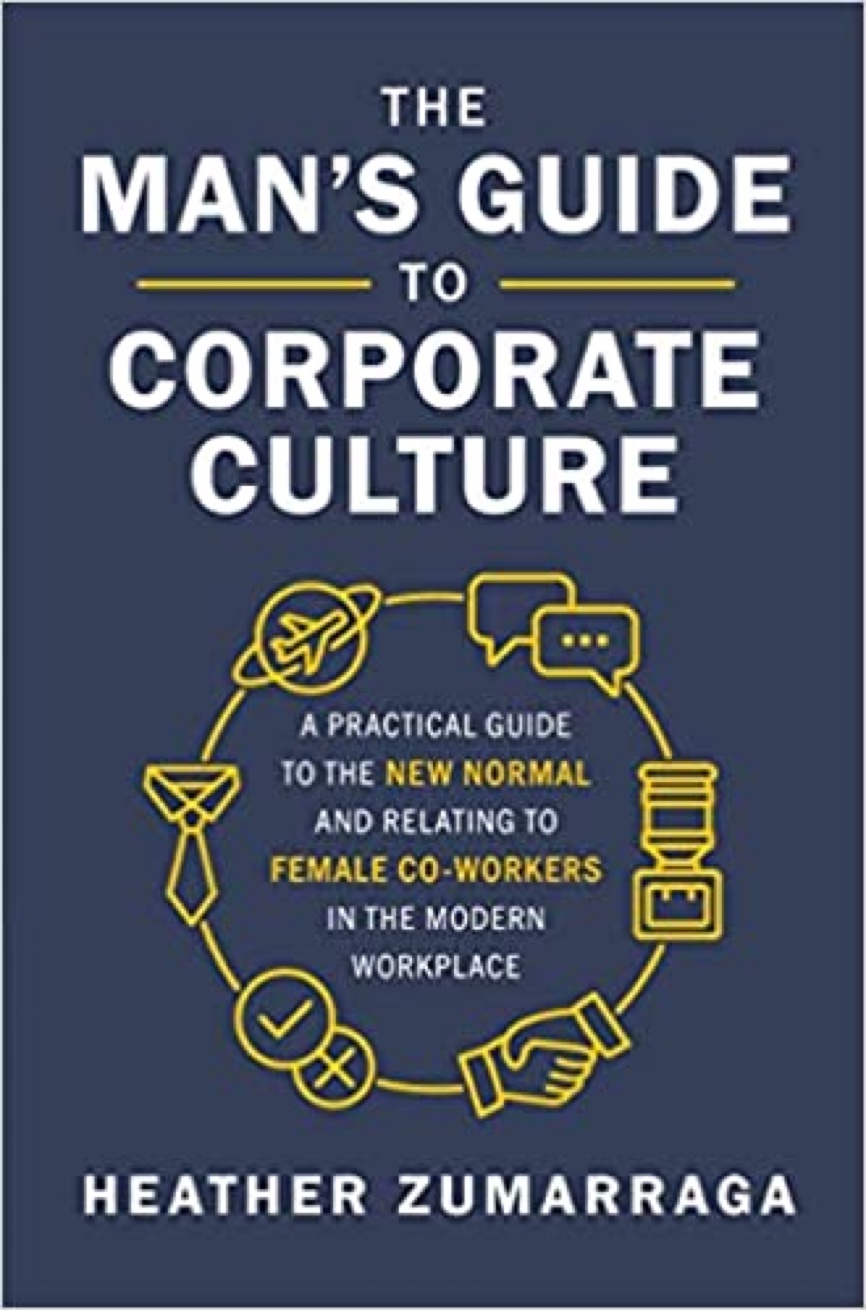
The Man’s Guide to Corporate Culture: A Practical Guide to the New Normal and Relating to Female Co-Workers in the Modern Workplace by Heather Zumarraga explains how the modern workplace has evolved over time and how men (and women) can navigate it while staying out of trouble. Things like accusations of sexual harassment or worse can be real career enders so take Heather’s advice if you want to stay afloat in what can seem at times like a tsunami.
Who is This Book for and How to Read This Book/Introduction
- This book is for men who work with women, corporations, small business employers, human resources departments, college students, and men and women couples. Here we find the chapters intended for men, corporations, and both men and women so you can skip around if you choose.
- Sionce the national discussion of sexual harassment in the workplace has gone to a whole new level, many men have become fearful of the perceived power that women have. The big change is that women are no longer afraid to speak up and are often encouraged to do so. This book is designed to help men learn to collaborate and find synergies with female colleagues so that they can take advantage of the skills and qualities that women offer. You can only do your best if you feel comfortable and this book should help. It’s based on the author’s experience along with hundreds of interviews.
1. It’s a Woman’s World and You Are Just Working In It.
- Women hold more jobs in the US than men and earn more college degrees at every level, which strongly correlates with higher incomes. Heather sites a number of successful female CEOs of some of the country’s largest companies. Yet 60% of male managers are not comfortable participating in normal workplace activities with women, such as mentoring and socializing. This serves to deprive their company of the talent of half of the population. The modern trend is for organizations to forbid romantic relationships in the workplace and even with customers and suppliers employees. Relationships that result in ex-lovers working together can create a hostile working environment. Many top-level executives have lost their jobs for inappropriate behavior and this list includes some women. The trend is finally toward a more ethical corporate governance.
2. How Did We Get Here?
- In 1986 the Supreme Court ruled unanimously that sexual harassment that was sufficiently severe or pervasive created a hostile or abusive working environment. Prior to that women were limited to lawsuits when the harassment was part of a quid pro quo for promotion. Now the simple act of pervasive harassment is enough to sue in federal court. Derogatory remarks about physical appearances, unwanted flirtation, and touching are possible allegations. Courts use the reasonable person standard when deciding if the behavior amounts to sexual harassment. The genders of the people involved are not relevant.
3. The Pendulum Has Swung Too Far
- As a result of this situation, many men worry about giving negative feedback to women. The media has created a world where some women are comfortable believing men are the enemy. The negative bias against men results from the movement going overboard. There are so many accusations it’s hard to know what to believe. A critical mass of accusations, however, makes it obvious that there is some truth to it as some recent high-profile cases have shown. False accusations or even misplaced suspicions, now have absurdly powerful repercussions. If you ever have to be deposed as part of a legal process, bring an attorney. Unfortunately, almost any behavior such as a shoulder pat can now be stretched into harassment. As a result, many men are reluctant to hire attractive women or hire women for jobs involving close interpersonal interactions. Also, the incarceration rate (90%+), the homicide rate (67%), and the homeless rate (70%) imply that men have a major crisis.
4. Let Mars Be Mars and Venus Be Venus.
- There is an agreement in the literature that men and women are different. Women tend to have better verbal abilities like reading comprehension and writing. They are also better at retrieving information from long-term memory. Men are better at juggling things in working memory and have better visuospatial skills. Men are more visually oriented and have stronger responses to sexual stimuli. The advice here is that you have a frontal lobe so use it to self-regulate. Think of it as the brakes for your brain.
- Women demonstrate more facial expressions than men and are better at reading them. Men will be distracted by bare skin, short dresses, and high heels. The lesson here is look at her face. You can compliment apparel but not physical appearance. Pay attention when women are talking and consider turning off your phone. Maintain eye contact, don’t interrupt, and paraphrase what is said. You really don’t have the luxury of not liking women or other men at work. If you do you will give it away somehow. Demonstrate you care by showing an interest in their personal life.
Posted in Book Summaries, Business Books, Leadership Books | No Comments »
Saturday, April 23rd, 2022
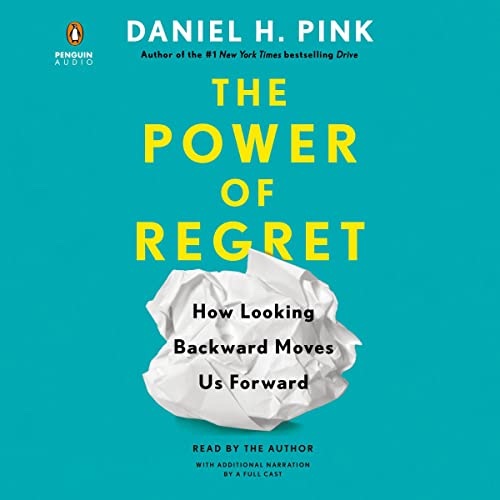
The Power of Regret: How Looking Backward Moves Us Forward by Daniel Pink deals with the power we can draw from dealing with our regrets in a thoughtful manner. Regrets deal with things you can control so you need to take action when possible to make things better and move on from things that can’t be fixed. Research shows that people who do this are healthier and happer. Thanks, Dan for this vital life lesson.
Part One. Regret Reclaimed – 1. The Life-Thwarting Nonsense of No Regrets
- Fron popular songs to literature to advice columns we hear over and over again about how successful people supposedly have no regrets. In this book, Pink shows not only that this is wrong-headed thinking, but when properly used, analysis of your regrets can serve to improve your life. We all have a portfolio of emotions and most of us try to have a bias in our lives for positive ones. That makes sense, but we also need to deal with negative emotions to help us avoid harm, be it physical or emotional. The purpose of this book is to show you how to use regret’s many strengths to make better decisions, perform better at work, and bring greater meaning to your life. Pink draws on his analysis of two massive surveys to accomplish this goal.
2. Why Regret is Human
- Regret is the unpleasant feeling associated with some action or inaction a person has taken which has led to a state of affairs that the person wishes were different. It is more understood as a process than a thing. As we mature, our brains naturally develop to experience regret. It is associated with the orbitofrontal cortex. People with lesions in this area typically do not experience regret. The same is true for people with Huntington’s and Parkinson’s disease. Reget is the most common negative emotion as things you regret are your own fault. They are things where you had control and constantly involve some comparison.
3. At Least’s and If Only’s
- These are two types of counterfactuals. When you think at least, you are thinking about how things could have been worse. When you think if only, you are thinking that an outcome could have been better if you had done something different. Most people engage in if only thinking much more than at least thinking. If only thinking degrades our feelings now, but it can improve our lives later. This is one way regret can help us do better tomorrow.
4. Why Regret Makes Us Better
- If you actively regret something you are not likely to do it again. A central finding is that regret can deepen persistence, which almost always elevates performance. Even thinking about other people’s regrets may confer a performance boost. Regret, however, does not always elevate performance. Lingering on regret for too long can have the opposite effect. Setbacks can supply fuel for future performance. Making mistakes and learning from them via regret is a path to growth.
- When it comes to things you regret it is key that you not wallow in them or dodge them altogether. Doing so will just make things worse. These feelings should result in thinking that results in future action that makes things better or avoids further pain. Think of this action as an evaluation that can be instructive. In short, if you make a mistake you need to ask yourself “what can I learn from it.” (Doug: This is a guiding principle for me.)
Posted in Book Summaries, Business Books, Education Books, Leadership Books | No Comments »