Archive for the ‘Leadership Books’ Category
Wednesday, August 18th, 2021
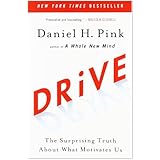
Drive: The Surprising Truth About What Motivates Us by Daniel Pink is a must-read for educators and parents alike. Dan summarizes current research and does a great job turning it into interesting and understandable prose that educators can apply to their practice. Every school should have this on the shelf.
Three Types of Motivation
- 1.0 – The basic motivations we need for survival
- 2.0 – Motivations based on direct rewards and punishments. Such carrots and sticks are typically financial in this context. They work for jobs that are routine, which are often the jobs that can be sent offshore or done by a computer.
- 3.0 – Intrinsic motivation, which is conducive to creativity. This allows you to do things for the satisfaction of doing them rather than any monetary reward. Examples include open source software, Wikipedia, learning to play a musical instrument, or doing a puzzle. It is important for nonroutine (heuristic) jobs. In these jobs rules are loosely defined, which requires creativity.
Carrots and Sticks Don’t Always Work
- Pink sites 128 studies that lead to the conclusion that tangible rewards tend to have a substantially negative effect on intrinsic motivation. This is one of the most robust findings in social science and one of the most ignored. (Doug: Educators should check out Alfie Khon’s 1993 book, Punished by Rewards.)
- Studies show that rewards and punishments can extinguish motivation and diminish performance. They focus behavior, which can crush creativity and they can crowd out good behavior. In some cases, they can lead to cheating, shortcuts, unethical behavior and lead to addiction. They can foster short-term thinking at the cost of long-term results.
Carrots and Sticks Aren’t All Bad
- Rewards do not undermine people’s intrinsic motivation for dull tasks where there isn’t any motivation to be undermined. To increase chances for success you need to: 1) Offer a rationale for why the task is important 2) Acknowledge that the task is boring 3) Allow people to complete the task their own way. Another way to offer extrinsic rewards for creative work is to give the reward after the job is finished. Care must be taken so that such rewards don’t become expected. In general, praise and specific positive feedback are less corrosive than cash and trophies (Doug: That means stickers for you elementary teachers)
Tags: Daniel Pink, Drive, Motivation
Posted in Book Summaries, Business Books, Education Books, Leadership Books | 1 Comment »
Thursday, July 1st, 2021
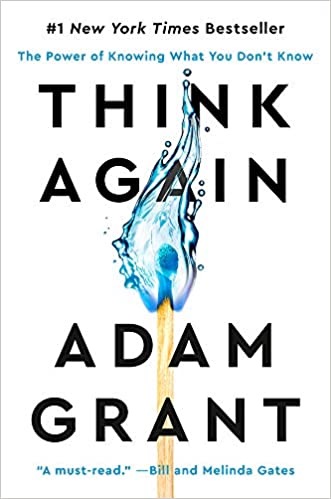
Think Again: The Power of Knowing What You Don’t Know by Adam Grant offers advice about rethinking that all of us can use at work and beyond. The key is to think like a scientist. This means you have to actively try to disprove your own ideas as a way of testing their quality. This would make a great text for any leadership course and an outstanding read for anyone seeking self-improvement. Make sure that there is a copy in your professional development library.
Prologue
- This book is about the value of rethinking your assumptions, instincts, and habits while keeping an open mind. It starts with a story about wildfire fighters who when trapped neglected at first to drop their heavy gear as it was part of their identity and dropping it would signal failure. One man started a fire that in effect burned a hole through the fire and saved his life. This required rapid rethinking as this technique wasn’t taught in fire school. Due to the pandemic, we have also seen many leaders being slow to rethink their assumptions. This book is an invitation to let go of knowledge and opinions that are no longer serving you well. A hallmark of wisdom is knowing when to abandon some of your most treasured tools as you seek new solutions to old problems.
Part I. Individual Rethinking – Updating Our Own Views
1. A Preacher, a Prosecutor, a Politician, and a Scientist Walk into Your Mind
- The big idea here is to think like a scientist rather than a preacher, a prosecutor, or a politician. This requires that you revisit your beliefs to see if new evidence has made them obsolete. The worst bias is thinking that you aren’t biased. Be careful to avoid confirmation bias where you only look for facts that support your beliefs and desirability bias where you see what you want to see. Scientists are actively open-minded searching for reasons why they might be wrong. Your IQ may work against you as smart people recognize patterns faster, which can lead to seeing more stereotypes. If you are trying to promote a change, reinforce the things that will stay the same.
2. The Armchair Quarterback and the Imposter: Finding the Sweet Spot of Confidence
- Here we meet two opposing syndromes. The Armchair Quarterback Syndrome happens when confidence is greater than competence. The Imposter Syndrome happens when competence is greater than confidence. Arrogance is ignorance plus conviction. Humility allows you to absorb life’s experiences and convert them into knowledge and wisdom. A mix of confidence and humility gives us enough doubt to reexamine our old knowledge and confidence to pursue new insights. Most effective leaders score high in both confidence and humility.
- Adam believes that there are benefits associated with the Imposter Syndrome. It can motivate you to work harder. It can allow you to work smarter as you question old assumptions. Finally, it can make you a better learner as you realize that you might have something you need to learn. You are more likely to seek other opinions. It can keep you on your toes as you never think you know it all. You maintain doubts as you know you are partially blind and committed to improving your sight. Each answer raises new questions and your quest for knowledge is never finished. Arrogance, however, leaves you blind to your weaknesses.
3. The Joy of Being Wrong: THe Thrill of Not Believing Everything You Think
- Most of us are wrong more often than we like to admit. Rather than being upset when you find that you are wrong about something, it’s better to tell yourself that it means you are now less wrong than before. You can even be joyful if you realize that it means you have learned something. Adam recommends that you allow learning from being wrong to let you detach from your past and to also live so that your opinions are detached from your identity. This will make it easier when a core belief is challenged.
- A study of professional forecasters showed that the most important driver of success was how often they updated their beliefs. The best went through more rethinking cycles. They have the confident humility to doubt their judgment and the curiosity to discover new information and rethink their predictions. You should view your opinions as hunches and know that something isn’t true just because you believe it. Emotions can also get in the way. When you feel strongly about something you are less likely to change your mind when new facts present themselves. This is why so many respected predictors failed to predict Trump’s victory in 2016.
4. The Good Fight Club: The Psychology of Constructive Conflict
- There are two kinds of conflicts. There are relationship conflicts where people essentially don’t like each other, and there are task conflicts where people disagree about how to do something. The former get in the way of success, while the latter usually helps people to work together successfully. Task conflict brings out the diversity of thought. It can help us stay humble, surface doubts, and make us curious about what we might be missing. It can lead us to think again moving us closer to the truth without damaging our relationships. What matters to children is not how little their parents argue, but how respectfully they argue.
- It’s possible to disagree without being disagreeable. Disagreement is key when it comes to task conflict. The trick is not let task conflict turn into relationship conflict. As a leader, you want to promote the idea that disagreement is necessary for growth and success. It’s also key that leaders show they believe and care about the people with who they disagree. This can make disagreement seem like a sign of respect. Try to frame disputes as debates. This signals that you are receptive to considering dissenting opinions and changing your mind. Don’t fall into the trap that some leaders fall into by surrounding yourself with agreeable people. They shield themselves from task conflict by eliminating boat-rockers and listening to boot-lickers.
Posted in Book Summaries, Business Books, Education Books, Leadership Books | No Comments »
Sunday, May 23rd, 2021
Weapons of Mass Instruction: A Schoolteacher’s Journey Through the Dark World of Compulsory Schooling by John Taylor Gatto explains how the “Germain” system of schooling adopted in the US was designed to produce docile factory workers and not original thinkers. As you read this important book reflect on how your schooling and the current schools in your community use the weapons of mass instruction John describes.
Prologue: Against School
- John’s experience shows that the main theme in secondary schools in the US is boredom. This can be traced back to our school’s Prussian heritage which offered a design aimed at producing mediocre intellects that would ensure a population composed mostly of docile and incomplete citizens. In other words, a manageable population. This type of schooling precludes critical thinking and strives to make children compliant and as alike as possible. At some point, they get sorted into manual labor and college tracks. The unfit are tagged with bad grades, remedial placements, and other punishments.
- Not only are students designed to engage in mass production, it’s vital that they also engage in mass consumption of things they may not need. They are sitting ducks for the folks in marketing. The good news is that once you discover the tricks and traps of modern schooling, they are easy to avoid. This book promises to help you do just that.
1. Everything You Know About School is Wrong
- This chapter focuses on the history of American schools. Prior to the school for all movement of the mid 19th century, children were included in family work, thinking, and inventing. Education was open-sourced and goals included self-reliance, ingenuity, courage, competence, and other frontier virtues. As students in factory schools, they became consumers of facts rather than producers of anything. While original thinking was patronized at times, it was subtly discouraged. There was also the beginning of the shift from local control to federal influence as school districts became larger, more bureaucratic, and less efficient.
2. Walkabout: London
- Here we are introduced to the concept of open-source learning. This is the learning that happens outside of schools when individuals decide for themselves what they want to learn and who they want to learn it from. This chapter tells the stories of many people who became very successful without college degrees. Some dropped out of college. Some never spent a day in college, and some are even high school dropouts. It seems that for many passionate and driven people, school as we know it only gets in the way.
- In the US 1.25 million students drop out each year. This takes courage and we should help these kids learn what they want to learn rather than giving up on them. Many students who do go to college end up learning little or nothing and end up with a huge debt and a grim career outlook. Perhaps more students should intentionally take up open-source learning rather than going to college. While John went to two Ivy League schools, he finds that most of what he learned that mattered happened outside of school. He also revisits the role schools play in standardizing students so they can serve corporate needs.
3. Fat Stanley and the Lancaster Amish
- Stanley was one of John’s students with an attendance problem. What John discovered was that he was skipping school to in turn work for free for five relatives who had their own businesses. He wanted to learn how to run a business so he could be running his own by the time he was 21. Once John knew this he started reporting Stanly as present as he knew that Stanley was learning more than John could teach him in school.
- We then look at the Amish with a focus on their values. While they never attend high school, they are successful entrepreneurs. They are innovative, take risks, have a strong work ethic, have high standards of craftsmanship, and use their families as their labor force. They are also legendary good neighbors. Amish children all experience practical internships and apprenticeships supervised by adults. In a sense, Stanley had discovered the secret of the Amish and adopted it for himself.
4. David Sarnott’s Classroom
- David Sarnoff arrived from Russia at the age of nine. His father promptly died and he taught himself English and got a job selling newspapers to be the family breadwinner. In five months he was fluent with no school. At fourteen he had his own newsstand. When he saw an ad for an office boy at Marconi Wireless he crashed a line of 500 boys and got the job. The lesson here is that waiting your turn is often the worst way to get what you want. As an office boy, he taught himself telegraphy and soon found himself on the leading edge of technology. At the age of 39, he became president of the Company then called RCA. He did all this without one day of school.
- John believes that if we taught kids to think critically and express themselves effectively that they wouldn’t put up with the nonsense schools force down their throats. Borrowing from a brochure he had recently seen at Harvard he cites qualities beyond grades that are needed for success. They included the ability to: analyze data, define problems, extract meaning from piles of information, conceptualize, collaborate, and convince others. John notes that none of these were taught in his district by policy.
Posted in Book Summaries, Education Books, Leadership Books | No Comments »
Thursday, May 6th, 2021
Be Excellent On Purpose: Intentional Strategies for Impactful Leadership by Sanée Bell shares her experience and vision as a school leader. As someone who has taught leadership for aspiring principals, I find her advice to be totally on the money. This would be an excellent book for any school leadership course. It’s also good reading for teachers who don’t aspire to the principalship, but who nonetheless lead in their own way.
Introduction
- To be excellent on purpose you need to be intentional with your time, intentional with the company you keep, and intentional about where you focus your thinking and energy. This will allow you to set a standard for success and do what it takes to close the gap between where you are and what you are striving to become. Excellence is a journey that requires effort and energy. You will see barriers as obstacles that you can overcome. This book is designed to help you develop habits that will help you lead with excellence.
1. Own Your Excellence
- As a young girl, Sanée had a vision that she wanted to compete with the boys in her neighborhood. She was clear and intentional about what she wanted to accomplish and built the steps needed to get there. Her vision was the roadmap to the end. It was her strategy for success. Later she was able to generalize her playground success to the rest of her life.
- Start by thinking about what you want to achieve. Then identify the action steps you need to take. Identify the barriers and develop a plan to eliminate them. As you move forward monitor your progress. As you develop your vision be sure you know why. This is where you will summon your motivation. Your why is what gives your vision meaning and purpose. With your why firmly in place you next have to address how you are going to accomplish your goals. Along the way be honest with others and yourself. As you venture into the unknown try to develop a level of comfort with it and with your own vulnerability. Celebrate your accomplishments rather than feeling like an imposter.
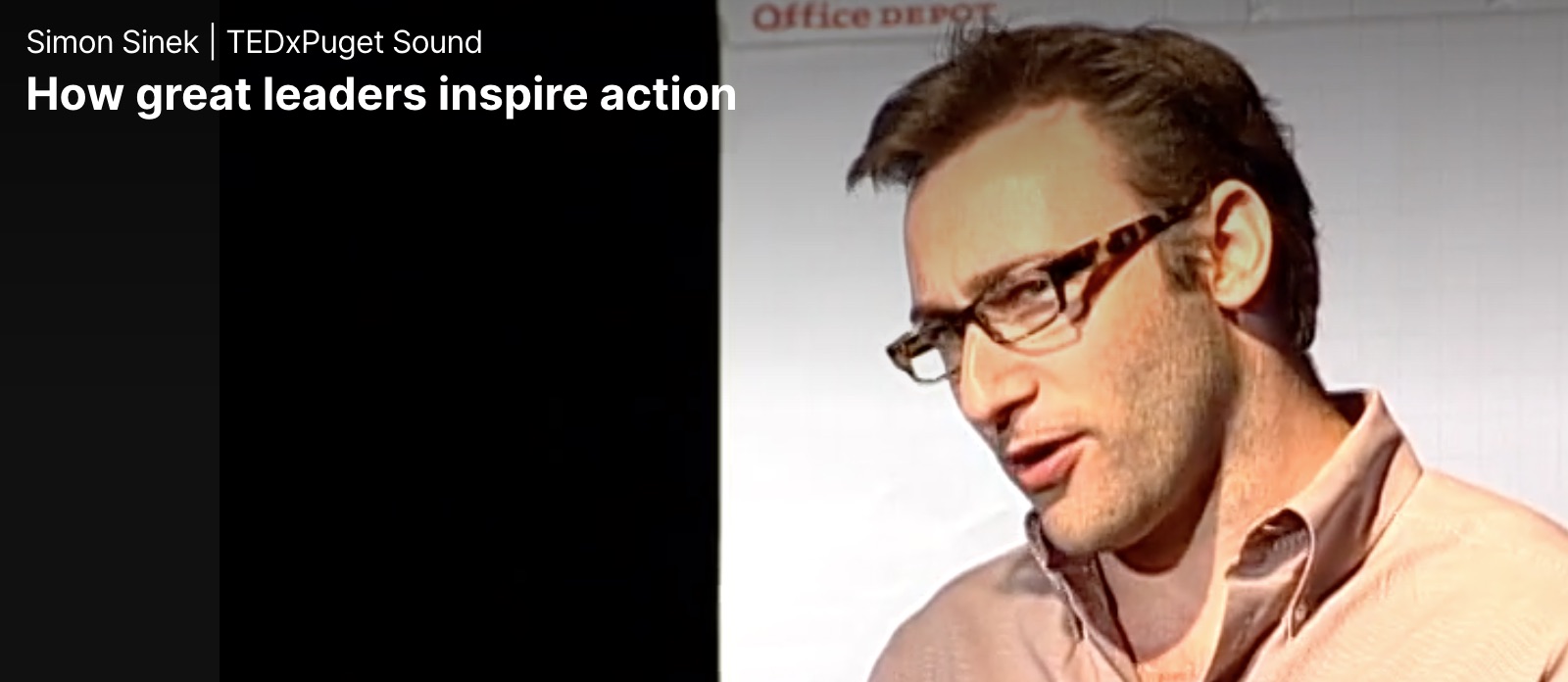
Sanée was inspired by Simon Sinek’s TED Talk How Great Leaders Inspire Action. Give it a look.
2. Understand the Power of Words and Actions
- Sanée’s mantra is “lead with purpose, intention, and excellence. Be excellent on purpose and strive for excellence in all we do.” Success is a result of intentional planning and hard work. Know that everything you do matters and that everyone is watching. Focus on what you can control. While culture work belongs to the group, the leader has the biggest responsibility. Your words need to match your actions. Work to get a commitment to continuous improvement. Ask “where can we continue to grow and improve?” Striving for excellence does not involve making excuses.
- Start with a focus on what’s strong rather than what’s wrong. Once you do this you can figure out how to make not-so-great areas better. It’s important to determine why what’s working is successful. Then it’s on to finding out why some things aren’t working well. You can give pep talks focused on your mission. Point out obstacles you overcame. Celebrate this achievement with the group and identify the challenges ahead. Speak from the heart and use emotion to inspire the group.
3. Expand Your Connections
- It is important that leaders use their abilities to connect. They need to broaden their network to include leaders outside of education and leaders around the world. This can greatly expand one’s learning. Think of it as your professional development network (PDL). This will also expose you to new opportunities. Look for people who push your thinking, not just people who always agree. Look for opportunities to meet people at conferences who you follow online.
- As you expand your virtual support team, be sure to prioritize local face-to-face connections. Sanée suggests that you schedule regular get-togethers with people who can support your work as you support theirs. You also need to manage by walking around. As you do so, check in with the people you lead. Be sure to ask “how are you doing” and as they say “I’m doing fine,” watch their body language to see if it sends the same message or a different one. Ask questions like why and don’t tell them how you solved their problems. Take time to be alone to think and write. Be sure to share what you write, which is easy today thanks to blogs like mine where you can guest post.
Posted in Book Summaries, Business Books, Education Books, Leadership Books | No Comments »
Wednesday, April 14th, 2021
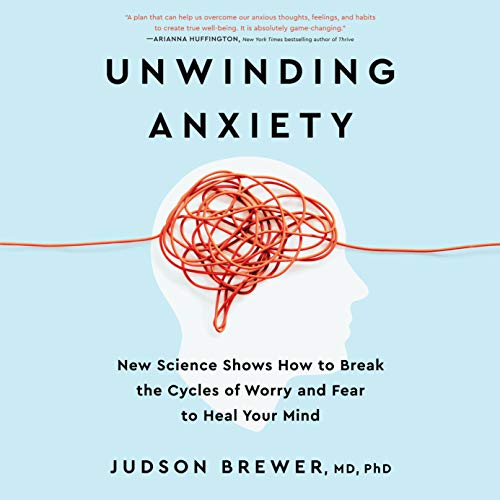
Unwinding Anxiety: New Science Shows How to Break the Cycles of Worry and Fear to Heal Your Mind by Judson Brewer offers actionable advice for anyone who suffers from anxiety. There is also a free app available that can further help make your life less stressful. Learn how you can use curiosity and kindness to your advantage. While I don’t suffer from anxiety, I know many people who do. If you are anxious, you need this book. It also makes a great gift for anxious friends and family. Thanks, Jud.
Introduction
- Judson has MD and PhD degrees which took eight years to complete. He then went on to a career as a psychiatrist doing research on anxiety. He found that anxiety is in and of itself a harmful habit. It hides in peoples’ bad habits and feeds other behaviors. When he realized this, due in part to his own panic attacks as a student, he was determined to “science the hell out of it,” to cite a Matt Damon quote from The Martian. During the last decade, his research has lead to excellent results in helping people quit smoking, overeating, and other bad habits with the help of smartphone apps. This book is intended to be a useful pragmatic guide to changing how you understand anxiety so that you can work with it effectively, and as a bonus, break your unhelpful habits and addictions.
Part 0 Understanding Your Mind: The Psychology and Neuroscience of Anxiety
1. Anxiety Goes Viral
- Anxiety is a feeling of worry, nervousness, or unease, typically about an imminent event or something with an uncertain outcome. Generalized Anxiety Disorder (GAD) is experienced by people who generally worry throughout the day. This usually results in poor sleeping habits. Other symptoms include edginess, restlessness, tiring easily, impaired concentration, irritability, and increased muscle aches. Specific phobias and obsessive-compulsive disorder also fall under anxiety diagnoses.
- Anxious parents are likely to have anxious kids. Uncertainty and lack of structure cause anxiety for many. It is tricky to diagnose as most people experience it to some degree. Worries about health, safety, finances, politics, and relationships are the top sources. COVID-19 has certainly added to our collective stress. People with GAD usually also suffer from depression or something else.
2. The Birth of Anxiety
- Anxiety and its close cousin panic are both born from fear. Ironically, fear’s main evolutionary function is helping us survive. Being afraid of dangerous situations and doing something about it is a good thing. The pre-frontal cortex (PFC) portion of our brain is where future scenarios get played out. It thinks slower than the reflexive part of our brain. When it doesn’t have enough information to predict the future it may start working on worst-case scenarios causing anxiety.
- Fear is an adaptive learning mechanism. Anxiety is maladaptive. Fear + Uncertainly = Anxiety. Without past experience or accurate information, it’s easy to turn on the worry switch. This is why fake news, which travels faster than real news, promotes anxiety. Our news media is more likely to give us stories that feed our anxiety than those that make us feel good. (Doug: If the news you watch makes you anxious, consider not watching it.) Anxiety is also contagious. Knowing this and that uncertainty triggers anxiety can help put you more at ease. It is possible to replace old habits like worry with habits that are more rewarding so stay tuned.
3. Habits and Everyday Addictions
- Most of us are addicted to something as addictions are not limited to things like hard drugs, alcohol, and tobacco. Compulsive behaviors like shopping and overeating also fall into this category. Our modern world has increased the likelihood of addictive habits as just about anything is much more available. The goal of the media is to increase clicks and eyeballs. Therefore they design not to inform, but to create addictive experiences. This starts with a Trigger, which is a thought or emotion. Next comes a Behavior like worrying. Finally, we have a Result or Reward such as avoidance or overplanning. Reinforcements and immediate availability are a dangerous formula for modern-day habits and addictions. This is how our brains work and this is important knowledge.
4. Anxiety as a Habit Loop
- Anxiety can act as a trigger that leads to the behavior of worrying. The result of this behavior can be feeling more anxious. That is the loop or cycle. While worrying usually doesn’t work, this doesn’t stop our brain from trying it again and again. Being aware of this is a good place to start. Judson and his team developed an app (Unwinding Anxiety) that they use to teach mindfulness to the subjects of their research. You can get a free trial or pay for the complete program. They used this app on doctors who do not get training on how to handle their emotions in medical school and found success with 63% of their subjects. First, you need to map out your anxiety. Then you tap into your brain’s reward system before you tap into your own neural capacities to step away from anxiety-producing habits.
Posted in Book Summaries, Business Books, Education Books, Leadership Books | No Comments »