Archive for the ‘Leadership Books’ Category

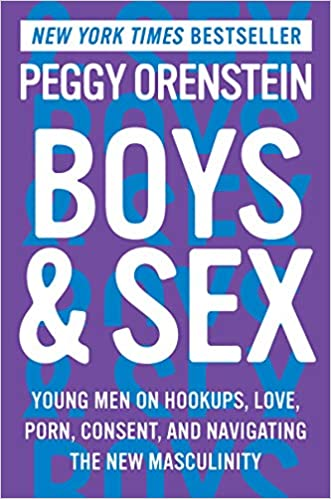
Boys and Sex: Young Men on Hookups, Love, Porn, Consent, and Navigating the New Masculinity by Peggy Orenstein

Saturday, July 11th, 2020
Boys and Sex

Boys and Sex: Young Men on Hookups, Love, Porn, Consent, and Navigating the New Masculinity by Peggy Orenstein finishes what she started with Girls and Sex, which is also summarized here. Once again she has conducted many interviews with young men and experts in many fields to paint a picture of how the same social forces that impact girls impact boys. Like her book on girls, all parents, boys, and girls should read my summaries and then get the books.

Introduction: What About the Boys?

  • For this book Peggy increased the sample size of the boys she interviewed to over 100 (She interviewed 72 for the Girls book.) Again they were in college or heading for college and represented a geographical, racial, and sexual orientation mix. Unlike the “Girls” book she included trans genders here. Although she is old enough to be their mother, she felt that they were generally more forthcoming than the girls. It was also much easier to get parent permission. While parents talk precious little to their daughters about sex, they talk even less about it with their sons.

1. Welcome to Dick School

  • Nearlly all of the boys in the study had egalitarian views about girls, thought they were smart and had platonic female friends. This is fairly new. Their definitions of masculinity, however, are right out of the 1950s. They included emotional detachment, rugged good looks, sexual prowess, athleticism, and the potential for wealth. Showing emotions is what girls do, which is not a good thing for boys. The young men who most internalize these masculine norms are more likely to have: sexually harassed a girl, bullied other boys, been victims of verbal or physical violence, engaged in binge-drinking, caused a car accident, been painfully lonely, been less happy, fewer close friends, been depressed, and been suicidal. They clearly pay a big price for being manly as do those around them.
  • Generally, boys only discuss emotions and feelings with girlfriends, sisters, and their moms. With women doing the emotional labor, boys end up stunted in a state of arrested development. Toxic masculinity deals with emotional suppression, disparagement of the feminine, and bragging about sexual conquest. This is prominent in the “jock culture” and featured in “locker room talk.” As a result, athletes are three times more likely to be accused of sexual misconduct. In order to see things like rape as ok or even hilarious, boys learn to disregard others’ feelings as well as their own.

2. If It Exists, There Is Porn of It

  • The big takeaway here is that today’s children are guinea pigs in a massive porn experiment and assessing porn’s impact isn’t easy as very little research funding is directed its way. All of the boys admitted to watching porn and some admitted to watching a lot. Parents and educators need to understand that porn is where their kids get most if not all of their sex ed. Intentional searches usually start when boys are 12 to 14. This is when most start to masturbate as they watch.
  • Watching porn is likely to cause young people to become sexually active sooner, to have more partners, to have higher rates of pregnancy, to be more sexually aggressive, to view women more negatively, and to engage in more risky and atypical sexual behaviors depicted in porn. It can cause less pleasure from partnered sex, concerns about penis size, and anxiety (erectile disfunction) when engaging in foreplay.
  • Perhaps main-stream media is more to blame as the scripts boys consume from childhood continuously objectify, demean, and are hostile or indifferent towards women. Unlike porn, which the boys know is about as real as professional wrestling, movies and TV shows are much more believable. Women in the business are often harrassed. The same is true for hip-hop music, the most popular music genre in the US who’s most devoted fans are typically white, suburban boys who are unlikely to know any black people.

3. Are You Experienced? Life and Love in a Hookup Culture

  • Hookups presume a lack of connection and commitment although it can be the first step toward a relationship. Physical intimacy is the precursor to emotional intimacy if it happens at all. This is just the opposite of what most people experienced in previous generations. What happens during a hookup is rather vague. It can be anything from making out on the dance floor to intercourse. Some boys never engage in it while others do so every week. It is most common among affluent, white heterosexuals, and predominant in Greek life.
  • Hookups are embedded in a school’s drinking culture. “Pre-game” afternoon drinking even when there isn’t a game leads to an evening of more drinking so when it’s time to hookup, both parties are often “hammered.” Boys are often told to ask permission prior to engaging in sex and to make sure the girl isn’t too drunk to know what she is doing. Hookup culture aligns with the values of contemporary masculinity: conquest over a connection, sex as status-seeking, and partners as disposable. Even for boys, they can be an emotional minefield causing inadequacy, anxiety, insecurity, confusion, disappointment, and embarrassment. There is a lot of peer pressure put on boys to hookup and brag about it. If boys understand this, at least they can make educated choices.
Share this:
Share this page via Email Share this page via Stumble Upon Share this page via Digg this Share this page via Facebook Share this page via Twitter Share this page via Google Plus

Girls and S*x: Navigating the Complicated New Landscape by Peggy Orenstein

Monday, June 22nd, 2020

Girls and S*x

Girls and S*x: Navigating the Complicated New Landscape by Peggy Orenstein tells the real story of what it’s like being a girl from middle school to college in today’s highly sexualized climate. Peggy scoured current research and had in-depth interviews with over seventy high school and college girls to compile this gripping and sometimes discouraging story. I first listened to the book on Audible prior to buying the physical cook for this summary. I just got Boys and S*x and will post my summary soon. I use the asterisk to avoid having Google Ads not post ads for these reviews.

Introduction

  • For this book Peggy interviewed more than seventy young women between the ages of fifteen and twenty, which is when most become sexually active. The group was diverse in terms of religion, politics, race, family composition, wealth, and sexual identification. They were, however, self-selected but all were hungry to talk about things like masturbation, oral sex, orgasm, and the complicated terrain of the hookup culture. Fully half experienced something on the coercion to rape spectrum.
  • Despite seismic changes in expectations and opportunity, they are still subject to the same old double standard. Sexually active girls are “sluts” while boys are “players.” Good girls are shamed as virgins and prudes. Here the opposite of a negative is still a negative. Peggy found that the conversations changed her. In preparation, she also reviewed the literature and talked to psychologists, sociologists, pediatricians, educators, journalists, and other experts.

1. Matilda Oh Is Not an Object – Except When She Wants to Be

  • At least some boys are very abusive with language, social media use, and even physical touching. Authorities often make things worse with actions that blame the victim. Blaming girls’ clothing for the thoughts and actions of boys, for example, is counterproductive and only a step from “she was asking for it.” Girls often engage in self-objectification, which can lead to depression and lower self-esteem. They learn that as females they need to project sex appeal. In addition to striving to be smart, nice, and friendly, they need to do it all while looking ‘hot’. As a man, Bruce Jenner used his body to win gold. As a woman, Caitlin Jenner displayed her body for attention.
  • Girls are also more likely to use social media to show off their bodies with or without sexy clothing and are quick to tell each other they look hot. They are twice as likely to be coerced to send sexts as early as middle school, and many consider it to be safe sex. Thanks to celebrities like Kim Kardashian, the butt has become the latest body part to reduce women to objects. Unfortunately, Kim and her fellow divas encourage young girls to package their sexuality.
  • The behavior of many popular celebrities like Miley Cyrus has lead to many young women dressing and behaving like the people they see on screen. Seventy percent of prime-time TV now contains sexual content. Movies also affect how girls and boys behave when they get together for parties.
  • The role of pornography has also had an impact. Almost all boys watch it, which changes their expectations when it comes to having real sex. A lot of porn scenes feature the denigration of women as well. Like it or not, porn has a very large role in sex education for this generation. For many, it’s how they learn what sex is. To them, things like oral and anal sex are the norm. Porn also adds to the objectification of girls promoted by other media. Competing with porn stars can cause some girls to believe that they need to put on a show to keep a partner’s interest.
Share this:
Share this page via Email Share this page via Stumble Upon Share this page via Digg this Share this page via Facebook Share this page via Twitter Share this page via Google Plus

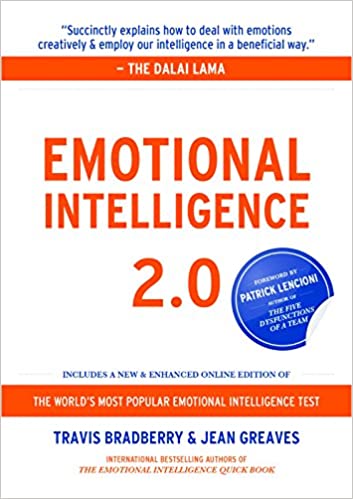
Emotional Intelligence 2.0 by Travis Bradberry & Jean Greaves (the book can be found here)

Monday, June 8th, 2020
Emotional Intelligence 2.0

Emotional Intelligence 2.0 by Travis Bradberry & Jean Greaves (the book can be found succinctly explains how to deal with emotions creatively and how to employ your intelligence in a beneficial way. There is strong evidence that EQ can be improved with effort and this book can direct that. Higher EQ leads to success on the job and at home so this is a book that everyone can use to forge a better life.

1. The Journey

  • All information from your senses has to pass through the emotional part of your brain (the limbic system) before it gets to the rational or thinking part of your brain (the frontal cortex). It’s the communication between your emotional and rational brains that is the physical source of emotional intelligence or EQ. It is emotional intelligence that explains why people with high IQs don’t consistently outperform people with average IQs.
  • The purpose of this book is to help you increase your EQ. You start by taking the Emotional Intelligence Apprasal online. To see your scores you will need the code at the end of the book, which is only good for one person. This appraisal provides a baseline against which you can judge your improvement. This is a new feature in version 2.0. You can also retake the test after you finish the book to see how much you have learned.

2. The Big Picture

  • Emotional awareness and understanding are not taught in school, but self-knowledge and emotional mastery are required to make good decisions on the job and in life. We have many words to describe our feelings yet all emotions are derivations of five core feelings: happiness, sadness, anger, fear, and shame. Here we find twenty different words to describe each. When emotions are intense they can highjack your rational thinking and cause you to react reflexively. Your reaction to these trigger events is shaped by your personal history. Enhanced EQ can help you recognize triggers and let you respond in a rational manner.
  • We all possess the qualities of personality, EQ, and IQ. Of the three, EQ is the one most amenable to improvement. It is also the foundation of a host of critical skills like time management, decision-making, and communications. It is the strongest driver of leadership and personal excellence. It is highly correlated with high-performance and salary regardless of the job. The rest of the book will help you improve your EQ.

3. What Emotional Intelligence Looks Like: Understanding the Four Skills

  • The four EQ skills come in two pairs known as personal competencies and social competencies. The first includes self-awareness and self-management. This is where you stay aware of your emotions and manage the resulting behavior and tendencies. Social competencies include social awareness and relationship management. This is where you work to understand other people’s mood, behavior, and motives. Emotions always have a purpose as they shape your reactions to the world around you.
  • Self-awareness is a foundational skill; when you have it the other skills will be easier to use. Self-management is dependent on your self-awareness as it gives you information that you can act on rationally rather than reflexively. Social awareness is also foundational as you need to pick up on the emotions of others so you can better manage your relationships. You need to listen well rather than thinking about what you are going to say next when another person stops talking. Relationships require you to understand others and are based on how you treat them over time. This chapter also contains positive and negative examples of all four skills.
Share this:
Share this page via Email Share this page via Stumble Upon Share this page via Digg this Share this page via Facebook Share this page via Twitter Share this page via Google Plus

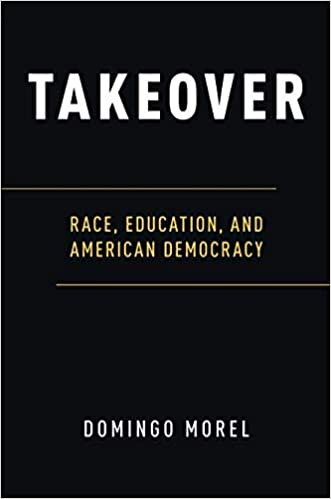
Takeover: Race, Education, and American Democracy by Domingo Morel

Wednesday, May 20th, 2020
Takeover

Takeover: Race, Education, and American Democracy by Domingo Morel tells the story of how state takeovers of urban school districts have tended to coincide with blacks gaining majorities on urban school boards. While the takeovers are based on poor academic performance and corruption, they don’t seem to improve academic results but they do take political power away from the local community. They also tend to result in a lack of collaboration, which is an essential contributor to school success in general. Although this book takes a political side in this argument, it does make a compelling case.

1. Schools, State, and Political Power

  • From the first takeover in 1989 (Jersey City, NJ) to 2017 there have more than 100 takeovers. This book examines takeover politics, their impact on communities, and what they teach us about democracy in America. In addition to at least 33 states and the district of Columbia, the 2001 No Child Left Behind (NCLB) legislation authorized state takeovers. What seems puzzling is that studies on the effects of takeovers do not show markedly improved outcomes in test scores, attendance, and graduation rates. They are seen by many as an assault on local autonomy. Since they usually abolish elected school boards, they appear to violate the 1965 Voting Rights Act. Takeovers, therefore, are about political power and they are often about race as racialized communities have historically relied on education policies as a way to enter the political sphere. The road to the mayor’s office and the city council has often gone by way of the school board.
  • There has been tension between states and cities ever since cities emerged. Beginning in the 1960s, federal grants to states were used to address issues of education and other issues. Although state funding was a small part of the budget at first, it gave states great leverage when it came to controlling the schools. States have also been slower than the federal government when it comes to advancing civil rights. Most takeover laws were passed in Republican-controlled states. This seems odd as the concept of local control has been central for Republicans and conservatives. Domingo sees takeovers as a systematic disempowerment of black communities and as state-sanctioned political inequality.

2. A View from Two Cities

  • Here we have case studies of two school districts that were taken over by their respective states. The first is Newark, New Jersey. Prior to the 1970s, Newark was run by whites even though they were a minority. Then the black and Hispanic voters organized and started to win seats on the school board. They also elected the first black mayor. When state funding shifted due to court decisions, the white-controlled state government demanded accountability from urban schools which included district governance and student accountability. With minorities in charge, the number of jobs in the district expanded. This was seen as patronage among other sources of corruption by the state. In 1988 the state passed one of the first Takeover Laws. When state monitoring exposed nearly 100 complaints, the state took control of its largest district in 1995.
  • The elected board was replaced by an “advisory board” along with a black superintendent. In 1996 the superintendent fired over 600 employees stating that the district had become a source of jobs rather than an educational institution. Nearly 2000 part-time jobs were also cut. Test scores and graduation rates worsened during the next five years. This was a shock to the community that had fought to gain political empowerment.
  • In 1991 the state of Rhode Island took over the Central Falls School District. This district was almost half Hispanic and included many other immigrant groups. They set up an appointed board with no Hispanic representation. In 2006 an enlightened commissioner started appointing Hispanics. In 2012 the election of a Hispanic mayor improved the relationship between the schools and the mayor’s office. In 2015 the district got a Hispanic superintendent. The cooperation and support resulted in better test scores, a higher graduation rate, and a lower dropout rate. In Newark, the takeover was hostile. In Central Falls, the takeover helped create a path for Hispanics to gain political empowerment and forge stronger ties to local and state elected officials. The conclusion: states have the capacity to disrupt or support local schools.

3. State Takeovers and Black and Latino Political Empowerment

  • Schollars generally agree that decentralization is the best way to empower minority groups. An astounding 85% of takeovers have happened in districts where blacks and Latinos make up a majority of the student population. When it comes to how political power for different groups is impacted by takeovers, Newark is representative. The state considered taking over the district when whites ran the school board in the 1960s but never did. They took it over, however, in 1995 when blacks controlled the school board. Latinos made out much better as they went from no power on the elected board to proportional power on the appointed board. Blacks and Latinos are well represented on appointed boards as state officials are concerned with being perceived as “colonizers.” When states go as far as abolishing school boards, it happens mostly in black districts.

4. What Take Over? State Centralization and the Conservative Education Logic

  • Between 1973 and 2000 there were school funding court cases in 18 states aimed at increasing state funding in poor districts after which the 14 states with the highest black populations passed takeover laws. As a result, black students are much more likely to attend a school supervised by state authorities. The main reason given for takeovers puts improving academic performance first, but takeover districts have not shown any improvement. The second reason is to improve education so as to improve the state’s economy. Another puzzle is that when takeovers are hostile, the collaboration that promotes good schooling is disrupted.
  • “White Flight” to the suburbs resulted in a greater degree of segregation in urban areas. The people who left with their money and wanted to keep as much as they could. As we saw in the case of Newark, state takeover resulted in lower spending on the schools. Eighty percent of takeover laws were passed under Republican governors who generally draw a small percentage of black voters. It seems clear that race, economics, and politics are all important factors that contribute to the likelihood of a state takeover, not just educational outcomes and concerns.

5. The Implications of State Takeovers for Urban Politics: Cohesive and Disjointed State-Local Regimes

  • The bulk of this chapter details the relationship between the Newark, NJ school district, and the New Jersey Governors from 1990 to the present. In general, the democrat governors were more in favor of increased financial support and decreased oversight. In 2006 Corry Booker, a black man raised in a white suburb became mayor with weak support from the black community. He backed charter schools, vouchers, and merit pay, which the black community resisted. He got along with the Republican governor Chris Christie who was elected in 2009. During Christie’s term, relations between the state and the people in Newark were fraught with disagreements.

6. Takeovers and American Democracy

  • The history of urban politics is one of corruption and patronage regardless of the race in power. It wasn’t until blacks gained power in schools and city governments, however, that states began to take over school districts. State officials also believe that they know better what is best for students in the districts they takeover even though it’s unlikely that they really care more. Domingo feels that the federal government can help by first providing increased financing to poor school districts. The feds can also push the states to make sure that local populations have more control over their schools.

Epilogue

  • On April 1, 2019, the last state-appointed superintendent departed ending the 22-year state takeover of Newark, NJ’s schools. The book reports the beginning of this process, but it was published (2018) prior to this event. The beginning of this process began in 2015 by the Republican governor Chris Christie just prior to his announcement that he was running for president. It seems clear that this was part of his effort to show how well he could govern a blue state. Two student protests helped bring this effort to pass. It ended a time where locals were blamed for things that they couldn’t control and began a time where they were now responsible for district outcomes. Domingo expects serious scrutiny from the state as a result.

Domingo Morel

  • Domingo is an Asst. Prof at the University for Rutgers, Newark. (@Rutgers_Newark) In addition to authoring Takeover: Race, Education, and American Democracy, he is co-editor of Latino Mayors: Political Change in the Postindustrial City. In 2019, he was a Visiting Scholar at the Annenberg Institute for School Reform and an affiliate with the Taubman Center for American Politics and Policy at Brown University. His website is DomingoMorel.Com. His email is domingo.morel@rutgers.edu. You can reach him on Twitter @DomingoMorel.
Share this:
Share this page via Email Share this page via Stumble Upon Share this page via Digg this Share this page via Facebook Share this page via Twitter Share this page via Google Plus

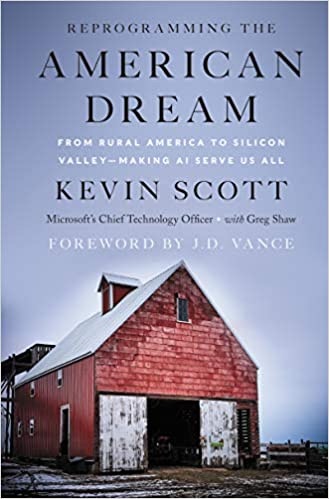
Reprogramming the American Dream: From Rural America to Silicon Valley – Making AI Serve Us All by Kevin Scott

Monday, April 27th, 2020
American Dream

Reprogramming the American Dream: From Rural America to Silicon Valley – Making AI Serve Us All by Kevin Scott finds a balance between “the robots are coming for our jobs” and “AI is great, nothing to worry about.” Like Kevin, I believe that all citizens need to educate themselves regarding the promises and perils of AI. That is clearly the purpose of this book. It won’t make you an expert in AI, but it will give you many clues. In addition to citizens, AI experts, policymakers, and executives are also Kevin’s intended audiences.

Introduction

  • There are two prevailing stories about AI. For low and middle-skill workers, we hear a grim tale of steadily increasing job destruction. For knowledge workers, we hear an idyllic tale of enhanced productivity and convenience. But neither captures the whole story. The story we need is AI’s potential to create abundance and opportunity for everyone as it helps solve the world’s most vexing problems. Kevin’s story is based on his upbringing in rural Virginia and his life as executive vice president and chief technology officer for Microsoft.
  • We know AI will radically impact economics and employment and we are already seeing it perform very specific, narrow tasks like selecting the ads you see, turning speech to text, and translating languages. He sees a future where workers at all skill levels are served. While AI was invented in the US, China’s goal is to become the leader and thus dictate policy regarding this technology. In order to have a voice in the debate you need to be informed, which is the goal of this book.

PartI: Where We’ve Been – 1. When Our Jobs First Went Away

  • Kevin returns to his rural home and visits old friends who are using simple versions of AI to harvest sod, monitor nursing home patients, and manufacture specialized plastic parts. The latter demonstrates how technology is allowing some manufacturing jobs to return to the US. In the case of the sod farmer, drones using AI are saving human jobs. In essence, AI can empower people rather than replacing them. He also visits a large Microsoft data center that replaced an obsolete prison. The local college even started a program to train workers. The challenge is to convince high school graduates that there is a better future in a technology job than in oil and gas jobs which might pay $60,000 to start, but are heavy labor jobs that over time, pay little more than the initial offer.

2. The Career Choice I Made

  • This chapter is largely autobiographical. Kevin tells his story from home to college to a small engineering company in Lynchburg, VA, to graduate school at the Univerity of Virginia where he met his future wife. When she was accepted to a PhD program in Götingen, Germany he was able to get a job there too. From there he went from Google to AdMob, to Google, to LinkedIn. LinkedIn was acquired by Google in 2016 and ultimately he was chosen by Saya Nadella the CEO to be Microsoft’s chief technology officer (CTO).
  • Along the way Keven stresses the importance of his supportive family and community in rural Virginia. While they were not rich he never lacked for food or housing and hand mentors and role models that supplemented his education. He didn’t have health care until he got to Google but never got sick either. While he doesn’t think you should base all of your career decisions on income, you should consider the economics of the choices you make. Get as much data and good advice as you can and reflect prior to making important life choices. For companies, he stresses the importance of stories. They need to be stories that employees can make their own and they need to be connected to how their work can somehow make the world a better place.

3. Stories of Revival

  • The stories here focus on rural life and opportunities. In 2016 75% of venture funding went to Silicon Valley, New York, and Boston. Kevin tells the success story of Memphis that now has the world’s largest cargo airport. AI is making inroads in agriculture with robots that do precision irrigation and drones that apply fertilizer and pesticides in just the right quantities and locations. Kevin offers some ideas of how the government can incentivize rural entrepreneurship. His big idea is to have an Apollo type program for AI. The Apollo program only cost $200 billion in the 1960s to get to the moon so it should be possible to do the same for AI.
  • We need a system to make rural people better at tech so they can run and debug drones, robots, and other high tech farm equipment. There is some effort in this direction. We also need to break down the stereotypes that urban and rural people have of each other. The media that people currently consume is part of the problem as many people binge on unhealthy information. He switched his consumption to 75% refereed journals like Science and Nature, 25$ to learning something new and different not related to his job, and 5% for everything else. Doing so made him less anxious, irritated, and much better informed.
Share this:
Share this page via Email Share this page via Stumble Upon Share this page via Digg this Share this page via Facebook Share this page via Twitter Share this page via Google Plus