Archive for the ‘Book Summaries’ Category
Tuesday, January 17th, 2017
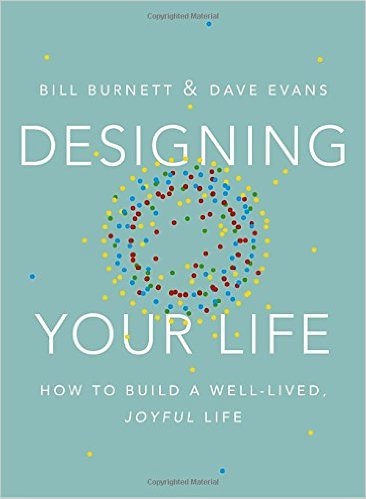
Designing Your Life: How to Build a Well-Lived Life by Bill Burnett & Dave Evans offers time-tested advice for becoming the best version of yourself possible. The advice here can help even if you are already fairly happy with your life. Their website also contains useful resources and supplements to the book.
Bill Burnett & Dave Evans
- Bill is the executive director of the Stanford Design Program and co-founder of the Life Design Lab. He is also a former leader of Apple’s PowerBook product line and CEO of a design consultancy. Dave is co-founder of the Life Design Lab, a lecturer in the Stanford Design Program, a management consultant, and formerly a co-founder of Electronic Arts.
Introduction
- Since only 27% of college grads end up in a career related to their jobs, it’s clear that most end up designing their careers and all need to design their non-career life. While this book is for all of us, it’s the two-thirds of workers unhappy with their jobs and the 15% who hate their work that need it the most. Life is full of problems, and solving them is what design is all about. A well-designed life is constantly creative, productive, changing, evolving, and there is always the possibility of surprise. Life then is about designing something that has never existed before. Keep in mind that passion is something you develop after you try something and get good at it. A key point is to never measure yourself against anyone. The five necessary mindsets covered are 1. Be Curious 2. Try Stuff 3. Reframe Problems 4. Know it’s a process and 5. Ask for help.
1. Start Where You Are
- You need to know where you are and what design problems you are trying to solve. In design thinking, the authors put as much emphasis on problem finding as problem solving. Deciding which problems to work on may be the most important decisions you make. The authors define a class of problems known as gravity problems. These are problems like trying to overcome gravity in that they are not actionable and therefore can’t be solved. The key is to not get stuck on something you have no chance of succeeding at.
- At the heart of this chapter is an activity that lets you take stock of your current status. You are asked to rate from 0 to 100 how you feel about the criteria of 1) Your Health, 2) Your Work, 3) Your Play, and 4) Your Love. As far as love is concerned you should consider all the different types of love you experience, not just love from a spouse or significant other. When you complete this task you will have a framework and some data about yourself. Nex,t you are asked to answer these questions. 1) Write a few sentences about how it’s going in each area. 2) Ask yourself if there’s a design problem you’d like to tackle in any area. 3) Ask if your problem(s) is a gravity problem.
Posted in Book Summaries, Business Books, Leadership Books | No Comments »
Friday, January 6th, 2017
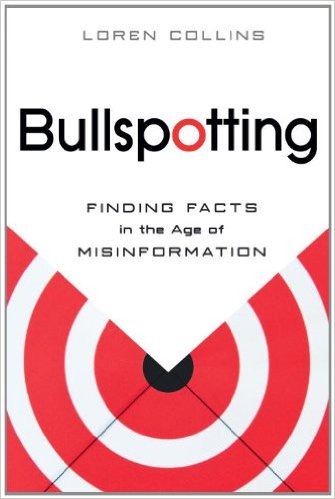
Bull Spotting: Finding Facts in the Age of Misinformation by Loren Collins will help you spot and avoid lies in a world with more accessible truth and lies than ever. In the age of fake news you can learn how to use the tools of critical thinking to identify the common features and trends of misinformation campaigns. Loren will help you tell the difference between real conspiracies and conspiracy theories, real science from pseudoscience, and history from fantasy.
Loren Collins
- Loren is and attorney and firm associate with the Law Office of W. Bryant Greene, III, P. C. He is the creator of Barackryphal, a website that debunks the fallacies propounded by birthers regarding the birth and citizenship of President Obama. He has written for The Atlanta Journal-Constitution on the topics of misinformation and critical thinking.
1. Baloney Detection
- Operating in the world efficiently depends on one’s ability to identify crap, also known as misinformation. Today we are constantly bombarded with information, which makes crap detection more import than ever. We tend to rely on common sense, but recall that there was a time when common sense told our ancestors that the world was flat. It can be helpful, but we need to look to science to uncover the truth.
- Most of us are not conditioned to distinguish between good and bad sources. We favor information from sources we like and visa versa. We accept information that supports our beliefs, and doubt information that doesn’t. This is know as confirmation bias. Other biases include having our thinking impacted by how something is framed, and putting more weight on recent information.
- People evolved to spot patterns even when they don’t exist and to create stories, myths, to explain the patterns. The ancient Greeks, for example, created different Gods to explain how the world worked.
- A common feature of creative misinformation is the reliance of anomalies. The problem with this approach is that it doesn’t produce a cohesive alternative theory. The idea is that if you can undermine one detail of the consensus view you have disproved it. If you see this in action, it tends to be a good means of spotting misinformation. Occam’s razor tells us that the explanation that makes the fewest assumptions is most likely to be the correct one.
2. Denialism
- Denialism concerns the rejection of truth accepted by experts. In some cases popular opinion denies scientific facts. For example, a 2010 poll showed that 40% of Americans believe humankind was created in our present form less than ten thousand years ago. The primary tactic is to look for anomalies that can poke holes in established theories. Deniers do not advance a cohesive alternative theory that can be tested.
- When confronted with evidence, deniers will often say it is forged or fake. When evidence can’t be denied they may say that it means something else like the Nazi gas chambers were not used for mass killings. Fake experts are also associated with deniers. While they may have college degrees, the degrees are usually in unrelated fields. Subjective experiences and anecdotes are often treated as solid evidence.
Posted in Book Summaries, Business Books, Education Books, Leadership Books | No Comments »
Monday, December 5th, 2016
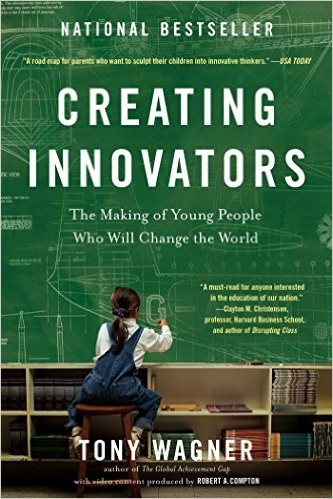
Creating Innovators: The Making of Young People Who Will Change the World by Tony Wagner (© 2012, Scribner: New York, NY) explores what parents, teachers, and employers must do to develop the capacities of young people to become innovators. Tony profiles innovators to identify patterns in their childhood that made them what they are. He shows how to apply his findings to education and tells parents how to compensate for poor schools. Keys include collaboration, interdisciplinary problem-solving, and intrinsic motivation. Sixty original videos are included that you can access via a smartphone. Go to Creating Innovators for a trailer.
A Primer on Innovation
- Innovation is about the process by which new things take place. It involves using novel and creative ways to create value via new products, services, business models, or processes. It involves valuable original ideas or insights that you somehow implement. It’s creative problem solving applied to the real world. Incremental innovation significantly improves products, processes, or services. Disruptive innovations create a new or fundamentally different product or service that disrupts markets and displaces dominant technologies.
- Innovations can be technical like Apple’s iPod, iPhone, and iPad. They can also be social like the nonviolent strategies of Gandhi and M. L. King.
Skills of Innovators/Nature of Creativity
- Tony offers the following as the main skills needed: 1) critical thinking and problem solving 2) collaboration across networks and leading by influence 3) agility and adaptability 4) initiative and entrepreneurship 5) accessing and analyzing information 6) effective oral and written communication 7) curiosity and imagination. It is also necessary to imagine the world from multiple perspectives, see all aspects of a problem, be optimistic, experiment to explore problems with a bias towards action, work with others as the day of the lone genius seems to be over. For places like Google and Apple, intellectual curiosity is more important than smarts. They also want people who will take control of a situation rather than waiting to be lead.
What Is Needed
- Creativity is a habit and like any habit, it can be either encouraged or discouraged. Teachers that value the right answer more than provocative questions tend to drum the curiosity out of students early on. Creativity can be encouraged or discouraged.
- Tony cites work of Teresa Amibile’s who says that creativity or innovation has three components. They are expertise, creative thinking skills, and motivation. She believes that motivation is the most important and that intrinsic motivation has more impact than extrinsic motivation. Tony adds that childhood play should lead to adolescent passion and adult purpose. They are the three interrelated elements of intrinsic motivation. He notes that a disproportionate number of innovative people attended Montessori schools where play is an important part of the curriculum.
What Is Needed
- Knowing how to find those things you are interested in and that motivate you is way more important than specific things you study. This implies that you should put a buffet of opportunities in front of children and let them engage in unstructured play. If a child finds an interest, it should be encouraged.
- Tony tells of a course at Stanford where students work in teams to solve open-ended problems. Most high school and college courses that feature individual competition, specific content, and extrinsic incentives like grades and GPA. What is needed are courses that feature teamwork, multidisciplinary approaches, and the intrinsic incentives of exploration, empowerment, and play.
Tags: Creating Innovators, Innovation, Tony Wagner
Posted in Book Summaries, Business Books, Education Books, Leadership Books | No Comments »
Sunday, November 13th, 2016
Teaching with Poverty in Mind: What Being Poor Does to Kids’ Brains and What Schools Can Do About It by Eric Jensen explains how the stresses encountered by poor students can impact their achievement in school and what schools can do about it. All schools should get some copies into their teachers’ hands.
Introduction
- Eric’s Three Claims.
-
1. Chronic exposure to poverty causes the brain to physically change in a detrimental manner.
-
2. Because the brain is designed to adapt from experience, it can also change for the better. In other words, poor children can experience emotional, social, and academic success.
-
3. Although many factors affect academic success, certain key ones are especially effective in turning around students raised in poverty.
- Eric points out that many poor students have not succeeded, and he claims that its due less to parents than to certain school-site variables that he thinks may surprise you. A goal of this book is to provide a better understanding of what poverty is and how it affects students. He goes on to explain what drives change within schools and inside a student’s brain. To help you make changes in your school and classroom, Eric draws on successful schools that serve poor children.
Posted in Book Summaries, Education Books, Leadership Books | No Comments »
Monday, October 3rd, 2016
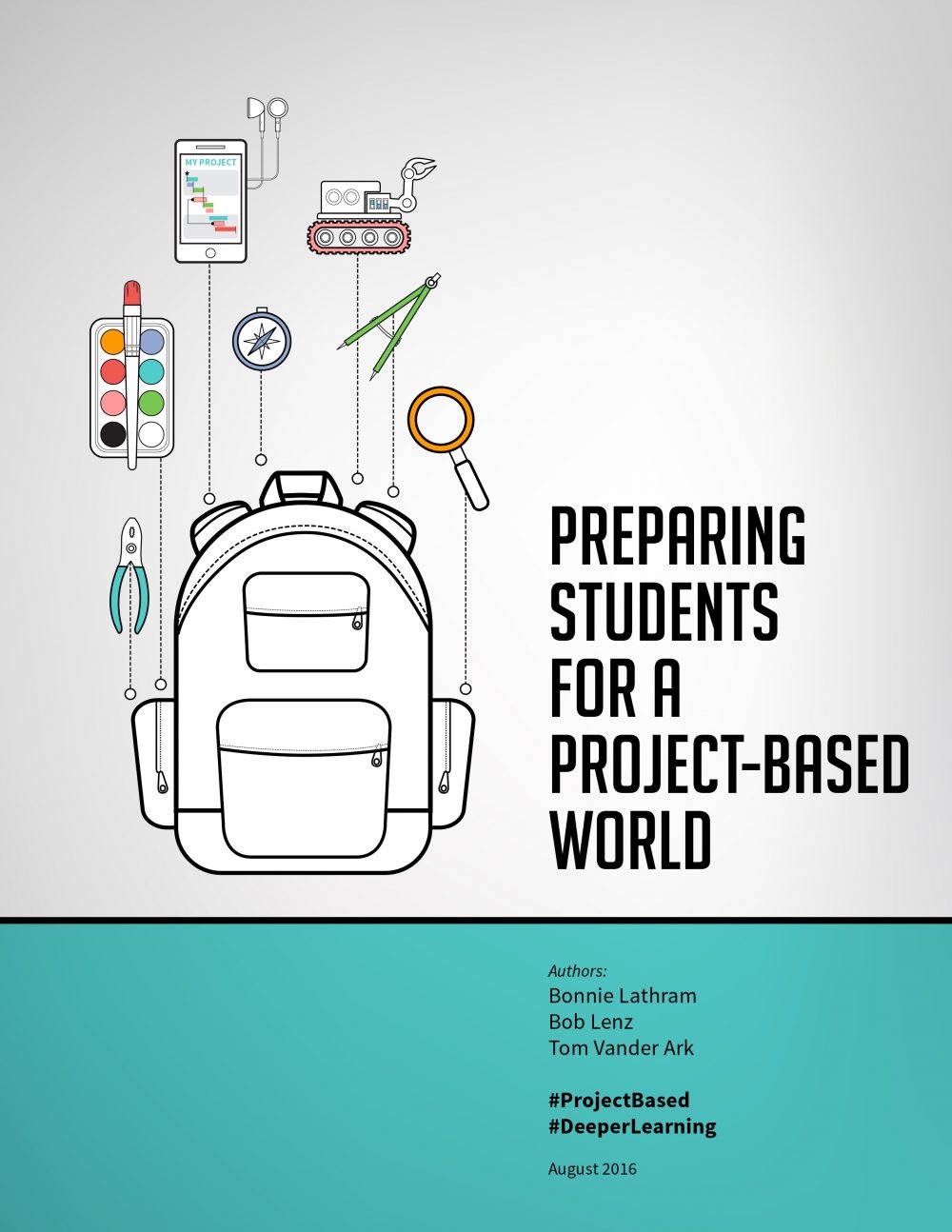
Preparing Students for a Project-Based World by Bonnie Lathram, Bob Lenz, and Tom Vander Ark spells out the rationale for introducing project-based learning as an excellent way to prepare students for college and careers. It is the first of three reports about the new economy and inequities in student preparation. The next two parts will deal with preparing teachers and students for a project-based classroom.
Introduction
- The new economy requires a lot from young people. The bar is higher and the rules have changed in five ways. 1. Anyone who can access the Internet can learn to code, build and app, and start a business. This makes competition much greater. 2. The pace of technological change requires continuous learning. 3. As robots take over routine tasks, non-routine work is organized into projects. 4. Soon 40% of workers will be freelance and people employed by companies will move frequently. 5. Value is produced by initiating and sustaining complex work applying design and problem-solving skills.
- As a result, we need to reimagine how we teach students and how we organize schools. Students need to use their own interests and passions to grow their skills, master core academic content, and learn how to collaborate with others. One way to do this is to give all students access to high-quality project-based learning.
The New Economy
- For most workers, a series of projects will mark their career. There is also an increase in gigs, which are short-term routine tasks requiring low-skills. The classic example here is Uber where anyone with a car and a drivers license can earn a modest income. Better paying jobs are just the opposite since they usually involve long-term projects, require much more skill, and pay much more. Today’s youth also has to beware of jobs subject to automation. The classic example here is tax preparation.
Inequity: Old and New
- Policy changes associated with No Child Left Behind and Race to the Top have not reduced gaps between black and white performance. Nine out of ten children from the bottom of the income ladder who graduate from college move to a higher economic bracket. Being poor, however, is an impediment to getting the education that can lift you out of poverty. Most of the jobs created since the last recession have gone to people with at least some college education. Higher college costs and stagnant wages have lowered the return on college investments so don’t go until you are ready and don’t leave without a degree.
A Project-Based World
- Technological and economic change results in a very different job market for students to face. There are six ways to prepare for a project-based world and it is vital that teachers facilitate all of them. 1. Look for real-world internships. 2. Get real-time feedback, not just grades. In your career you will get feedback so get ready for it. 3. Learn how to collaborate. 4. Project results need to be communicated so work on communication skills including public speaking. 5. Personalize your learning. This will involve applying the skills learned elsewhere. 6. Learn about project management and team leadership.
Deeper and Project-Based Learning
- Project-based learning is one way to support deeper learning outcomes. They should be demanding and require a public audience. Essential project design elements include: a focus on student learning goals and standards, meaningful problems and appropriate levels of challenge, an extended process, a real-world context, student voice and choice, time for reflection, opportunities to critique and revise, and a public presentation. This report includes exemplars using several project results.
- This chapter ends with several fallacies associated with traditional non-project-based education. These include: memorizing content is all that’s necessary, more homework increases rigor but PBL is not rigorous, and PBL only works for white middle class students. The authors claim that PBL allows students to learn and master content knowledge, demonstrate and apply knowledge and skills, and learn how to learn as they transfer knowledge to new and different contexts.
A Call For Action
- It’s clear that we need advocates in the education and business community to move forward on this vital issue. Do what you can to get this information into the hand of policy makers and engage them in conversations. Parents can also play a key role as advocates. The authors list ten elements necessary to make high-quality possible. They are: 1. Pedagogy – Combine PBL with personalized learning. 2. Accountability – Assign individual as well as team projects an make all students in a group accountable. 3. Integration – Projects should span disciplines. This may require some team teaching. 4. Badging – Students should receive badges to certify things like project management skills. 5. Voice – Students should be responsible for defining the scope and deliverables of their projects. 6. Assessment – Teachers should check in periodically to provide formative feedback and use a rubric to assess completed projects. 7. Exhibitions – Students should be able to present their work to a public audience. 8. Portfolios – Students should collect and manage artifacts in a portfolio as evidence of their learning. 9. Training – Teachers need significant training prior to implementing PBL. 10. Tech – Powerful tech tools should be available to students and teachers
The Authors
- The authors bios are included at the end of this document. Bonnie Lathram is a Director at Getting Smart where she leads large-scale education initiatives. Bob Lenz is the Executive Director of the Buck Institute for Education. Tom Vander Ark is CEO of Getting Smart and a partner at Learn Capital, an education venture fund. You can follow them on Twitter at @belathram (Bonnie) @pblbob (Bob) and @tvanderark (Tom).
Posted in Book Summaries, Education Books, Leadership Books | No Comments »