Archive for the ‘Book Summaries’ Category

STEM by Design: Strategies and Activities for Grades 4-8 by Anne Jolly

Monday, September 19th, 2016

1. What Is STEM?

  • STEM education is an interdisciplinary approach to learning that removes the traditional barriers separating the four disciplines of Science, Technology, Engineering, and Mathematics and integrates them into real-world, rigorous, and relevant learning experiences for students. (See this short animation for a visual definition.) There is more of a focus on working in teams, and the problems do not have a single right answer. This is an emerging national trend and is noted for taking many teachers outside of their comfort zones. The purpose of this book is to give you a teaching toolkit filled with new ideas and know-how to help you start exploring and implementing STEM education.
  • As failure is a normal part of the engineering process, it is also a part of STEM education. The students need to know that failure is expected and that the classroom is risk-free. Teachers facilitate rather than tell as students follow an engineering design process. Students connect and apply science principles and use math and technology as tools to solve an engineering problem. Rather than conduct an experiment to test a scientific hypothesis, students engineer a solution for a real-world problem. The steps are: 1. Define the problem, 2. Research, 3. Imagine, 4. Plan, 5. Create, 6. Test and Evaluate, 7. Redesign (iterate), and 8. Communicate.
  • Consider adding some of these reference books to your school’s professional development library.

2. Why Teach STEM?

  • STEM literacy can have a positive personal impact on the lives or our students. It can also impact our country and society in general. Businesses are asking for employees with in-depth mastery of STEM skills. Anne lists seven compelling reasons. 1. Help student develop deeper understanding of science and math concepts. 2. Promote innovative critical thinkers, which can allow creativity to flourish. 3. Students learn who to approach and solve problems. 4. They develop a sense of ethics and social conscience. 5. Students develop collaboration skills. 6. Technological literacy increases. 7. Students understand the connection between STEM education and future careers.

3, STEM Variations

  • In addition to a fully integrated program that uses the engineering design process and integrates the other subjects, there are many variations that you may run in to. A common one stresses the subjects individually and may add engineering and coding courses to the standard science and math offerings. Some add a maker component to the school’s offerings. Others add the arts and call it STEAM. Anne suggests that art courses stay in play so that students will have artistic skills to use as they design projects.
Share this:
Share this page via Email Share this page via Stumble Upon Share this page via Digg this Share this page via Facebook Share this page via Twitter Share this page via Google Plus

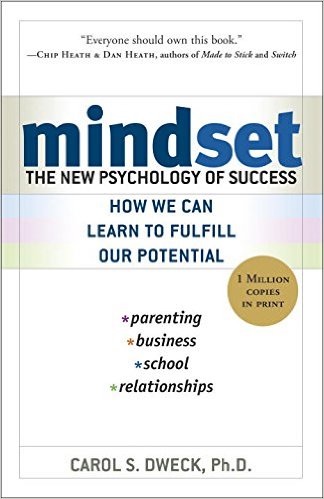
Mindset by Carol Dweck – Revised Summary

Saturday, September 10th, 2016
Mindset

Back by popular demand is a revised summary of Mindset: The New Psychology of Success – How We Can Learn to Fulfill Our Potential by Carol S. Dweck, Ph.D. will help you learn how a simple belief about yourself guides a large part of your life. It is vital that all teachers and parents read this book.

Carol S. Dwech PhD

  • Carol is one of the world’s leading researchers in the field of motivation and is the Lewis and Virginia Eaton Professor of Psychology at Stanford University. Her research has focused on why people succeed and how to foster success. She has held professorships at Columbia and Harvard Universities, has lectured all over the world and has been elected to the American Academy of Arts and Sciences. Her scholarly book Self-Theories: Their Role in Motivation, Personality, and Development was named Book of the Year by the World Education Federation. Her work has been featured in such publications as The New Yorker, Time, The New York Times, The Washington Post, and The Boston Globe, and she has appeared on Today and 20/20.

Estimating Your Own Ability

  • Studies show that people with growth mindsets tend to be accurate in assessing their own abilities, even if it is unflattering. If you are oriented toward learning, you need accurate information about your current abilities in order to learn effectively. Howard Gardner is quoted as saying that exceptional people have “a special talent for identifying their own strengths and weaknesses.” They also have a special talent for converting life’s setbacks into future successes. Creativity research sees this as the number one ingredient in creative achievement. Dweck’s key message is that you can change your mindset as they are just beliefs.

Mindsets and Personality

  • Beyond intelligence, fixed and growth mindsets impact your personality. People with fixed mindsets believe that they are what they are and cannot change. They want to be praised and not challenged. Those with growth mindsets want to get better and are accepting of people who point our their shortcomings. Marriages between different mindsets can fall apart as a result. Top performers in sports are those who constantly push themselves to be better. If you get a thrill from what’s easy, you may have a fixed mindset. If you enjoy what is difficult, you may have a growth mindset. You think that becoming is better than being.

What Do the Experts Know?

  • If you have a fixed mindset, you think that tests and experts can somehow tell you what your potential is. Many accomplished people were thought to have little potential. Dweck lists Jackson Pollock, Marcel Proust, Elvis Presley, Ray Charles, Lucille Ball, and Charles Darwin as examples. Look for students who are energized by criticism. (Doug: My daughter studied fine arts at Pratt Institute in Brooklyn, NY. Every day she had to endure criticism of her work. As a result, she got better and better. After graduating in 2006 she immediately got work in the competitive art industry in New York City and has worked ever since.)
Share this:
Share this page via Email Share this page via Stumble Upon Share this page via Digg this Share this page via Facebook Share this page via Twitter Share this page via Google Plus

The Myths of Standardized Testing – Short Summary

Wednesday, September 7th, 2016

Myths

I’m still on the road, so today you get a shortened summary of The Myths of Standardized Tests: Why They Don’t Tell You What You Think They Do by Phillip Harris, Bruce M. Smith, and Joan Harris. If you agree with me that the current state tests imposed by the federal government are harmful to students and teachers, you will find ammunition here to help me fight this battle. If you want the longer summary, click here.

Scores Correlate With Wealth

  • The tests rely on items closely linked to socioeconomic status and inherited aptitudes to spread out the scores. As such they tend to measure what students bring to school, rather than what they are taught once they get there.

Just Pass or Just Fail?

  • Any student can go from proficient on one version to needing remediation on another. Items are chosen to spread out the scores of the test takers. Time limits spread out scores even more. As students can only sit and focus for so long, the tests can only deal with a small fraction of the domain. Some topics have to be skipped. Timed tests also produce test anxiety.

Who Wants to be Judged by a Snapshot?

  • Tests depend on the idea that a small portion of a student’s behavior fairly represents the whole range of possible behavior. To draw valid inferences from a test, it must cover more than a small part of the content domain.

What They Don’t Measure

  • They don’t measure goals schools pursue like creativity, critical thinking, motivation, persistence, empathy, leadership, courage, compassion, honesty, and curiosity. Students with high scores may be shallow thinkers. Important items that all students should know are left out at the expense of items that half of the students will miss. There are too many standards to use criterion-referenced tests.

Fuzzy Math

  • Test scores are not clean, crisp numbers but fuzzy ranges that extend above and below the score, and 5% of the time the true score isn’t even in the fuzzy range

Are They Really Objective?

  • A look at how the tests are made reveals a good deal of subjective human judgement from the people who write, edit, and assemble the test items. Setting the standards also requires judgement that occurs in a political and social context. Achievement levels are, first and foremost, policy statements.

Carrots and Sticks by Mostly Sticks

  • There is excessive reliance on rewards and punishments. Research shows how rewards dampen interest in, and enthusiasm for, the activity that is rewarded.

Teachers Cheat

  • “The more any quantitative social indicator is used for social decision-making, the more subject it will be to corruption pressures, and the more apt it will be to distort and corrupt the social processes it was intended to monitor.

The Narrowing Effect

  • High-stakes tests have narrowed and dumbed down curricula and eliminated time spent on untested subjects by about a third, including recess. Tests also drive instruction towards items with one clear, right answer at the expense of open-ended problem solving.

True Predictors

  • Nonacademic accomplishments are better predictors for future accomplishments than grades or test scores. Grades are much better predictors than tests since they often consider more qualities than test scores. The best predictors of future accomplishment are similar accomplishments.

The Back of the Bus

  • We expect everyone to learn the same things, to the same level, at the same time? What is the point when everyone is unique? Our obsessive focus on academic achievement measured by tests has pushed other goals to the back of the bus.
Share this:
Share this page via Email Share this page via Stumble Upon Share this page via Digg this Share this page via Facebook Share this page via Twitter Share this page via Google Plus

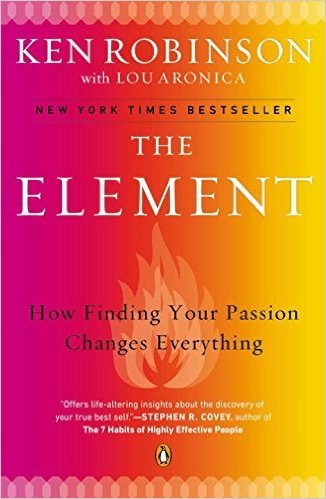
The Element: How Finding Your Passion Changes Everything by Ken Robinson

Tuesday, September 6th, 2016
The Element

The Element: How Finding Your Passion Changes Everything by Ken Robinson, PhD (©2009, Penguin Books: New York, NY) deals with the point where natural talent meets personal passion. Ken explores the conditions that lead us to live lives filled with passion, confidence, and personal achievement. The stories about people from a wide variety of fields entertain and inspire. The book is a classic. If it’s not on your shelf, click the icon below to get your copy. If you read it a while ago, my summary will be a good review. Also check out Sir Ken’s TED Talks.

Sir Ken Robinson

  • Sir Ken is an English author, speaker, and international advisor on education in the arts to governments, non-profits, education, and arts bodies. He was Director of The Arts in Schools Project (1985–89), Professor of Arts Education at the University of Warwick (1989–2001), and was knighted in 2003 for services to education. Originally from a working-class Liverpool family, Robinson now lives in Los Angeles with his wife Marie-Therese and children James and Kate.

Introduction

  • We are all born with tremendous natural capacities, and we lose touch with many of them as we spend more time in the world. Ironically, one of the main reasons is education itself. Young children are confident in their own imagination and usually see themselves as being creative when they start school. By the time they finish formal education, most don’t feel that way. Ken uses the stories of people who did find their Element and offers them to help us all do the same. Most of the stories were gathered via direct interviews that often feature twists, turns, and surprises.

Who’s Stories?

  • Here are some of the people who’s unlikely stories help make this book so special: Matt Groening – Simpsons creator, Gillian Lynne – dancer and founder of company that did Cats and Phantom of the Opera, Paul Samuelson – economist and author, Paul McCartney – Beatle, John Cleese – Monty Python member, Mick Fleetwood – drummer Fleetwood Mac, Bart Conner – Gold Medal Gymnast, Gordon Parks – Founder of Essence Magazine, Buckminster Fuller – architect, Ewa Laurance – woman’s world billiards champion, Aaron Sorken – award winning writer for stage, movies, and television, Meg Ryan – Actress, Arianna Huffington – creator of The Huffington Post, and Richard Branson – Entrepreneur.
Share this:
Share this page via Email Share this page via Stumble Upon Share this page via Digg this Share this page via Facebook Share this page via Twitter Share this page via Google Plus

The Innovator’s Mindset: Empower Learning, Unleash Talent, and Lead a Culture of Creativity by George Couros

Tuesday, August 9th, 2016

IM
The Innovator’s Mindset: Empower Learning, Unleash Talent, and Lead a Culture of Creativity by George Couros gives great encouragement and advice to teachers seeking to improve continuously in the face of budget restrictions, policies that don’t make sense, and curricula that are way too static for a constantly changing world. This would be a great book to give to every teacher in your school.

Introduction

  • George begins with praise for his father who was always learning and exposing his children to the latest technology from the VCR to Facebook. As an illiterate Greek immigrant, he started as a dish washer and ended up as a restaurant owner. While his father had to embrace countless changes, George regrets that many educators are more likely to resist change rather than embrace it. As a result, we have 21st-century schools with 20th-century learning. If teachers don’t understand that the world is changing and that they need to change with it, the world may decide that it doesn’t need them anymore. If it’s just about knowledge, students can find and digest that themselves.
  • There is a need for innovation in education. Inspiration is also needed and it is one of today’s students’ chief needs. It can spark curiosity that will prompt students to learn on their own. Unfortunately, most students leave school less curious. Successful students leave school being good at school and the world isn’t school. One day they are raising their hand to go to the restroom and the next day they are on their own in a world that requires critical thinking and collaboration.

Part I: Innovation in Education – 1. What Innovation is and Isn’t

  • George sites the failure of Blockbuster Video Rental as an example of how an organization can fail if they don’t change fast enough. If, according to the common saying, “We need to prepare kids for jobs that don’t exist,” innovation in education is essential. George even created a job title: Division Principal of Innovative Teaching and Learning. No teacher has ever had a former student return to say a standardized test changed his of her life for the better.
  • George defines innovation as a way of thinking that creates something new and better. It can be something totally new (invention), or a change to something that already exists (iteration). It’s important to avoid thinking that any use of technology is innovative. Student essays done on a computer are probably not innovative, while a student blog may well be. Technology is a tool, not a learning outcome or a leadership outcome. As John Maxwell once said, “Change is inevitable, growth is optional.” It’s vital that education not become the new Blockbuster.

2. The Innovator’s Mindset

  • We start with an inspiring story of how a student overcame a stutter by adopting the innovator’s mindset. He goes on to discuss the highlights of Carol Dewck’s book Mindset: The New Psychology of Success. See my summary here. George points out that the world only cares about and pays for what you can do with what you know, and it doesn’t care how you learned it. Every educator, therefore, needs to have an innovator’s mindset. To promote this, George made a budget line titled ‘innovation’ and it was up to teachers to apply for the money. This is like a school setting up its own grant system. He also lets teachers know about the popular mantra that says: failure is an important part of the process.
  • Letting teachers know they have the freedom to fail will also promote resiliency and grit. The only way to innovate is to try things and see if they work or not. This must be done as you adjust to each learner. In order to innovate, you need to focus on asking questions. This will drive the process. Teachers also need to ask would they want to be a learner in their own classrooms? Lessons need to connect to students’ lives and they need to learn from each other. You also need to collect feedback continuously.

3. Characteristics of the Innovator’s Mindset.

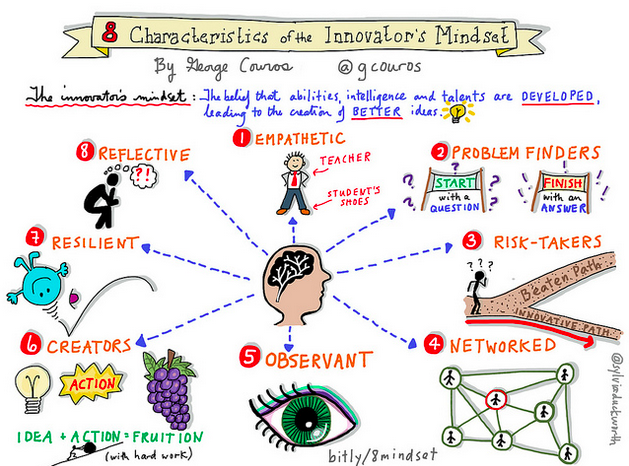
  • Silvia Duckworth’s illustration at the top lays out the eight characteristics. They are: 1) Empathetic – This is all about thinking about the classroom environment and lessons from the students’ point of view. 2) Problem Finding: This is one step beyond simply giving students problems to solve. This will help students to become self-starters. 3) Risk Takers: There needs to be a balance between drawing on one’s experience and trying something new. 4) Networked: Every idea is a network of ideas. When students come to school we continually tell them to share. Educators need to take this advice. 5) Observant: Inspiration is everywhere and often in unexpected places. You just have to keep your eyes open. Educators also need to look beyond their field for ideas and inspiration. 6) Creators: Anyone can consume information. The move from teacher-centric instruction to learner-centric creation is vital. 7) Resilient: Expect pushback from students, colleagues, and supervisors as you try new things. This is a skill that all of us need to develop. 8) Reflective: What worked? What didn’t? What would I change? What do I do next? It’s important to question your efforts, progress, and processes.
Share this:
Share this page via Email Share this page via Stumble Upon Share this page via Digg this Share this page via Facebook Share this page via Twitter Share this page via Google Plus