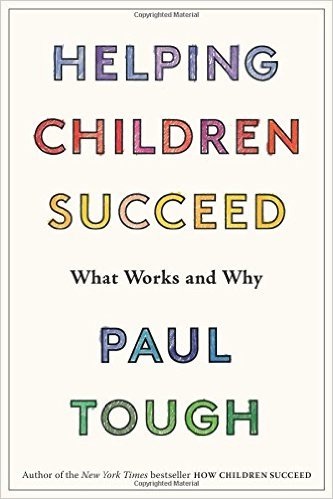
- As of 2013 more than 50% of US students are eligible for a free or subsidized school lunch. As this number continues to climb, the challenge of teaching low-income children can no longer be considered a side issue in American education. Helping poor kids succeed is now, by definition, the central mission of American public schools. Achievement gaps between poor and non-poor kids have remained the same by some measures and increased by others in spite of the fact that closing the gaps has been a government priority for decades. If you work with kids who are growing up in poverty or other adverse circumstances, you know that they can be difficult for teachers and other professionals to reach, hard to motivate, hard to calm down, hard to connect with. This book revisits the research that Paul wrote about in How Children Succeed. It extends his reporting to new discoveries, new models, and new approaches to interventions with children, both inside and outside the classroom.
- Social-science literature is rife with examples of small, high-quality programs that seem to become much less effective when they expand and replicate. Therefore, the aim here is to examine interventions not as model programs to be replicated but as expressions of certain underlying ideas and strategies. The second challenge is to find strategies to address the problems of disadvantaged children. Here we consider the developmental journey of children, and particularly children growing up in circumstances of adversity, as a continuum — a single unbroken story from birth through the end of high school.
- “America’s public schools are being hijacked and destroyed by greed, fraud, and lies.” James Meredith – 1st black students at the University of Mississippi 10/1/1961. This quote sums up the purpose of this book. The authors limited themselves to only 50 and hope that readers will send in some more that do not appear herein. Myths are beliefs in things that may or may not be true. They fill in the void left by ignorance. The focus here is on myths that are untrue and that are having unhappy consequences. Hoaxes are different in that the person pushing them knows them to be dubious or untrue, but also knows that they will greatly benefit the pusher. Liars are different in that they don’t even believe what they are saying. Once again the lies are promoted for someone’s self-interest. The overridding myth is that America’s public schools have failed. The authors do an excellent job showing that this is not the case.
- The focus here are the international tests where the US usually ends up in the middle of the pack. This is where we have been since the first efforts at country sorting where made in the 1960’s so it’s not like we have gone downhill. If you sort out the poor kids our scores are at the top with countries like Finland where poverty is 5%. The fact that the tests are in different languages and use the metric system makes them less valid. Never the less, reformers have used these scores to promote unproven reforms.
- The same test scores are used to show that private schools are better than public schools, but once you take socioeconomic the status of the students into consideration, public schools do better. Private school students are wealthier and whiter. Teachers have more autonomy, better resources, and few students with disabilities and English language learners. They also have less violence and discipline problems as they can control who they accept and who they get rid of. While charter schools are actually public schools, they share many of the same qualities as operators can game the system to control their population. While comparing publics to charters is difficult, the evidence we do have indicates that publics do better. The big reason in my mind is that when compared to public school teachers, charter school teachers are less experienced, less likely to be certified, less well paid, and have higher turnover rates.
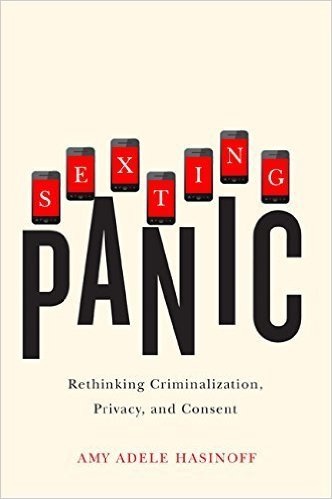
- This is a very well researched a cited scholarly book. Amy looks at how sexting is commonly viewed as child porn and a factor in cyberbullying rather than a normal part of sexual foreplay. She believes that teaching abstinence when it comes to physical sex is as ineffective as teaching abstinence when it comes to sexting. Rather than acknowledge girls’ sexual agency, many see them as weak minded youth who are suffering from raging hormones and blindly following social trends. In fact, sexing is a modern form of foreplay and only becomes problematic when the receiver violates the sender’s privacy. Not only does the media often blame the victim, so do the courts and society at large. It’s about time somebody started this conversation. As you read this book prepare to change your thinking on the subject.
- The main argument here is that granting young people the right to consensually see, create, and distribute sexual media may be the most effective way to protect them from harm. It is currently criminal with variations in all states. Here Amy discusses a number of specific cases and how laws are designed to punish the person sending sexts. The question arrises as to whether sexting is free speech or not. Also, is it an expression of normal adolescent sexual expression? In some states, sexting has been reduced from felony status to that of a misdemeanor. This makes no sense as depending on your state or country, a variety of consensual sexual behaviors are legal for minors depending on their respective ages. Ironically, it is generally illegal for minors to view many sex acts that they can legally engage in such as Internet porn. Amy also believes that criminalization of sexting will have a disproportionate impact on gays, minorities, poor kids, and girls.
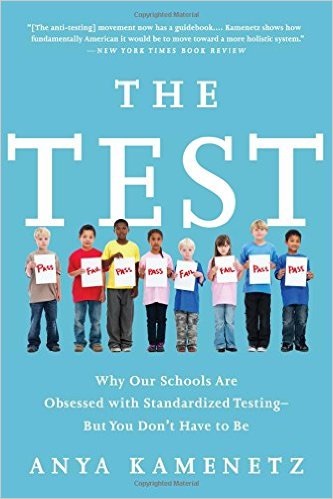
- Anya starts with the premise that high-stakes tests are stunting children’s spirits, adding stress to family life, demoralizing teachers, undermining schools, paralyzing the education debate, and gutting our country’s future competitiveness. She also cites Campbell’s law which can be stated as “when a measure becomes a target, it ceases to be a good measure.” You give people a number and they will work towards it to the detriment of all other measures of success. They also harm the poor, minority, and English language learners they were designed to help as people with means look to purchase homes that are served by schools with high test scores. This book starts by defining the problem and ends with solutions as to what we need do of fix it.
- 1. We are testing the wrong things. They mostly test the application of memorized routines to familiar problems in only two subjects. Novel situations that require thinking aren’t covered. There are lots of important things they don’t test.
- 2. Tests waste time and money. The tests along with test prep, practice tests, and field tests eat up tons of time. This doesn’t count testing imposed by school districts and tests given by teachers for grades and to direct instruction. Kids who struggle usually get more of this in addition to extra time to take the tests. The costs add up.
- 3. They are making kids hate school and turning parents into preppers. The process is boring and putting teachers’ and principals’ jobs on the line adds to needless stress. For some, the anxiety depresses performance. Rich parents pay for prep test classes and home quality time is sacrificed for parent-directed test prep.
- 4. They are making teachers hate teaching. Outside authorities have the final say on how teachers do their job. For many states, teacher evaluations and tenure depend on test scores. Research shows that ratings for individual teachers are highly unstable, varying from year to year and one test to another. Retirement and attrition rates have increased and job satisfaction has plummeted.
- 5. They penalize diversity. Poor and minority kids fail more and their schools are often punished or closed. Schools with higher rates of students with disabilities are in the same boat. To increase percent proficient scores, some teachers focus attention on students near the proficiency line. It’s clear that standardization is the enemy of diversity.
- 6. They cause teaching to the test. NCLB testing focuses on easily tested portions of reading and math skills. Therefore, teachers will arranges their teaching to place an undue focus on what can be tested. Studies indicate that as a result, teachers spend more time talking while students sit, listen, and don’t think much.
- 7. The High Stakes Temp Cheating. There is no doubt that a good deal of cheating has taken place since the tests were introduced, and schools more likely to cheat are schools with poor scores that tend to have poor and minority students. There are also reports of students cheating on SAT exams.
- 8. They Are Gamed By States Until They Become Meaningless. NCLB allowed every state to create its own assessment regime, cutoff scores, and progress measures. Since the states are the customers, testing companies give them what they want. Furthermore, it’s people working for the states that make the cutoff decisions. When political leaders set educational standards, they tend to act with political motivation. In short, there is no accountability.
- 9. They Are Full of Errors. There is no doubt that many state tests contain questions with ambiguous or wrong answers. This is probably due to the fact that people hired to write and grade tests are low paid ($15/hour) and not required to have relevant degrees or experience in education. They are also likely to be temporary workers. Even the SAT has made the essay portion optional as the scores didn’t predict grades or success in college.
- 10. The Next Generation of Tests Will Make Things Even Worse. With the introduction of the Common Core Standards comes tests with higher difficulty and fewer testing options. New tests will use computers for administration, which means the school’s computers will be tied up for long periods doing testing as opposed to supporting student projects. They will still test limited subjects in limited ways, be error prone, coachable, and likely to distort the curriculum.
- The genesis of Matt’s DITCH model of teaching starts in 2007 when he was lecturing and teaching from a textbook. He knew the kids were bored and so was he. He was stuck in the old paradigm of using the textbook as the curriculum along with worksheets and multiple choice tests. While I’m always leery of words as acronyms as their authors usually have to stretch things a bit to make them work, the DITCH acronym really works. It stands for Different, Innovative, Tech-Laden, Creative, and Hands-On. These are the hallmarks of Matt’s model that he rolls out in this book. In addition to ditching your textbook, this model also requires you to ditch your curriculum and, perhaps more importantly, ditch your mindset.
- Imagine it’s 1904 and you want to have a conversation with the legendary John Dewey who lives in Chicago? Unless you lived nearby, this would be essentially impossible. Today, however, it is possible to have conversations or at least listen to famous educators from all over the world thanks to the Internet.
- If you started teaching when I did, you were probably were much less efficient that connected teachers today who have electronic filing cabinets and many other time saving applications. Today you can take your students on electronic field trips at little or no cost. Things you write don’t rely on good penmanship. Finding information seldom take more than a few seconds. In short, going digital makes your life and your students’ lives much easier.
1. Adversity
2. Strategies


50 Myths & Lies That Threaten America’s Public Schools: The Real Crisis in Education by David C. Berliner, Gene Glass, and Associates
Monday, June 13th, 2016
50 Myths & Lies That Threaten America’s Public Schools: The Real Crisis in Education by David C. Berliner, Gene Glass, and Associates takes on many myths that have support amongst reformers and the media. This is a must read for anyone fighting the madness of our current test-and-punish school reform system. Give a copy to any policy maker you know.
Myths, Hoaxes, and Outright Lies
Myths and Lies About Who’s Best: Charters, Privates, Maybe Finland?
Sexting Panic: Rethinking Criminalization, Privacy, and Consent by Amy Adele Hasinoff
Wednesday, May 18th, 2016Sexting Panic: Rethinking Criminalization, Privacy, and Consent by Amy Adele Hasinoff takes on common wisdom and shows how it is harmful to many girls as is lets privacy violators off the hook. It sees sexing as a natural part of the process of developing a normal and healthy sex life and promotes the idea of explicit consent when if comes to distributing private media images. This book belongs in every school and in the hands of every teen parent and policy maker.
Introduction
1. The Criminalization Consensus and the Right to Sext
The Test: Why Our Schools Are Obsessed with Standardized Testing – But You Don’t Have to Be by Anya Kamenetz
Wednesday, April 20th, 2016The Test: Why Our Schools Are Obsessed with Standardized Testing – But You Don’t Have to Be by Anya Kamenetz explains in some detail the ten things wrong with state tests along with some history and politics. She goes on to tell educators and parents what they should do to help kids survive the madness. Anyone who dislikes state test should get this book.
Introduction
1. Ten Arguments Against Testing
Ditch That Textbook by Matt Miller
Tuesday, April 5th, 2016
Before and After