Archive for the ‘Book Summaries’ Category

Blink – Vintage Gladwell

Friday, September 10th, 2010

Blink: The Power of Thinking Without Thinking is Malcolm Gladwell’s second bestseller. Even though it was written in 2005, the information remains current and valuable. This summary is written with educators in mind. His 3rd book, Outliers, is also available here.

Click here to see my summary Blink.

Share this:
Share this page via Email Share this page via Stumble Upon Share this page via Digg this Share this page via Facebook Share this page via Twitter Share this page via Google Plus

Social Pollination – Manage your social media effort – Monica O’Brien

Friday, August 20th, 2010

Monica O’Brien’s book gives the big picture along with abundant detail on how to manage the social media feed for an organization or an individual. While it is written with businesses in mind, it certainly applies to educators and schools as well. My summary focusses on the concepts. If you want the detail, buy the book. Someone in your organization should have it.

Click here to see my summary Social Pollination.

Share this:
Share this page via Email Share this page via Stumble Upon Share this page via Digg this Share this page via Facebook Share this page via Twitter Share this page via Google Plus

All Hands On Deck – Culture Trumps Strategy – Joe Thy

Tuesday, August 10th, 2010

This book by Joe Tye uses a fictional format to explain why organizational culture is so important and how you can get the people you lead to help you create the kind of culture you want. My summary deals with the key concepts, but you need the book to access the compelling story and valuable appendix. This would be a good read for your entire team to discuss.

Click here to see my summary of All Hands On Deck.

Share this:
Share this page via Email Share this page via Stumble Upon Share this page via Digg this Share this page via Facebook Share this page via Twitter Share this page via Google Plus

How to Tell Liars From Statisticians Robert Hooke

Tuesday, July 27th, 2010

Although this book by Robert Hooke was written in 1983, it is still applicable today. It can help you avoid being persuaded against your will if you only look at the numbers spouted by the data pushers with a critical eye. This book and my summary were written for people who don’t especially like numbers, as well as those who do.

Click here to see my summary of How to Tell a Liar from a Statistician.

Share this:
Share this page via Email Share this page via Stumble Upon Share this page via Digg this Share this page via Facebook Share this page via Twitter Share this page via Google Plus

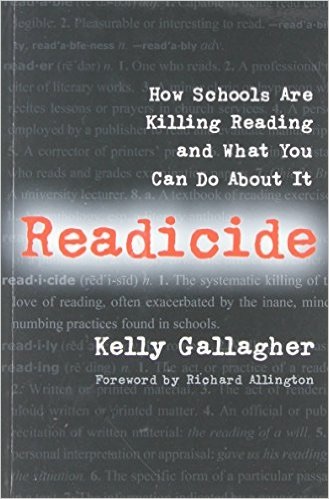
Readicide – How Schools Are Killing Reading and What You Can Do About It by Kelly Gallagher

Tuesday, June 8th, 2010
Readicide

Readicide: How Schools Are Killing Reading and What You Can Do About It by Kelly Gallagher explains how most schools teach reading in a way that kills most students love of reading. It also gives advice on how to fix the problem. Educators at the middle school and elementary levels along with parents should read this.

A Proposal to Webster’s

  • Read-i-cide: noun, the systematic killing of the love of reading, often exacerbated by the inane, mind-numbing practices found in schools. This is Gallagher’s proposed definition of the title of this book. In his 20+ years as an educator, administrator, and consultant, he has seen many teachers and administrators push practices that kill many students’ last chance to develop into lifelong readers.

Overemphasis on Testing

  • When most schools say they value reading, what they mean is that they focus intensely on raising state-mandated reading test scores. They feature the kind of reading that students will rarely if ever, do as adults. As a result, these schools are working against developing independent readers. Students who perform poorly, get more of the same ineffective treatment. Two-thirds of college-bound students still have to take remedial courses. If students are taught to read and write well, they will do fine on mandated tests. If they are only taught to be test-takers, they will never learn to read and write well.

Too Many Standards

  • Standards are necessary, but the problem with state and local standards in the US is that there are too many of them. The biggest danger of sprinting though the content is that we graduate students who do not develop an interest in any content area. We have courses that are a mile wide and an inch deep. By sacrificing deep, rich teaching, we chip away at student motivation. We turn students into memorizers instead of thinkers.
Share this:
Share this page via Email Share this page via Stumble Upon Share this page via Digg this Share this page via Facebook Share this page via Twitter Share this page via Google Plus