Archive for the ‘Doug’s Original Work’ Category

My Christmas Present to You – A Free Chapter From My Book

Sunday, December 23rd, 2018

In order to spread the word about how policymakers and corporate leaders are messing up education and what we can do, I published a book this year. I’ve been flattered by the positive feedback so if you haven’t read it yet it’s time to take a taste. Just scan the table of contents below and find your favorite topic. If you are having a hard time deciding, go for chapter 19 as it’s a topic I haven’t seen covered elsewhere. Thanks for your support.
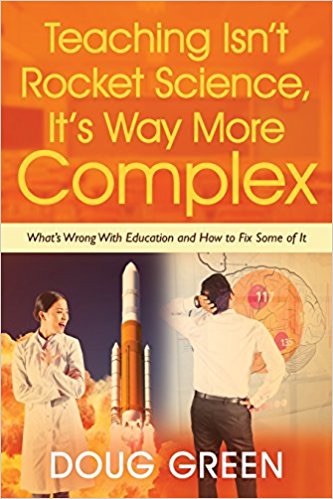
Rocket Science Book

Here Is the Deal

  • Below are the chapter titles from my book Teaching Isn’t Rocket Science, It’s Way More Complex: What’s Wrong With Education and How to Fix Some of It. As my Christmas gift to you, I’m offering the introduction and a free chapter of your choice with no strings attached. Just select your favorite and send me an email with the chapter number to dgreen@stny.rr.com. The chapters are all self-contained so they can be read in any order. If you like the free sample you can purchase the book in softcover or Kindle editions at Amazon. You can also read an executive summary on my blog.

Chapter Titles – Just Pick Your Favorite

  • 2. Education Isn’t Rocket Science, It’s Way More Complex
    3. How to Cheat on Standardized Tests and Not Get Caught
    4. Are You Smarter Than Bill Gates?
    5. Failing at the Business of School
    6.Achievement Gaps and Ethnic Groups
    7.The Drive to Fire Underperforming Teachers Will Not Improve Our Schools
    8. Special Education Shouldn’t Be Special
    9. If Gifted Lessons Are So Good, Why Can’t All Students Participate?
    10. Education Drugs: Learning on Steroids
    11. Kindergarten is the New 1st Grade
    12. Math Class: The Champ at Slowing Down the Fast Learners.
    13.Not Ready for College? Flunk Gym.
    14.Coding for Everyone? Are You Serious Mr. President?
    15. SAT’s for All? One More Bad Idea From the Political Elite
    16. Forging Strong Relationships With Students Should Be Top Of Your To Do List.
    17. Good Luck Learning a Foreign Language in American Schools?
    18.The Arts: One More Victim of Common Core Testing.
    19.Teachers/Parents: don’t run away from discussing porn.
    20. It’s Time For An Assessment Revolution: Give Students Access To The Internet
    In Exams And Scrap Traditional Grades.
    21. Why Would Anyone Let Their Kid Play Football or Anything Else?
    22. Bathrooms and Locker Rooms: A New Battlefield
    23. The Drive To Fire Underperforming Teachers Will Not Improve Our Schools
    24. If Education Is Going To Improve, We Must Work On Improving Initial
    Teacher Training
    25. Five Ways Hectically Busy School Leaders Can Stay On Track
    26. Think About How To Do It Right, Rather Than Doing It Over
    27. As A Teacher, It’s Important To Get Good At What You Don’t Like To Do
    28. A Word About Flipping Your Class
    29. Can We Save Opera? The Barriers to Digging the World’s Greatest Art Form
Share this:
Share this page via Email Share this page via Stumble Upon Share this page via Digg this Share this page via Facebook Share this page via Twitter Share this page via Google Plus

16 Jobs That Will Disappear In The Next 20 Years Due To Artificial Intelligence from Alux.Com

Sunday, September 16th, 2018

Drivers
16 Jobs That Will Disappear In The Next 20 Years Due To Artificial Intelligence from Alux.Com (@aluxcom) should provide guidance to students and people already in the workforce. If you have one of these jobs, start preparing for something else. If you are still in school, prepare for something else. Watch the original Alux.Com video on YouTube. For each job, I have added my own thoughts and advice based on my daily viewing of Internet resources for this blog.

One study at Oxford found that 45% of all jobs will disappear in the next ten years.

  • For the most part, it’s easy to extrapolate from where we are to where we are going as many of these job loss trends are well underway or available as prototypes. As time marches forward, machines and computer software will be able to do more and more and this isn’t new. Not only will jobs in the US disappear, but many of the jobs that have been sent offshore will return only to be done by machines and/or computers.

Manufacturing Workers

16 Jobs Not to Train for and to Start Retraining If You Are In One

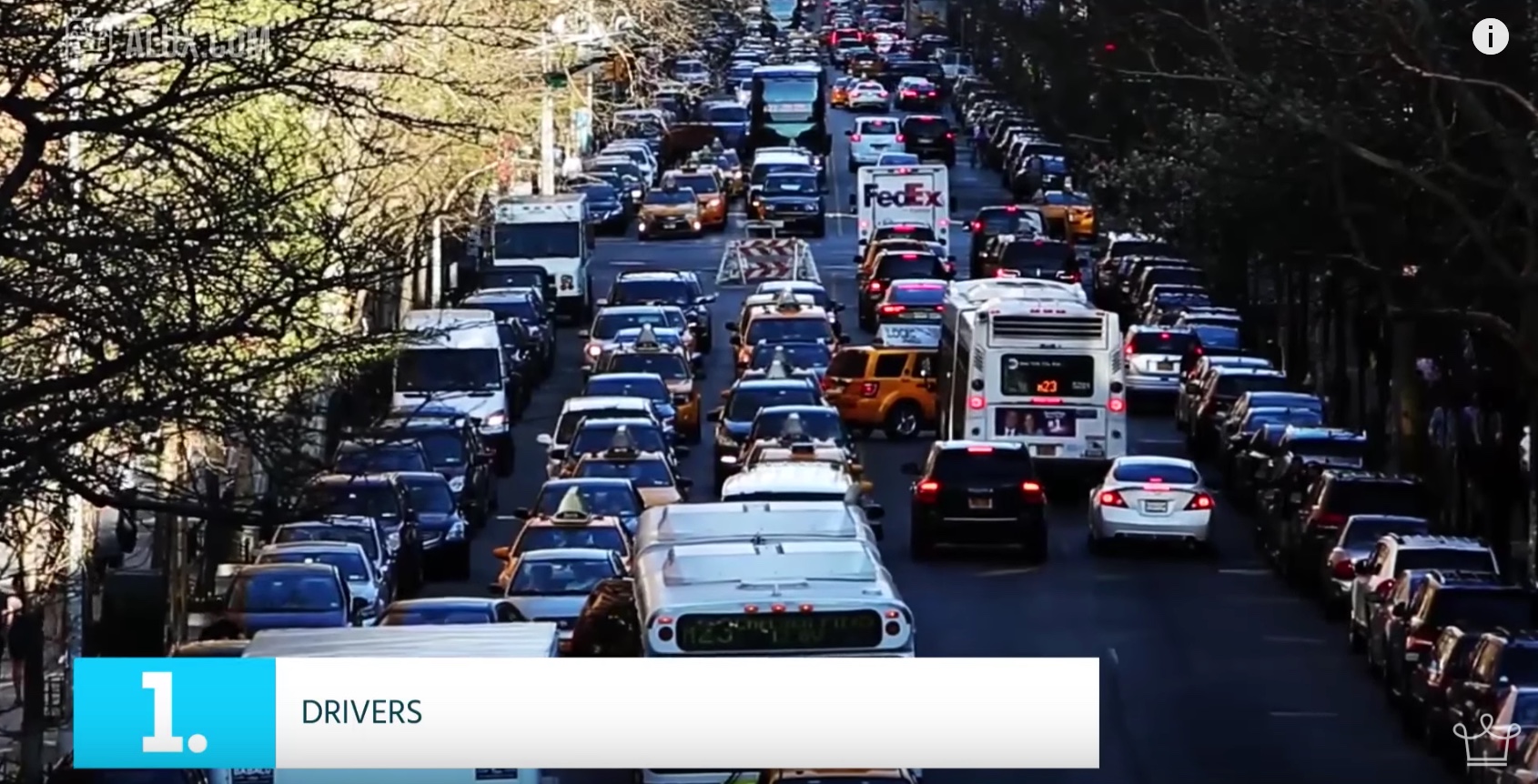
  • 1. Drivers – It looks like it won’t be long before cars and trucks drive themselves. Our 20 million drivers will have to reinvent themselves. There are already self-driving trucks in Nevada and self-driving Uber cars in Pittsburg. This should be a real boon for old people and it should save many lives. Perhaps when I get to the point where my daughter tries to take my car keys away I’ll have a self-driving car.
  • 2. Farmers – Much of what needs to be done is rapidly being automated. Labor intensive jobs are already disappearing. This should reduce our reliance on immigrant labor. Already under 2% of employed people in the US work on farms. Farming also continues to become more hi-tech. On some dairy farms, for example, cows are already milking themselves. If you want to be a farmer, take as many science and engineering courses as you can. You can also expect to work for one of the ten companies that control almost all of the food we eat.
  • 3. Printers and Publishers – This one is well on its way with the growth of Internet publishing. Few publishers have been able to establish a successful paywall in front of their online content. These jobs won’t totally disappear for a while as older people like me still like the experience of holding real books, magazines, and newspapers. There is no laptop screen as big as my physical New York Times.
  • 4. Cashiers – Self-checkout stations are expanding already. At my Walmart, as of today, there are eight along with an equal number of checkouts staff by humans. I prefer self-checkout at grocery stores and places like Walmart as there is usually no waiting. I suspect that as soon as lines show up they will add more and have fewer humans. I’ve used them in restaurants as well and I like this experience. I don’t have to give my credit card to some server I don’t know who takes it someplace where I can’t see it. In the last year, my card was hacked twice in restaurants in New York City for this reason. Fast food restaurants now let you order and pay using your smartphone from the parking lot.
  • 5. Travel Agents – I’ve been doing my own booking online for years. The last time I used a real agent was in 2002. Many of my retired friends sign up for tours where someone does all the planning and makes all the arrangements for at least a bus full or people. I prefer doing it myself as when you go on a tour bus or cruise ship you take the crowd with you.
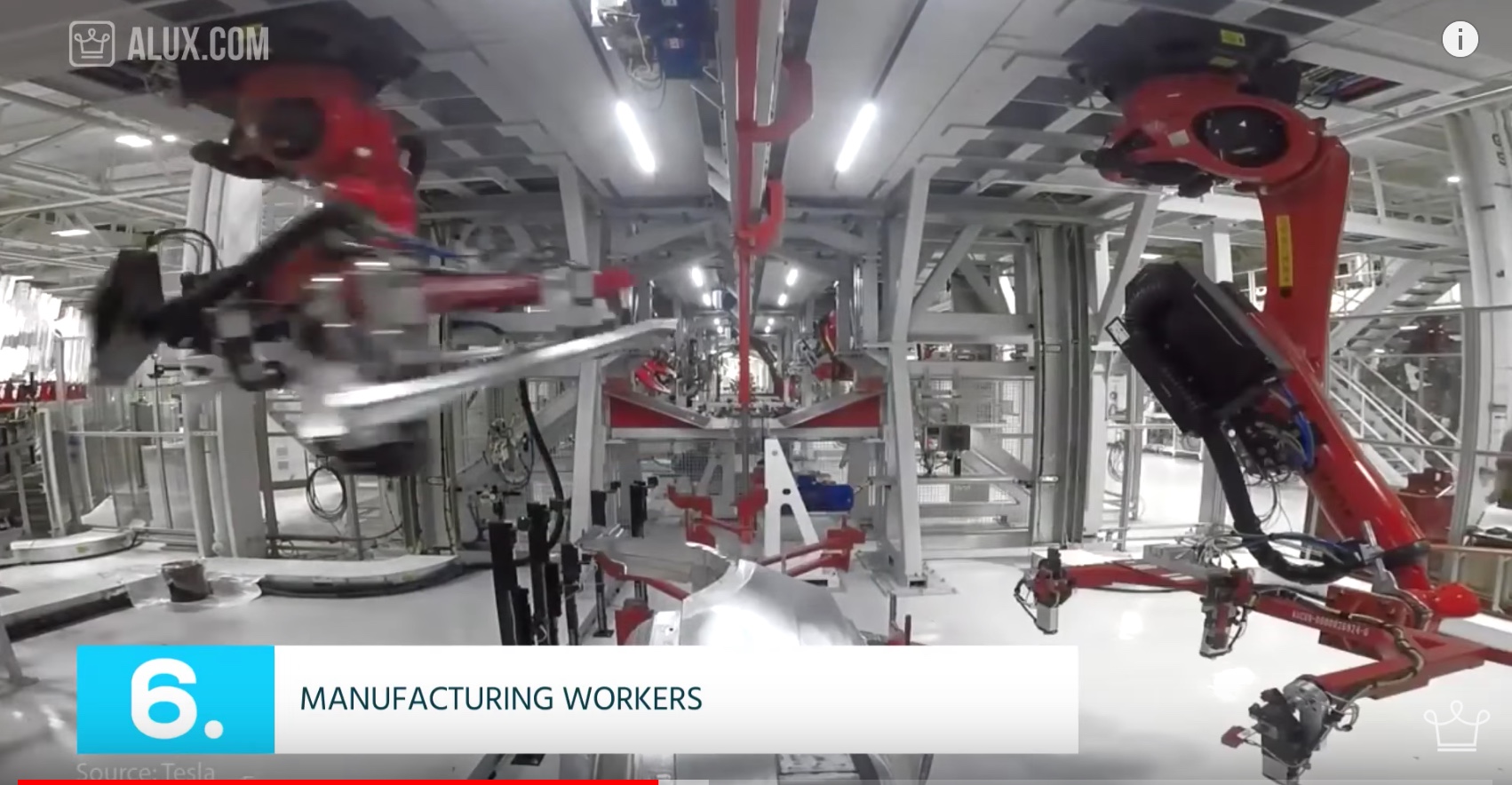
  • 6. Manufacturing Workers – Now machines build other machines with less human interaction every year. This is not new as car manufacturers have been using robots for decades. This is a slow and steady change unlike some of the others listed here. Many schools are letting students manufacture things with 3D printers. This is one more reason why all students should try to take a few programming courses.
  • 7. Dispatchers – The role of the dispatcher is coordinate people in the field. Technology will soon do this better. You can already call your own cabs and pay with your smartphone. I think we will need people who can maintain and repair vehicles for some time. These jobs have already become more technical as the first thing they do is connect a computer to the vehicle’s computer.
  • Waiting Tables

  • 8. Waiters and Bartenders – This trend has already begun. I’ve been to restaurants where once you are seated you use a tablet at the table to order and pay. We still need humans to do some of the food preparation, but there is no reason why a robot can’t serve the food someday soon.
  • 9. Bank Tellers – ATMs have already cut the number of people doing this job. There are still many transactions that we need tellers for, but efficiency is making them more productive. At my bank, the tellers use a machine to count the money I get when I cash a check.
  • 10. Military Pilots and Soldiers – The military is often the first to adopt new technology. Drones are more accurate and safer, at least for the person piloting the craft. We only have prototypes of robot soldiers at this point, but the idea of a robot soldier engaging bad guys in urban warfare has a lot of appeal. Check out this prototype soldier from Boston Dynamics. We also have robots that help clear IEDs and landmines. As terrorists adapt and evolve, we will need to do the same with increasingly advance technology.
  • 11. Fast Food Workers – This falls in the same category with the waiters and bartenders. According to some thinking, the push for $15/hour pay has pushed automation to be adopted faster. Order taking and paying is easy to automate. The harder part of food preparation will take a bit longer, but it is already underway. The remaining humans will need to be more skilled to troubleshoot the entire process.
  • 12. Telemarketer – This industry has been taken over by online ads. People like me that only have cell phones can block calls, which takes a big piece of the market off the table. Facebook, for example, can test the effectiveness of ads and target them to people who are more likely to respond. I don’t mind seeing this job go as it seems like a crappy job.
  • 13. Accountants and Tax Preparers – Boring and repetitive jobs are ripe for takeover by machines. Most people have simple needs for tax preparation that can easily be met by software. Tax preparation software is already decades old. If you are an accountant or plan to be one, you better be good and expect to only get the tricky nonroutine work. Rich people and large corporations will still need tax preparation people, but they better be really top notch.
  • Stock Traders

  • 14. Stock Traders – Only 10% of stocks traded today are traded by humans. In this world, the bots always win. Most people will still want to talk to a financial advisor who needs to be very knowledgeable and constantly learning. The habits of constant learning and continuous improvement should serve workers well as they try to deal with the ever-changing nature of the job market.
  • 15. Construction Workers – Technology is getting more efficient and fewer specialized workers will be needed at the job site. For example, watch Sam the Bricklaying Robot that can lay bricks better and three times as fast as the fastest human. Sam’s human supervisors will have to understand the entire job and not just be able to lay bricks. This trend probably started with the invention of the wheel or something like that. Automation has also dramatically cut the number of people needed to run mines and oil fields.
  • 16. Movie Stars – Human actors are expensive and moody. Actors will just be generated by computers. The 3D animated movies like Toy Story and others already give us an idea of how movies can be made without actors. Next time you see one of these animated movies be sure to stay for the credits and read about the hundreds of jobs that take the place of a relatively small number of actors. The problem here is when the movie is done, all of those people have to look for their next job. There are a lot of jobs for non-starving artists who are willing to do what the boss wants as opposed to their own thing so don’t hesitate to develop some artistic skill.

Dr. Doug’s General Advice On Preparing For the Future

  • We know that it is very difficult to know what kind of job you are going to be doing even a few years in the future. In the meantime, there are a few things that are clear as far as what you can do to prepare for whatever comes next no matter how old you are.
  • 1) Whatever you do, get good at it. There will be less and less work for people who are mediocre.
  • 2) Become a self-directed learner so you can acquire as much in the way of skill and knowledge as possible on your own. This can start as early as elementary school for some students. Tricky jobs require fast learners who can figure things out as they go. There are tools on the Internet that make learning much more available.
  • 3) Work hard and learn something new and try to improve every day. The future is not likely to belong to the slackers, at least for a while. If we get to the point where machines are doing everything we have to get good at slacking.
  • 4) Consider taking as many science, engineering, and programming courses as possible. In a future featuring more and more robots, you want to be designing, maintaining, or supervising them rather than being replaced by them. Even if you don’t want to get serious about programming, at least learn how to create and maintain an attractive website.
  • 5) Creative people will always be in demand. Some might argue that creativity cannot be taught, but most educators believe that it can be facilitated. If you don’t give students open-ended problems and projects, they won’t be able to exercise their creative ability. Parents can do this too.
  • 6) Artistic skills will be in demand. Everything you see on television, print media, and the Internet was created in part by artists. If you want to go to an art school, make sure it’s one where you will spend most of your time developing your artistic ability rather than taking a bunch of liberal arts courses. Try to take the AP versions in high school so you can avoid them in college. Also, pick a school in a big city where it will be easier to get high quality internships.
  • 7) Develop your network. Most people get their jobs by way of word of mouth. In addition to working hard to become highly skilled and creative, make sure that as many people as possible in addition to family and friends know what you can do. Rather than a resumé, put samples of your best work, whatever it is, on your website.

Some TED Talks on the Topic

  • Jobs of the Future and How We Can Prepare For Them, a TED Talk by Avinash Meetoo. @AvinashMeetoo As robots proliferate, the creative arts will thrive because people will have time on their hands and will be able to create things that entertain. In addition to the creative arts, there will be a high demand for jobs that call for computer science.
  • AI and the Future of Work a TED Talk by Volker Hirsch @vhirsch FoxCon in China is replacing 60,000 workers with robots. This means it’s cheaper to use robots than it is to pay someone $5 a day. Keep in mind that we have had industrial robots for decades. Drones are already delivering pizzas in New Zealand. Large legal firms are using AI to do legal work. Automation will take every job that it can take. Anything that has repetition machines can probably do better. If you are an account or radiologist you should consider retraining. Hoping that change won’t happen is a bad idea.
  • How the Future of Work is Not Jobs a TED Talk by Rudy Karsan @RudyKarsan tells us that people are already creating work and that entrepreneurism will increase in the future. He also makes a pitch for universal minimum income.
Share this:
Share this page via Email Share this page via Stumble Upon Share this page via Digg this Share this page via Facebook Share this page via Twitter Share this page via Google Plus

If Supporting Student Passion Is So Important, What If They Don’t Have Any?

Tuesday, June 12th, 2018

Teaching Isn't Rocket Science

My informal research has found that many if not most students lack serious interests let along a passion for anything worthy of academic effort. When I ask students what they are interested in or what they want to major in someday, I often get little more than a shrug. So what should we do?

What My Blogging Effort Reveals

  • Every day I surf the Internet searching for resources for my audience of parents and educators. I have found a number of themes that show up often. These themes form the basis of my recent book Teaching Isn’t Rocket Science, It’s Way More Complex: What’s Wrong With Education and How to Fix Some of It. (Purchase at Amazon — Executive summary) In it I deal with themes like the importance of relationships, personalizing instruction, and the harm caused by standardized testing.

So what should we do?

  • One reoccurring theme is that teachers should allow students time to pursue their interests and passions rather than being forced to only study the school’s standard curriculum. I like this idea. In some schools, students are allowed to study what they want on a regular basis. This resembles Google’s 20% time where employees can do what they want one day each week and let everyone know what they accomplish. Other schools weave student interests and passions into project-based learning.

Most Lack Passion

  • While this sounds good, my informal research has found that many if not most students lack serious interests let along a passion for anything worthy of academic effort. When I ask students what they are interested in or what they want to major in someday, I often get little more than a shrug. I don’t count passions for things like social media or computer games as topics that we should turn students lose to study in school, although I’m sure creative teachers can work them in somehow.

Convince the Teachers

  • We need to convince teachers that it’s important for students to find interests and passions about topics that could lead towards a career. The next step is to suggest ways they can help students find their passion as part of their current teaching practice. I don’t think this should be too difficult. Regardless of what one teaches, one can make an effort to simply expose students to as many potentially interesting aspects of their discipline as possible.

Be Direct

  • Tell students directly that it is their job to find things they are interested in as they encounter new things anywhere and to make notes of what they find attractive. They should turn in a list of things that they would like to explore further. The teacher then carves out time for individual exploration that can be online and hands on. Students need to be responsible for reporting on what they find.

Put Student Work On a Blog

  • A classroom blog can help. With help from the school IT staff it should be easy for students to post their work. Once posted, the teacher, their classmates, and parents can see evidence of growing passions. Students should be allowed to continue with a subject of interest or to explore something else. This seems possible and I believe that it would serve the students well and accomplish the vision of many people with strong expertise in the field of education.

Who is Dr. Doug Green

  • Doug has been an educator since 1970. After teaching chemistry, physics, and computer science, he became an administrator for the next 30 years with experience at the secondary, central office, and elementary levels. He has also taught a number of leadership courses for The State University of New York at Cortland and Binghamton University and authored over 300 articles in computer magazines and educational journals. In 2006 he gave up his job as an elementary principal to care for his wife who had Lou Gehrig’s disease. After her death in March of 2009 he decided to see how I could use my expertise to help busy educators and parents hone their skills and knowledge and started this blog.
Share this:
Share this page via Email Share this page via Stumble Upon Share this page via Digg this Share this page via Facebook Share this page via Twitter Share this page via Google Plus

Can I Get a Tweet For My New Book?

Friday, January 26th, 2018

I love writing, but I’m not crazy about marketing my own work so I could use your help. If you like the Internet resources and book summaries I post, please consider sending out a tweet to promote my new book Teaching Isn’t Rocket Science, It’s Way More Complex: What’s Wrong With Education and How to Fix Some of It. In it, I take on the current reforms and their one-size-fits-all test-based accountability and standards. A lot of what is happening is bad for students and demoralizing for teachers and with your help, we can work to make things better.

Bad tests promote bad teaching and the students who suffer the most are usually those who need personalized instruction the most. We need more arts and exercise, not less. We need to give kids the help they need when they need it and expose all students to exciting hands-on, real-world, lessons and projects. We need to foster creativity and collaboration as we work on forming strong relationships. This is advice from someone who has been in this business since 1969 and who tries to live outside the box. If you are part of this fight, my book is full of ammunition. Thanks for all you do and I’ll see you tomorrow with more free resources.

Here is a sample tweet: Check out “Teaching Isn’t Rocket Science, It’s Way More Complex” by @DrDougGreen http://amzn.to/2zfOTbL Here is a summary http://bit.ly/2FdK337

Click here to buy at Amazon. Scroll down for a summary and please share.

    Rocket Science Book

    1. Introduction

  • Teaching is tricky business. If it were as easy as rocket science, which we seem to have figured out, all students would be learning as fast as their individual brains would allow. This implies that they would learn at their own individual pace, which would cause the gaps between the faster learners and the slower learners to gradually increase.
  • Unfortunately, our current set of reforms driven by the corporate/ political complex gives the same tests to students each year based on their born on date, regardless of their ability. It also expects teachers to close the gaps between slow and fast learners. One way to do this is to slow down the fast learners. In this book, Dr. Green explains why the current reforms and out-dated teaching methods need to go and just where we might head.

2. Teaching Isn’t Rocket Science; It’s Way More Complex

  • It’s clear that we understand how rockets work as we have sent them all around the solar system and beyond. The human brain, however, which is the learning playground for students and teachers is much more complex and less understood. Promising ideas in education spread slowly, if at all, because of a resistance to change and federally imposed standardized testing. Thanks to the media, however, the public doesn’t realize this and they think that teachers are generally doing a bad job. They also think that all students should be able to achieve at high levels, which is nonsense. We all know that some students are more capable at cognitive tasks than others.

3. The Pressure On Teachers To Get Good Test Scores Makes It Inevitable They Will Cheat

  • When the government encouraged by business leaders imposes high-states tests on schools, three things can happen. First, some will cheat and many have. Second, most will try to game the system with endless test prep that brings with it a lot of bad teaching practice. Finally, some will just fail. Schools will be closed and careers will be negatively impacted or ended altogether. This chapter documents some of the cheating and explains the different ways that teachers can cheat. It also suggests that teachers work to create engaging lessons and let the tests take care of themselves. If they do, test scores are unlikely to go down and just might go up.

4. Are You Smarter Than Bill Gates?

  • Bill isn’t the only member of the corporate class pushing for test-based accountability, he is just the most famous and has the most wealth to push his ideas. Dr. Green suspects that when Bill wants to cure some disease, he reaches out to experts in the field. When it comes to education, it seems that he thinks he already knows the answers. Meanwhile, it’s hard to find any real expert in the field who thinks the current reforms are a good idea.

5. Failing at the Business of Schools

  • Unlike businesses, schools cannot control their raw materials. They just take the students that their parents drop off. Most are also run from the top by a school board composed of elected volunteers who for the most part lack any serious educational expertise. For these reasons, trying to hold schools to business standards makes no sense. It also makes no sense to hold all schools to the same standard as their raw materials vary.

6. Achievement Gaps and Ethnic Groups

  • When advocates for blacks, Hispanics, and poor kids see that that whites and Asians perform better on standardized tests, they expect schools to work on closing the gaps. Ironically, if schools did a perfect job of letting every student learn as fast as possible, the gaps would increase. Doug maintains that the best way to close the gaps is to slow down the fast learners, which some schools do well. He also points out that the subgroups themselves are arbitrary and don’t make much sense. For example, why are Spanish speakers the only group based on the language they speak when more people speak English and Chinese? People from China and India are very different in appearance and culture, yet they are in the same group.
Share this:
Share this page via Email Share this page via Stumble Upon Share this page via Digg this Share this page via Facebook Share this page via Twitter Share this page via Google Plus

Happy New Year – Check Out My New Book

Monday, January 1st, 2018

May your 2018 be all you and those you love expect and need. Take time to rest and recharge, and set some new goals. One of my goals for 2017 was to finish and publish a book. I hope you will consider picking up a copy and sharing it with anyone you know who has the power to make some needed changes. It’s time to move past one-size-fits-all instruction and a failed test-based accountability system among other things. Join me in this vital fight.

Thanks so much for your support and if you are looking for some New Year’s diversion, check out my previous posts and archives. Happy New Year and God bless.

Rocket Science Book

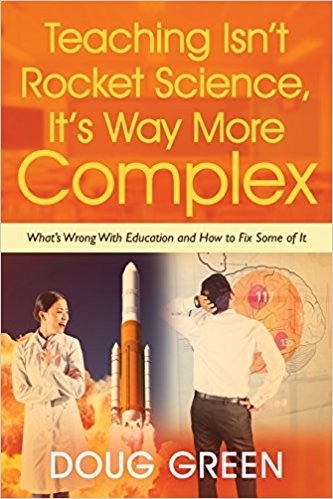
Teaching Isn’t Rocket Science, It’s Way More Complex: What’s Wrong with Education and How to Fix Some of It by Doug Green

Share this:
Share this page via Email Share this page via Stumble Upon Share this page via Digg this Share this page via Facebook Share this page via Twitter Share this page via Google Plus