Archive for the ‘What can Dr. Doug do for you?’ Category

Six Ways To Help Students Deal With Academic Burnout by Amanda Winstead

Thursday, November 24th, 2022

Six Ways To Help Students Deal With Academic Burnout by Amanda Winstead

Burn Out
Photo by Monstera: Pexels
Every educator should be all too aware of how real academic burnout can be for students, especially as the holiday break draws near. After months of learning new information and skills, taking tests, and finishing up homework assignments, students can feel burnt out and exhausted, both mentally and physically.

Thus, it’s crucial for educators to truly understand what burnout is and recognize the signs. If students go too long feeling burnout, it can severely affect their educational experience and even start wearing on their mental health.

Let’s take a closer look at what academic burnout is as well as some ways educators can help students deal with it and even prevent it in the first place.

What Is Academic Burnout?

Usually, when you hear the word “burnout,” it refers to occupational burnout. We lead hectic and stressful lives today and, as such, burnout has become a major concern. In fact, the World Health Organization has deemed burnout an official syndrome that can be diagnosed.

However, while burnout typically refers to a syndrome that stems from chronic workplace stress, it’s important to recognize that this same overwhelming stress can occur as a result of chronic classroom or academic stress as well.

When students spend too much time pushing themselves at school and then working on homework when they go home, they can easily become overwhelmed and exhausted. Students need time to de-stress and take care of themselves just as much as working adults do.

Unfortunately, not all educators know how to recognize the signs of academic burnout and what to do about it — but they should. Some of the most noticeable signs of a student dealing with burnout include:

Increasing self-doubt
Feeling defeated more than usual
Detachment and disinterest
Lack of motivation
Poor or negative attitude that is getting worse or not going away
Emotional and physical exhaustion

Burnout 2
Photo by Andrea Piacquadio: Pexels

Six Ways Educators Can Help Students Prevent and Manage Academic Burnout

Academic burnout is not something to take lightly, as it can significantly impact a student’s life and success. Luckily, there are ways educators can help their students mitigate and manage their academic burnout.

1. Make student health a priority

First and foremost, the well-being of your students should be a top priority. It’s difficult to teach your students adequately if they are struggling with their mental health.

Supporting student mental health not only shows them that you care and have their best interests in mind, but it can also teach them how to manage and prioritize their own well-being. You can do this by bringing mindfulness exercises to the classroom, normalizing mental health check-ins with personal awareness, and offering resources to students who might need to talk to someone about their mental health.

Making your students’ mental health, a priority can go a long way toward helping them better manage stress and prevent burnout.

2. Teach healthy coping strategies

For some students, suffering from academic burnout is the result of poor stress-coping habits. Thus, teach them healthier academic coping strategies, such as how to:

Stay present and aware
Recognize their needs and prioritize them
Build self-care habits
Use positive self-talk and be kind to yourself

Essentially, you want them to understand that it’s okay to not always be the perfect student. They are allowed to give themselves a break and even forgive themselves when they mess up or fall behind.

3. Encourage healthy habits

When students are overwhelmed by school, they can start developing unhealthy habits. They might start sleeping poorly, exercising less, and developing unhealthy eating habits. All of these things can make the symptoms of academic burnout worse.

While it is the job of the parent to promote healthy habits, teachers can also encourage healthy habits in the classroom. You can teach them that eating smarter makes them smarter, that getting a good night’s rest can help them focus better in school, and that making time to exercise can boost their mood.

There’s no one right way to encourage healthy habits in the classroom, but doing so can help students better manage their stress.

4. Provide more outlets for students to have fun and de-stress

Learning doesn’t have to just be about sitting at a desk listening to a lecture or reading out of a textbook. There are many other fun ways to help your students learn while also providing them with an outlet to have some more fun and release some of their stress.

Educational video games, for example, can be a great way to boost student engagement while also giving them a much-needed break from more traditional and mentally exhausting teaching methods. You can also use other types of games or more interactive and fun lessons.

If you feel like your students are more stressed and overworked than usual, you can also offer them more breaks during lessons. Even just five minutes here and there can allow them to give their brains a much-needed break. You can even guide them through some meditation or even mini-stretch sessions to help them alleviate stress.

5. Encourage socialization with their peers

When students are burnt out, they might start to isolate themselves and spend less time with their peers. But socialization is important, and it can help them find support in friendship and give them an outlet for their stress.

Of course, you can’t control what your students do with their time outside of the classroom, but you can help by encouraging them to participate in extra-curricular activities or even join a student club.

6. Help them stay organized and set realistic goals

Burnout can also be the result of poor organization and time management, and not all students are great at this, especially when they are younger. So an important aspect of helping students deal with their burnout is teaching them how to be more organized.

This can also include teaching them how to set more realistic and attainable goals. As students get older, they start setting academic goals for themselves, especially if they hope to go to college or land a job.

But this can sometimes lead to them putting too much pressure on themselves by setting unrealistic goals. Helping them learn to better manage their workloads while also teaching them how to set more attainable goals can help them mitigate stress that can lead to burnout.

Wrapping Up

As an educator, you are likely aware that no two students are the same. So not all of the above tips will necessarily work for every student. In the end, the most important thing you can teach them is that it’s okay to ask for help. If they are struggling and feeling burnt out, help them understand that it’s okay to reach out to you, their parents, the guidance counselor, or anyone else for help.

Amanda Winstead

Amanda is a freelance writer out of Portland, focusing on many topics, including educational technology. Along with writing, she enjoys traveling, reading, working out, and going to concerts. If you want to follow her writing journey or even just say hi, you can find her on Twitter.

Share this:
Share this page via Email Share this page via Stumble Upon Share this page via Digg this Share this page via Facebook Share this page via Twitter Share this page via Google Plus

How to Raise Kids Who Aren’t Assholes: Science-Based Strategies for Better Parenting from Tots to Teens by Melinda Wenner Moyer

Monday, October 31st, 2022
Kids Who Aren'T Assholes

How to Raise Kids Who Aren’t Assholes: Science-Based Strategies for Better Parenting from Tots to Teens by Melinda Wenner Moyer can help just about anyone be a better parent. Like her, you are not likely to become a perfect parent with perfect kids, but you can profit from the extensive research and expert interviews she conducted. If you have kids still at home, be sure to get a copy as well as copies for any adult children who have kids.

Introduction

  • Over the years, Melinda has engaged in a great deal of research in order to write parenting articles for major publications. She has found that this effort has made her a better parent. The purpose of this book is to share what she has learned with. More than anything, parents want to raise children who are kind. In surveys of what parents want their children to be, kindness comes before intelligence and work ethic. Parents play a key role, but not the only role in child development so it’s vital that their role is as positive as possible. People who are kind, helpful, and generous are happier, more successful, and make more money. (Doug: Being nice is really a selfish thing to do as if you take care of yourself, you can do more for others.)

Part I Traits
1. “It’s All About ME!” How to Raise Kids Who Aren’t (Overly) Selfish

  • Kids can be very self-centered. This is natural as their frontal lobes haven’t fully developed. Start with helping kids understand their emotions and how to recognize the emotions of others. Kids with good emotional recognition generally experience better outcomes in many areas. You can ask about the emotions of characters when you read to kids or just do it in the daily run of life, including your own emotions. When you discipline a child, include emotions. Explain how emotions affect others.
  • Letting kids help around the house can take more time, but it’s important. Make sure that their tasks go beyond cleaning up their room and helping everyone in the house. Look for opportunities for kids to help in the community and try to let them have some choice. Don’t just bark orders. Explain anything that you ask them to do. Be a role model. Point out the good stuff and the bad stuff that you do.

2. “This Is Too Hard.” How to Raise Kids Who Are Ambitious, Resilient, and Motivated

  • In this chapter Melinda draws on the works of Carol Dweck’s Mindset and Angela Duckworth’s Grit that are both summarized here. It’s key that you compliment kids for effort rather than intelligence. If they think they are smart, they are less likely to take on challenges where they run the risk of looking “not smart.” How hard you try impacts how smart you become. Grit is a combination of passion for something, enough self-control so you work at it on a regular basis, the ability to work through and learn from mistakes, and a belief that what you are doing matters.
  • You should expect your kids to pick at least one extracurricular activity each year and stick with it until the year ends. Unfortunately, some such activities are expensive. Any accomplishment tends to motivate and leads to a success spiral. Kids tend to procrastinate as their pre-frontal cortexes aren’t fully developed. Try to make tasks that seem too difficult seem fun or less scary. Help them recognize and eliminate distractions and create a good working environment. Rewards can stifle intrinsic motivation but are ok as a surprise after something is accomplished. Acknowledge their feelings and give choices when possible, even for chores. They are more likely to be motivated if they feel less controlled.

3. “You’re Dumb and Ugly!” How to Raise Kids Who Don’t Bully – and Who Help Those Who Are Bullied

  • Most parents worry about their kids being bullied, but few give thought to the notion that their kids might do some bullying. Research shows that one in three do some bullying and one in six engage in cyberbullying. Bullying is a continuum, and a kid can be a bully one day and be bullied the next. Bullying is something that is repeated and deliberate, and it involves an imbalance of power. It is often done to boost social stature. Among girls, it often involves exclusion or rumor spreading. (Watch the “Mean Girls” movie with your kids.) Kids often bully as a misguided way to deal with their anger.
  • Cyberbullying may have the same causes, but it differs in that it can happen at a distance any time of day, and it usually leaves a digital footprint that can be shared with parents or teachers. Bullying can also have long-term effects, such as depression and low self-esteem. Parents should talk to kids about bullying so they know it when they see it and know that it is not ok. Encourage them to do what they can to help a victim when they see bullying happen. Help them learn how to deal with anger. There is advice here for what to do if you discover that your child has been bullying others or is being bullied themselves. Schools play a big role here, so make sure your school has a plan or a program for dealing with it.
Share this:
Share this page via Email Share this page via Stumble Upon Share this page via Digg this Share this page via Facebook Share this page via Twitter Share this page via Google Plus

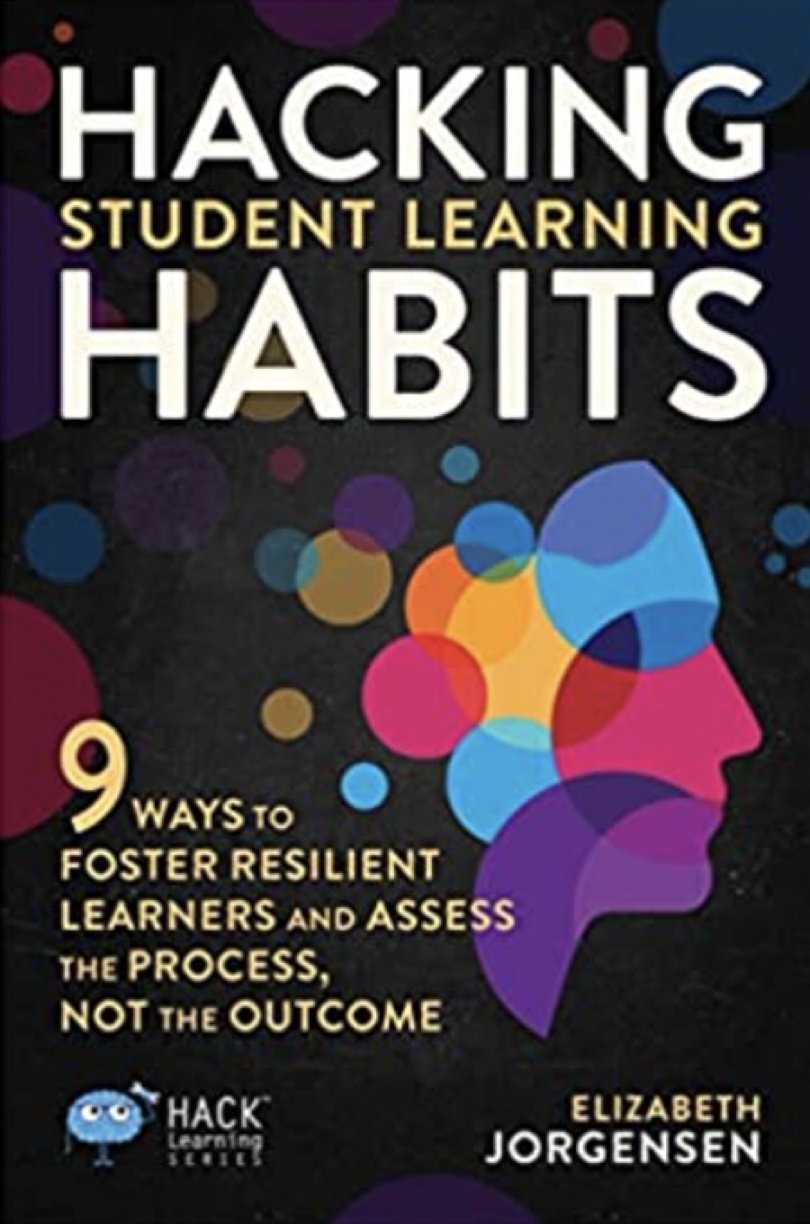
Hacking Student Learning Habits: 9 Ways to Foster Resilient Learners and Assess the Process, Not the Outcome by Elizabeth Jorgensen

Monday, September 5th, 2022

Hacking Habits
Hacking Student Learning Habits: 9 Ways to Foster Resilient Learners and Assess the Process, Not the Outcome by Elizabeth Johnson offers a host of great advice that beginning and veteran teachers can use to help their students form efficient learning habits. If you want to shift student focus from grades to learning with a bigger purpose, start here. Every leader should be sure to add this fine book to their professional development library.

Introduction: Implement Process-based Assessment

  • As the subtitle implies, the goal is to focus on the process, not the finished product. The teacher provides feedback (no grades) to all students and tells them it is to help improve their work and not to judge anyone. Students are expected to make mistakes and learn from them. All work requires revision. Students are given ample time to write and revise in class, so late work isn’t an issue. By engaging in expected behaviors and habits, they earn points. Points are never taken away and can be used to generate grades if necessary.
  • Do not use grades or rubrics. Rubrics are not used as they stifle creativity, prevent risk-taking, and provide a blueprint for blandness. All it does is expedite grading. It is also necessary to write a lot and to get feedback from the teacher and your peers. In the beginning, students and parents get letters from the teacher and a former student outlining expectations. (See the appendix for these letters.)

1. Create Process-Based Learning Habits: Support Skill-Building

  • The goal is for students to form habits that allow them to be their best, develop higher-order thinking, and solve problems. Habits like reading each day, and getting proper sleep, exercise, and nutrition should be on the list. Students need to gather ideas, attempt challenges, collaborate, celebrate small victories, and play. The focus should be on effort rather than results. They should know that they have the power to improve and control their own progress through the habits they form. When possible, students should set goals.
  • As a teacher, focus your energy on the things you can control and teach your students to do the same. Look for allies at conferences, on social media, and in your own school. Experiment with better ways to engage students. Share student work online and in school displays. Students should feel like it’s not about getting something done; rather, it’s about the process. Their big goal is to become self-directed learners.

2. Encourage Practice, Not Perfection: Performance with Daily Habits

  • The important thing is to convince students of the benefits of accumulated daily practice. Remind them that their favorite sports stars practice every day. You can’t do yesterday’s practice tomorrow. Daily production increases confidence. Assess them on their ability to work through the process of practice. Inspire students to set process-driven goals. They need to identify with your help the behaviors they need to repeat each day. Seeing others be productive can exert powerful pressure.
  • They should share their practice and receive feedback from each other, their teachers, and ideally, their parents and other family members. They should view feedback as a collaboration rather than judgment. They should value improvement over outcomes. Be sure not to average grades if you do give them. Efforts should simply add to previous efforts. Have face-to-face meetings with parents whose students struggle and have the students run the meeting that deals with the class problems and forms a plan.
Share this:
Share this page via Email Share this page via Stumble Upon Share this page via Digg this Share this page via Facebook Share this page via Twitter Share this page via Google Plus

Three Tips for Opening a Flourishing Business While Caring for Your Baby by Emily Graham

Saturday, August 27th, 2022

Child Care

Three Tips for Opening a Flourishing Business While Caring for Your Baby by Emily Graham
Welcoming your baby into the world is one of the most exciting and memorable times of your life. However, this amazing yet exhausting time can prove extra stressful when trying to get a company off the ground. If you want to make your business ownership dreams a reality and still bond with your bundle of joy, these tips from Dr. Doug Green’s blog can help.

1. Prep the Night Before
Preparing as much as you can at night for the following day saves you time and helps your professional and personal tasks go much smoother the next day. Make a list of tasks that can be done ahead of time.

Lay out the baby’s outfitbaby’s outfit the night before with a couple of spares in case of accidents. Have clean burp rags handy, and stock diapers and wipes. Make sure bottles are clean and any frozen milk is put in the fridge to defrost. 

Be sure your clothes are also ready for the next day. If you have a coffee maker that runs on a timer, load the coffee and set the timer, so your cup of joe is hot and ready when you awake. Prep as much food as possible so that when it is time to eat, your entree is mostly or completely done. 

2. Redesign Your Office
Whether your office space is an entire room or the corner of your bedroom, update your workspace to accommodate your little one. There are times throughout the day you pull double duty as a parent and entrepreneur, so a few tweaks to your office can make the adjustment much easier.
 
Add a rocker or bouncer to the office, such as a baby swing or bassinet. According to What to Expect, babies sleep 12 to 17 hours every 24 hours, depending on their ages. So chances are, your kiddo is going to take some naps throughout the day. This gives the baby a place to snooze while you are hard at work.

Have a mat and box of toys ready to go should your little one want to play. You may need to add a fence once your tike becomes mobile. Finally, be sure to remove any breakable or dangerous objects from the baby’s play zone. 

If the office is simply not functioning for the two of you, it may be time to list your home and purchase one that meets your needs. If you are going to own a business, you must be able to work comfortably while keeping your child safe. Make a list of the new office requirements for your real estate agent so he or she knows exactly what you need. 

3. Utilize Helpful Services and Tools
Finding help takes a portion of work off your plate. A great example is a formation service that can help you complete and process a limited liability company application. Setting your business up as an LLC has numerous advantages, including less paperwork, limited liability, increased flexibility, and tax advantages.The regulations around forming an LLC vary by state, so know your state’s rules before proceeding. Once you are ready to move forward, hiring a formation service saves you lots of time; plus, you avoid the hefty fees that a law office charges. 

Look for ways to make your business more cost and time efficient. Instead of hiring a graphic designer, you can use a logo design tool to create free online logos. This tool offers thousands of professionally designed logos that you can customize. Or you can use images, icons, and other design elements to enhance your current logo. And a PDF joiner may help to organize the multiple documents you and your team are juggling for a client. Instead of searching through dozens of digital documents, you can merge PDFs into one living document during your team’s process. Then, you can formalize the document and it will be ready for your client.

While this momentous time in your life may have more stress than you would like, you can still have a flourishing career as a business owner and be a dedicated parent. Following these three tips can help you achieve success both in the workforce and at home. And you can visit Dr. Doug Green for additional tips for parents and EDUCATORS.

Emily Graham
Emily is the creator of MightyMoms.Net. She believes being a mom is one of the hardest jobs around and wanted to create a support system for moms from all walks of life. On her site, she offers a wide range of info tailored for busy moms — from how to reduce stress to creative ways to spend time together as a family. You can email her at emilygraham@mightymoms.net. She lives in Arizona.

Share this:
Share this page via Email Share this page via Stumble Upon Share this page via Digg this Share this page via Facebook Share this page via Twitter Share this page via Google Plus

Music for a Friend That Can Stimulate Your Brain

Sunday, August 21st, 2022

Music
Purchase this ACOUSTIC WALL ART here.

Today’s post is special. I have a good friend who is recovering from heart and cancer surgeries. When we get together, we take turns playing favorite YouTube music videos. This is for him and anyone who wants to stimulate their brain. Enjoy and share. Dr. Doug

Classical: ach: Toccata & Fugue in D minor – Original Canadian Brass with Peter Schickele = If you like brass and Bach this is a winner. @CanadianBrass

Religious: Home Free – How Great Thou Art – This is my favorite hymn. You don’t have to believe in God to enjoy this as the background is insanely beautiful. @HomeFreeGuys

Folk: Psalm 136 with Béla Fleck and Sierra Hull – As a banjo player Bela is my idol. I think you will find that Sierra can keep up with him. @belafleckbanjo @sierrahull

Ukulele: Taimane Gardner, the Ukulele Virtuoso | Taimane Gardner | TEDxMaui – She mixes Bach’s Fugue in D minor with some flamenco stuff. This is VERY COOL. @taimanegardner @TEDxMaui

Classical: Mason Williams – Classical Gas w/ Deborah Henson-Conant – This is a very cool classic song with a harp accompaniment. @HipHarpist

Rock: Stevie Nicks – Edge of Seventeen (Official Music Video) – I never get tired of this song. I hope you like it too. @StevieNicks

PercussionRoyal Marines Corps of Drums and Top Secret Drum Corps | The Bands of HM Royal Marines – If you know any percussionists, please share this with them. @RMBandService

Rock: Guns N’ Roses – Sweet Child O’ Mine on iPhone (GarageBand) – Every GarageBand instrument & instrument setup used for #GunsNRoses #SweetChildOfMine can be found in this video

Folk: Punch Brothers cover Gordon Lightfoot’s “Wreck of the Edmund Fitzgerald” 3/3/22 Boston, MA – Chris Thile and Punch Brothers with Noam Pikelny, Chris Eldridge, Gabe Witcher, and Paul Kowert perform Gordon Lightfoot and Tony Rice’s “Wreck of the Edmund Fitzgerald” @LessThanFace1 @punchbrothers @christhile

Bagpipes: Shipping Up To Boston/Enter Sandman – Bagpipe Cover (The Snake Charmer x Goddesses of Bagpipe) This is a mix of Irish tunes and metal for you on the Bagpipes with 3 Female Bagpipers all the way from the US, Scotland and India. This video is very well done. @yourbestvids @DropkickMurphys

Rock: Rush – Tom Sawyer (Bass Cover) by a very young girl. She is incredible. Getty Lee is considered a top bass player, and she is playing his entire part. @EllenPlaysBass

Broadway: Six from Six: The Musical on Broadway – This is an Animatic of the final number, which to my tastes should be a big hit. If you like it a little searching will find videos from the actual show that I saw and really enjoyed on 2/18/2022. @TheTobyMarlow @MucyLoss

Movie Hit Song: This Little Girl Singing ‘Let It Go’ Inside A Ukrainian Bomb Shelter Will Melt Your Heart. Just in case you haven’t seen this yet I had to post it. @jamescrugnale @Independent

Song for early readers: Peace Love and Hope – David Perry Origina – This would be a good song for elementary teachers to play. It is especially good for beginning readers. @DavidPerryTunes

Folk: Northwest Passage (Stan Rogers) – The Water Boys (A Cappella Cover) – If you aren’t a Stan Rogers fan here is your chance to get started. @WaterBoysUW @Stanfest

Soul: Blues Brothers: Soul Man – SNL – Today’s song “Soul Man” by The Blues Brothers was recorded LIVE at the Universal Amphitheater in September 1978, a few months after they debuted on SNL as the musical guest on April 22, 1978. @dan_aykroyd @nbcsnl

1050s Ballad: “In the Still of the Night along with a lot of 1950s icons – The Five Satins perform this memorable song. If you’re my age you will love this. If you don’t remember the 1950s you can still get a kick out of this. @safeshare_tv

Rock: Joan Jett & Dave Grohl ~ Cherry Bomb 2015 – This is a favorite of mine. It’s a rock number for a woman, but Dave does it justice. @joanjett @foofighters

ABBA: ABBA’S DANCING QUEEN Like You’ve NEVER Heard It Before! Simon Cowell Won’t Forget This AGT Audition – Debbii Dawson WOWS Simon & the Judges with her GORGEOUS Original Version of a Pop Classic with Simon Cowell, Heidi Klum, Sofia Vergara, and Howie Mandel on America’s Got Talent 2022. @debbiidawson @AGT @SimonCowell @heidiklum @SofiaVergara @howiemandel

Metal: Miley Cyrus and Metallica “Nothing Else Matters” Live on the Stern Show You don’t have to be a fan of Miley or Metallica to enjoy this. It starts with a talk with Howard Stern. The singing starts at about the 2:40 mark. @Metallica @MileyNewsAccess @MileyCyrus @HowardStern

Share this:
Share this page via Email Share this page via Stumble Upon Share this page via Digg this Share this page via Facebook Share this page via Twitter Share this page via Google Plus