
Archive for the ‘Guest Posts’ Category

Exams-Free Education: Benefits and Drawbacks by Michelle Brooks

Thursday, August 15th, 2019

Exams Free Ed
Exams-Free Education: Benefits and Drawbacks by Michelle Brooks takes on the idea that standardized testing not only isn’t needed but has a negative impact on learning. She joins a growing field who think it’s time to move on and in the process improve learning for all students.

Introduction

  • Some time ago, the words “exams-free education” might have sounded like total gibberish. But education is changing, new approaches and methods emerge, and exams-free training gets more attention. For example, Finland, which is famous for its high-quality school system, has only one mandated standardized test. So, is the exams-free education a thing? Is it worth implementing or at least trying out? Let’s explore the benefits and drawbacks of exams-free education to find out.

Benefits of Exams-Free Education — Emphasis on Active Learning

  • First of all, it is crucial to make a distinction between active and passive learning. Active learning means that all students are engaged in the educational process, which can take lots of forms (writing, problem-solving, reflecting). The main goal is to make sure that all students are working and studying simultaneously. On the other hand, passive learning means that students receive information from the teacher, try to memorize it and reciprocate later. Is not it surprisingly similar to exams?
  • Yes, the exams follow the same approach. And the consequences can be dire as students will not be able to study independently. What does it mean? All sorts of things: for example, students will not know how to find credible sources when it comes to writing essays. Learners may not be able to find, understand, and summarize information effectively as they got used to passive learning.
  • So, it is a detrimental practice. Students have to learn actively, so they will be able to study independently. It is a skill which proves invaluable, especially while studying at college.

Exams-Free Education Offers More Feedback

  • Sir Ken Robinson, a renowned educator and author of this famous TED Talk, warns: standardized exams are too judgmental and do not offer enough feedback. It is not an efficient educational practice, especially for learners who struggle with studies and want to get better.
  • Think about it this way. The only feedback the students get after the exam is a grade — for example, A, B or C. But it is only a letter which does not help them improve, especially if a person constantly receives bad grades. And, which is the most important, people tend to live up to the grades they used to receive subconsciously. So, if the student continually has F, one will most likely keep getting this grade.
  • Exams-free education focuses on descriptive real-time feedback, not a judgmental one. First of all, if students work together, they can give and receive feedback instantaneously. Also, the teacher’s role will not be boiled down to simply placing a letter on a piece of paper. Instead, the educator can communicate with students and help them get better.

More Attention to 21st-Century Skills

  • Studying is a complicated process. But exams tend to reduce this complexity to a couple of test questions. This approach does not motivate students to explore the subject further. All they need to do is memorize information and provide the correct answer to the question. Moreover, exams pay little to no attention to so-called 21st-century skills. These are invaluable not only in college and school but also further in life. Think about creativity, critical thinking, and entrepreneurial thinking.
  • These skills can not be measured by answering standard exam questions; still, they are of crucial importance. And so the examination system must change. For example, instead of standardized exams, teachers can introduce the project-based assessments. This type of evaluation can take different forms. Think about working on research projects, creating a blog, or even something as simple as making a poster.
  • Such activities do not only allow students to go beyond standard exam questions but also help them in expressing creativity without fear of being judged. Still, exams-free education has its challenges and limitations, which are essential to consider.
Exams Free Ed 2

Exams Do Help Study Better (If Used Effectively)

  • Research proves that exams and preparing for them help students study better. How? Let’s go back to the process of memorizing and reciprocating the information. In some ways, it is similar to physical exercises. When people repeatedly train some muscle groups, they become stronger. The same goes for the memory: if students consistently try to memorize some information, chances are they will succeed. Thus, learners will be able to retrieve this information even after some time.
  • But it is important not to boil this technique down to simply memorizing and retrieving. To get the most out of it, students can form the questions and try to come up with answers based on the information they have learned. This way, they will memorize information more efficiently.

Drawbacks of Exams-Free Education Exams-Free Education Is Not That Specific

  • Exams have one significant benefit: they can accurately test students’ knowledge about a specific topic. For example, they determine whether students understood certain formulae or memorized historical dates. Exam-free education focuses on more broad ways of assessment, such as research projects. If so, it is hard to understand whether students picked up some specific knowledge or not.

Final Words

  • Education is versatile, and it changes continuously, with new studying approaches appearing. This process is also flexible and can be modified depending on students’ needs and goals. If so, it wise to utilize both approaches and combine exam-free education with actual tests. The goal here is to understand which method works best in every situation and do not be restricted by old-school exam techniques.

Michelle Brooks

  • Michelle is a freelance writer who works for EssayPro. She is from NY. Having several years of writing career behind, she can definitely state that some topics require more time and effort than others. She specializes in composing amazing essays. Mary knows for sure how important it is to develop your creativity to present exciting and engaging content. In this article, she shared some personal ideas supported by evidence on how to improve one’s creativity and learn to write extraordinarily about ordinary things. Her Twitter is @michellbrook23.
Share this:
Share this page via Email Share this page via Stumble Upon Share this page via Digg this Share this page via Facebook Share this page via Twitter Share this page via Google Plus

Why PhDs Should Consider Academic Editing by Dennis Wesley

Tuesday, August 6th, 2019

Pro Editing
Why PhDs Should Consider Academic Editing by Dennis Wesley uncovers the world of professional editing jobs for people with real subject matter expertise. While these people usually have PhD’s, it’s not always necessary. If this sounds interesting to you or someone you know, check out the valuable resources and information in this excellent guest post.

Introduction

  • The transition from academia to the larger world can be quite difficult. After all, not all PhDs prefer teaching roles. If, however, one craves to remain in the academic ecosystem without wanting to pursue teaching roles, academic editing may be a very good option. Academic editors are also known as Subject Matter Experts (SMEs), but these designations are not always interchangeable. Much like any other editing role, academic editing inevitably involves copyediting, proofreading, fact-checking, and offering constructive criticism. SMEs may also perform the same tasks, but they mainly examine manuscripts for soundness of argument, the relevance of materials cited, consistency, and the overall value of a manuscript in relation to the state of research in the given field. In addition, SMEs typically offer substantive editing services.
  • This post offers a good account of the differences between standard copy editing and substantive editing. Academic editors may also offer or be required to offer substantive editing services. What one may do as an academic editor or SME, however, depends mostly on job description. In both cases, having a PhD is a significant advantage, and editors or SMEs with a PhD are typically in demand. To a certain extent, clients and companies prefer PhDs to other seemingly less qualified academic editors (say, those with “only” a Master’s degree) for substantive editing assignments, which is more lucrative than copy editing.

Judging an Editor’s Worth

  • This is certainly not to say that editors without a PhD are incompetent. This may or may not be the case, but it certainly cannot be considered a fact. Having a PhD is a significant advantage because editing companies and publishing houses tend to place PhDs in higher regard. This is because the worth of academic editors is mainly based on the following factors:
  • (i) whether an editor can do more than copy editing (here is where knowledge in an academic field comes in handy, and PhDs are considered experts in their respective fields)
  • (ii) whether an editor has published in reputable, peer-reviewed journals (more often than not, PhDs tick this box)
  • (iii) whether a candidate is a certified editing professional (this levels the playing field for those without a PhD, as professional editing courses are rigorous and certified editors are often very good)

Some Caveats

  • Academic editing can be lucrative. There are plenty of options for remote work, and there is a good degree of flexibility. However, academic editors also tend to face the following difficulties.
  • When Editing Becomes Rewriting: Most manuscripts, whether they are authored by native English speakers or non-native English speakers, require a very high degree of editorial intervention. That is, even if the author of a poorly written paper requests copy editing services only, editors typically end up providing substantive editing services for the price of copy editing. Most companies or publishing houses that offer work-from-home or freelance editing roles have rigorous standards. In-house reviewers often employ rigid standards to evaluate edited manuscripts. Therefore, if as a copy editor you rightly refrain from making drastic overhauls to segments, paragraphs, and even sentences of a poorly written manuscript, you will hear back from the reviewers. They will want you to do a comprehensive job with the manuscript. If you decline, you may either be forfeiting pay altogether or will be paid a reduced fee for the assignment. In all fairness, a copy editor must only be required to point out segments of a manuscript that require conceptual overhauls. The changes ideally must be made by the author.
  • Academic editing, however, is a competitive industry. Companies routinely make copy editors perform substantive edits on manuscripts for copy editing rates. Therefore, you will occasionally find yourself rewriting manuscripts to ensure grammatical and conceptual accuracy. This undoubtedly raises ethical concerns. You can avoid these situations, however, by looking closely at manuscripts before accepting them. Else, you can let your client or the Project Management team know if a text submitted for copy editing requires substantive editing and rewriting. This must be done before you accept the assignment.

Native Editors Versus Non-Native Editors

  • Almost all editing companies and publishing houses prefer native English editors. These editors have more bargaining power and are generally paid more than non-native editors. This distinction does not matter much when it comes to judging the suitability of editorial candidates with PhDs. Should you find yourself a little low in the pecking order as a non-native editor, you can become a certified editor.
  • The most popular—and the most rewarding accreditation comes from the Society for Editors and Proofreaders (SfEP), which especially trains aspiring academic editors. Upon successfully completing training, one can also get featured as an editor on their website. This makes it easier to find work, as you won’t have to rely on middlemen. Additionally, this allows you to communicate directly with your clients, which makes it easier to understand project requirements and manage expectations and deadlines. Another advantage of the SfEP certification is that hiring companies will have to pay you the standard industry rate per 1000 words. That is, you can’t be paid less than this standard rate. Uncertified non-native editors, even if they are exceptional and possess the coveted PhD, sometimes get paid less than this standard. The SfEP membership is not free, however, and you will be required to upgrade your membership from time to time to reflect your experience and expertise.

Check Out the Queen

  • On the other hand, one can also check out Queen’s University Canada’s Professional Editing Standards Certificate. One must complete all five of its online editing courses to earn the certificate, which is recognized by the SfEP for membership upgrades. Getting certified may be a tad expensive, but it is a great option for non-native editors. Work-from-home freelance roles do offer flexibility, but they also require a great deal of accountability. Additionally, payment schedules vary from place to place, so plan and choose accordingly.

Where You Can Get Started

  • Below is a list of places that are almost always looking for academic editors and SMEs. This list is not an endorsement; it is merely a small collection of places that offer remote working and in-house opportunities for PhDs.
  • Scribendi is a Canadian company, and their editors possess at least a Master’s degree. As an editor, one can expect to work on term papers, essays, thesis and dissertation documents, legal documents, and academic presentations.
  • Bartleby SMEs: As an SME at Bartleby, you wouldn’t be editing academic documents authored by students or researchers; instead, you’d be authoring explanatory solutions to assessment material featured in textbooks commonly prescribed in North American schools and colleges. SMEs at Bartleby typically hold at least a Master’s degree.
  • At Enago, editors typically work on manuscripts authored by non-native writers—in particular, students and researchers affiliated with South Asian universities. In addition to thesis and dissertation documents, essays, and term papers, editors also get to work on curriculum vitae and conference-related documents.
  • Cactus Global is an Indian company that mainly focuses on scientific publications, especially in relation to the Life Sciences. Cactus also hires editors for the Humanities, Arts, and Social Sciences.

Dennis Wesley

  • Dennis is an independent educational researcher and blogger, who lives in the US. His interests include STEM and Humanities education, especially interdisciplinary practices and methods. He has worked as an academic editor, and still freelances from time to time. You can check his personal bloghere
Share this:
Share this page via Email Share this page via Stumble Upon Share this page via Digg this Share this page via Facebook Share this page via Twitter Share this page via Google Plus

The Best Remedies for Heart Disease Among Women by Jennifer Smith

Sunday, May 19th, 2019

The Best Remedies for Heart Disease Among Women by Jennifer Smith

EKG

According to a 2018 report by the U.S. Department of Health & Human Services on the leading causes of deaths among women, one in every four deaths is heart-related. This report was instrumental in painting the harsh reality in the medical world, especially concerning women and heart disease. Since then, different experts have come up with many remedies—all aimed at reducing the number of deaths among women. This article discusses some of the best remedies for heart diseases among women.

Keep track of your heart condition

  • Keeping a record of your heart condition is one of the best ways of maintaining a healthy heart. Unlike other organs, detecting heart diseases in early stages is impossible, especially when someone does not have specialized equipment. Fortunately, EKG machines have revolutionized this medical space in the following ways.
  • Thanks to the best EKG machine, it is possible for a doctor to keep track of your heart rate and rhythms. Inconsistency in heart rate and rhythms can signify a bigger heart problem. However, it is hard to detect if your heart rhythm and heart rate are inconsistent without a specialized machine, such as an EKG machine. Thanks to advances in this niche of EKG machines, it is now possible to detect enlargement of the heart and, more importantly, detect other complications such as myocardial infarction and hypertension.
  • Choose a regular exercise routine and get enough sleep every day

    • Finding an enjoyable hobby is easy, but being consistent in an exercise routine is hard for most women. The U.S. Department of Health & Human Services points out that being part of regular exercise is not only good for metabolism but also strong and healthy hearts. According to this department, paying for a gym membership is great, but being inconsistent is not suitable for your heart. Instead, pundits point out that daily exercise, such as using stairs, is unmatched when it comes to your health.
    • On the other hand, a night of good sleep is essential, especially for women aged 30 and above. Although the optimal hours of sleep are still one of the most discussed items in the medical cycles, the minimum number of hours recommended for women is six. In a study by an independent firm in 2018, people who sleep less than six hours a day have higher chances of getting cardiovascular disease.

    Manage stress through changing life perceptions and reducing alcohol intake and smoking

    • Stress is without a doubt the highest cause of heart diseases in the world. Although it is hard to live a stress-free life, having a unique approach to stress management is critical. One of the best ways of reducing stress in life is having a mental shift of success and failures in life. Humans have high expectations about themselves and others. If the expectations are unmet, stress is inevitable. However, having a change in life perception is not only a key to happiness and satisfied life but also ideal for your heart wellness.
    • On the other hand, smoking and alcohol have a tremendous effect on your nervous system and other vital organs. However, the two affects stress management of women and makes her vulnerable to heart diseases. Although deciding to stop drinking alcohol and smoking is advisable, reducing the intake of the two is also great for your heart.

    Change your diet and eat healthier

    • According to pundits, we are what we eat! This medical reality also applies to heart health. One of the greatest threats to your heart are unhealthy fats. Although there are many types of fats, trans-fat poses a risk to your body. According to statistics, consumption of trans-fats and over-consumption of fats increases your chances of heart diseases by over 34%. In order to be healthy, reduce fat consumption.
    • It is also critical to reduce salt intake, especially added salt. Recent studies have shown a lot of connection between excessive salt intake and heart disease among women. Salt has a negative effect on your heart as well as other organs in your body. Instead of adding salt to your food, experts recommend that you try out alternatives such as different healthy seasonings.
    • Finally, eating a balanced diet may sound cliché to the modern population, but it is the gateway to better health, especially to a healthy heart. In the last two decades, most people are becoming keen on what they eat. One of the trends is a vegan’s approach to diet. Although it has its own downfalls, the lifestyle provides some insights on the importance of fruits and vegetables in our diets. It’s also a good idea to avoid added sugar and sugar-laden drinks.
    Share this:
    Share this page via Email Share this page via Stumble Upon Share this page via Digg this Share this page via Facebook Share this page via Twitter Share this page via Google Plus

Token Ideas for Guest Speakers by Jenna Smith

Friday, January 18th, 2019

ECCO.Com

Token Ideas for Guest Speakers by Jenna Smith

deals with how groups and organizations can honor guest speakers. She is associated with EDCO Awards & Specialties, which is a manufacturer of corporate recognition items including crystal awards, promotional products and trophies. Be sure to check them out. Thanks Jenna.

  • Finding an effective speaker is one of the most important phases of conducting a seminar or a conference. Speakers need to be notified weeks or even months in advance, especially if they are a well-known personality, an inspirational person, or someone who has a major contribution in different fields of study. Speakers are willing to take time off from their jobs, and they are looking forward to speaking in front of a large audience, lecturing about their expertise and sharing new knowledge. The audience is expected to listen to the speakers, and take down notes about the topics that they will most likely cover. At the end of every seminar or conference, the speakers are given a token of appreciation, as a form of gratitude from the organizers of the event.
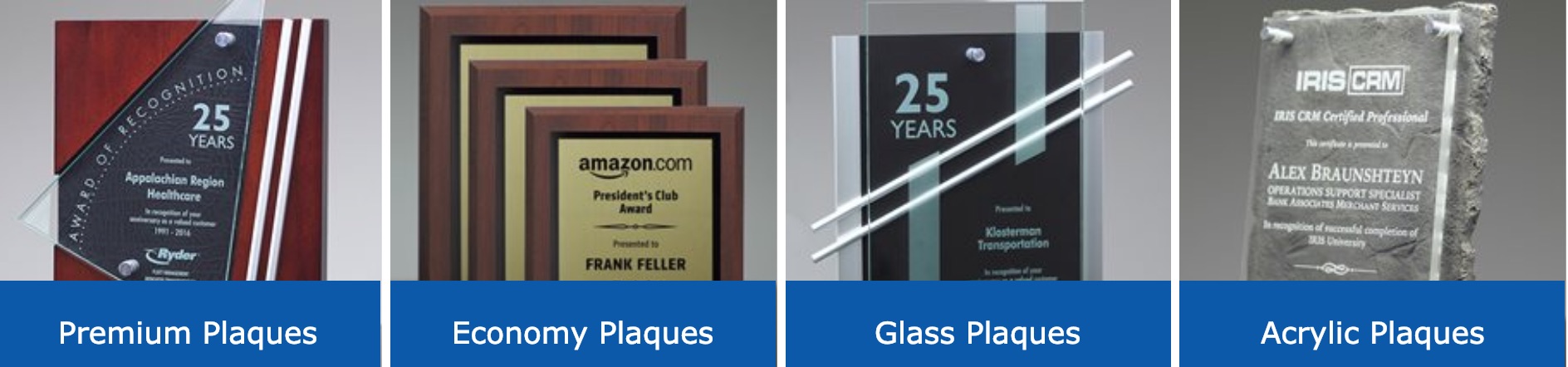
  • The token of appreciation is usually given in the form of an engraved plaques, but it depends on how much budget was allocated for the tokens. Most of the time, plaques are given out to speakers because they are sold everywhere. Plaques are also affordable and can be displayed on the speaker’s office to highlight the event. However, plaques are quickly becoming old fashioned, and event organizers in the present have been thinking about new ideas on what other tokens they could provide to the speakers aside from the usual plaque. The thing that can be given to a speaker varies from organization to organization, and it all boils down to how much they are willing to shell out. The following list is some of the best gifts that can be given to speakers and other guests of honor:

Personalized Items

  • Anything that is personalized would be a great gift to speakers. Personalized whiskey, pens, and notebooks are some of the most common gifts handed out to speakers. Handing out a personalized item to a speaker would make them feel special, and they will highly appreciate this type of gift. One of the best tips that organizers should consider would be asking the speaker about their personal preferences so that the speaker would enjoy the gift better. Most of the time, these personalized items that are given to speakers are left untouched. These tokens end up being displayed on the speaker’s office, while others are making use of it.

Vouchers

  • It might sound ridiculous to give a voucher to a speaker, but it is one of the most common trends in the world today. Vouchers for restaurants, entertainment, and experiences have become common, and most speakers will be more than happy to accept the gift. They are also looking forward to a great weekend or holidays with their family, and having a voucher on hand would be a great way to save a lot of money from paying for the entrance, food, and so much more.

Gadgets and Accessories

  • For organizers who have a lot of budget for their program, they could purchase a new gadget for their speakers which they can use for further talks. However, they can also provide them with accessories that they can use, like power banks and tablet covers. Power banks and external batteries would be a great token especially if they are relying on their smartphones to discuss their topics. Having a low battery is inconvenient, but with a power bank on hand, they would never think of running out of batteries again. Tablet covers can also be a great token to speakers, and there are a lot of beautifully made products available online. Mobile speakers would also work, especially if they will be speaking in a location where speakers are limited.

Artistic Crafts

  • Bobbleheads, statuettes, and caricatures are some of the best tokens that can be given to the speaker. These gifts also have a touch of personalization, and it would have a high sense of appeal to those who will be receiving it.

Old School Handwritten Note

  • If the organizers do not have enough budget to buy a token of appreciation, they could make an old-style note instead. Speakers will appreciate these notes, especially if the audience will participate. Old-style notes have their own charm that makes them an ideal token for speakers. However, remember that a physical pen with a handwritten note would work best. The same charm does not work for printed letters and emails
Share this:
Share this page via Email Share this page via Stumble Upon Share this page via Digg this Share this page via Facebook Share this page via Twitter Share this page via Google Plus

Tips for Teaching Your Kids How to Take Quality Photos by Emily Ford

Thursday, December 13th, 2018

Photo Tips
Tips for Teaching Your Kids How to Take Quality Photos by Emily Ford looks at some of the top tips for encouraging your kids to get into photography. Whether you’re a professional photographer or a keen amateur, you can easily implement these with your children.

Introduction

  • Photography is a skill that can take many years to perfect. The rewards can be great, but it takes time and effort that isn’t always available if you have a busy schedule. If your kids start showing an interest in photography, you can do them a huge favor by teaching them how to take quality photos early on. Doing so will give them an excellent foundation for developing their skills as a photographer. It can also bring you closer together as you enjoy a shared hobby.

1. Have Fun

  • Photography shouldn’t be a chore, particularly at a young age. There’s much to be said for the charm and unique perspective that a child can bring through a lens. For both of you, it’s important that this pastime is something you can enjoy together. Encouraging your child to have fun with the camera is invaluable.

2. Practice Together and Review

  • This point is somewhat linked to the first point. You’ll want photography to be something you practice together at times, sharing that fun and excitement. With the invent of digital photography, you don’t have to worry about wasting film. Therefore, you should encourage them to take as many photos as they like. You can review them together and look at which ones are good and why.

3. Holding the Camera

  • It may seem like common sense to you, but holding a digital camera isn’t always intuitive to young photographers. Take the time to show your child how to hold a camera. This allows them to steady the camera and capture better photographs. It also means that they’ll be able to frame their shots better. Keeping the camera straight is important and comes from holding the camera correctly.

4. Backgrounds and Foregrounds

  • Many adults struggle with these aspects of photography, so forming good habits from an early age can be incredibly useful. Teach your child to look at the elements that make up the background and foreground. Show them how to look for clutter and unnecessary things that will mean photos look messy.

5. Get in Close

  • When using a camera, many people seem reluctant to move too close to their subject. They’ll rely on zoom lenses or simply take the photo from a distance. Doing this means that the end result lacks focus. Show your kids that it’s ok to get up close to the subject (provided they don’t mind that!) to give a clearer focus on the subject.

6. Look for Back Light Situations

  • Taking a photograph with lots of light behind your subject will cause your subject to come out too dark. Common situations occur where the sun or a window during the day is behind your subject. To avoid this you can tell your camera to use the light coming from the subject to determine exposure rather than light coming from a bright background. Modern cell phones make this easy. All you have to do is tap on your finger on the subject on your screen and the cell phone will use the light coming from your subject to adjust exposure.

7. Landscape or Portriat

  • Make sure your child understands the difference between holding the camera so the long side is up and down (portrait) or left and right (landscape). As the names imply, the first is fine for taking pictures of people fairly close up, while the second is best when the content of the photo contains mostly backgrounds. A lot of people take too many pictures in the portrait position as this is the way they usually hold their cell phone when they use it. Most photos, however, will look better in the landscape position.

7. In Conclusion

  • Of course, these are just some of the basics of photography that can help your child improve. Depending on their age, you may also want to cover things such as how aperture, shutter speed, and ISO work together. However, the more complex elements should be saved until they’re ready and able to learn. Also, be sure to have your children evaluate their own work. This will help them become better critical thinkers.
  • Emily Ford

    • Emily is a blogger for thephototeam.co.uk. She has been a regular contributor to sites talking about the newest trends in photography and event management. When she’s not writing, she enjoys, cooking, hiking and pretty much anything outdoors.

    Share this:
    Share this page via Email Share this page via Stumble Upon Share this page via Digg this Share this page via Facebook Share this page via Twitter Share this page via Google Plus