
Archive for the ‘Guest Posts’ Category

Chiropractic Adjustments: Real Treatment or Real Quackery? by Reyshimar Arguelles

Friday, December 7th, 2018

Chiropractic Adjustments

Chiropractic Adjustments: Real Treatment or Real Quackery? by Reyshimar Arguelles takes on a controversial topic. Since my own experiences with chiropractors have been positive I decided to do this guest post. Be sure to ask your chiropractor if he or she will refer you to another type of physician if your problem isn’t one they can fix. Mine did once even though it meant less business for him.

Introduction

  • As a species, humans are constantly looking for ways to improve our way of life and the way that we do things on a daily basis. We are constantly looking for solutions to problems and better ways to execute processes. Down to the very core, human history has always been a recurring trial and error scenario.
  • Sometimes, we’re able to come up with breakthroughs, and sometimes, we fail and then it’s back to the drawing board. One realm of living where we’re very particular is the realm of health. Isn’t it strange? That we’ve lived for millennia and yet, we’re still trying to learn new things about our bodies and how to better treat them.

Watch Out for Fads

  • This seemingly-constant pursuit for new knowledge often gives rise to a multitude of fads. Things like ketogenic diets, alternative medicine, yoga, and quite recently, chiropractic adjustments sprouted like mushrooms in a forest. Those who propose these new methods always claim that there’s a scientific basis for these things. Sometimes, they’re legitimate. They truly improve the way we live and the effectiveness at which we’re able to address the plethora of problems that plague our lives.
  • But sometimes, these fads turn out to be hoaxes, quackeries, and falsehoods that were constructed with the purpose of using hype and mere anecdotal evidence in order to get people to jump on the trend. So, what category do chiropractic treatments fall under? First, we need to define some things.

What exactly is a chiropractic adjustment?

  • According to this article, a chiropractic adjustment is the manipulation of vertebrae that are unable to function properly. The ultimate goal of giving a chiropractic adjustment is to increase the range of motion, improve bodily functions, and to reduce the likelihood of nerve inflammation.

When is it administered?

  • Chiropractic adjustments are usually administered in order to address neck pain, lower back pain, headaches, recurring strains, sports injuries, and injuries that are sustained from car accidents. It’s also important to note that spinal adjustments are extremely dangerous when done improperly. It is because of this that it’s of paramount importance that you only get your adjustments done by fully trained professionals like the New York Chiropractors.

The Verdict

  • Chiropractic adjustment should not be the end-all-be-all solution for back pains. It is not the miraculous treatment that many would have you believe it to be. However, its benefits cannot be denied. Is it a real treatment? Yes, it is, but not to the extent that many of those who try to stoke the hype would tell you. Studies have not yet confirmed its effectiveness for pain relief or even as a treatment for chronic back pain for that matter.
  • It has, however, proven to be beneficial in many ways. For the purpose of maintaining bodily functions, range of motion, and flexibility, chiropractic adjustments will definitely be beneficial to you. This should be taken in the context of a component of a solution, not a singular, one pill cures all solution to your problems. It’s important that you do not undergo a chiropractic adjustment if you have osteoporosis, chronic back pain, or even simple back pains as these may worsen with improper treatment.

Reyshimar Arguelles

  • After graduating from university, Rey worked as a journalist. He covered various beats, including politics and crime. Later, he would work as a freelance writer on the side. He usually writes academic papers as well as blog content. You can reach him at reyshimar.arguelles92@gmail.com
Share this:
Share this page via Email Share this page via Stumble Upon Share this page via Digg this Share this page via Facebook Share this page via Twitter Share this page via Google Plus

All Children, Including Those with Learning Disabilities, Benefit from the Arts by Lillian Brooks

Friday, October 26th, 2018

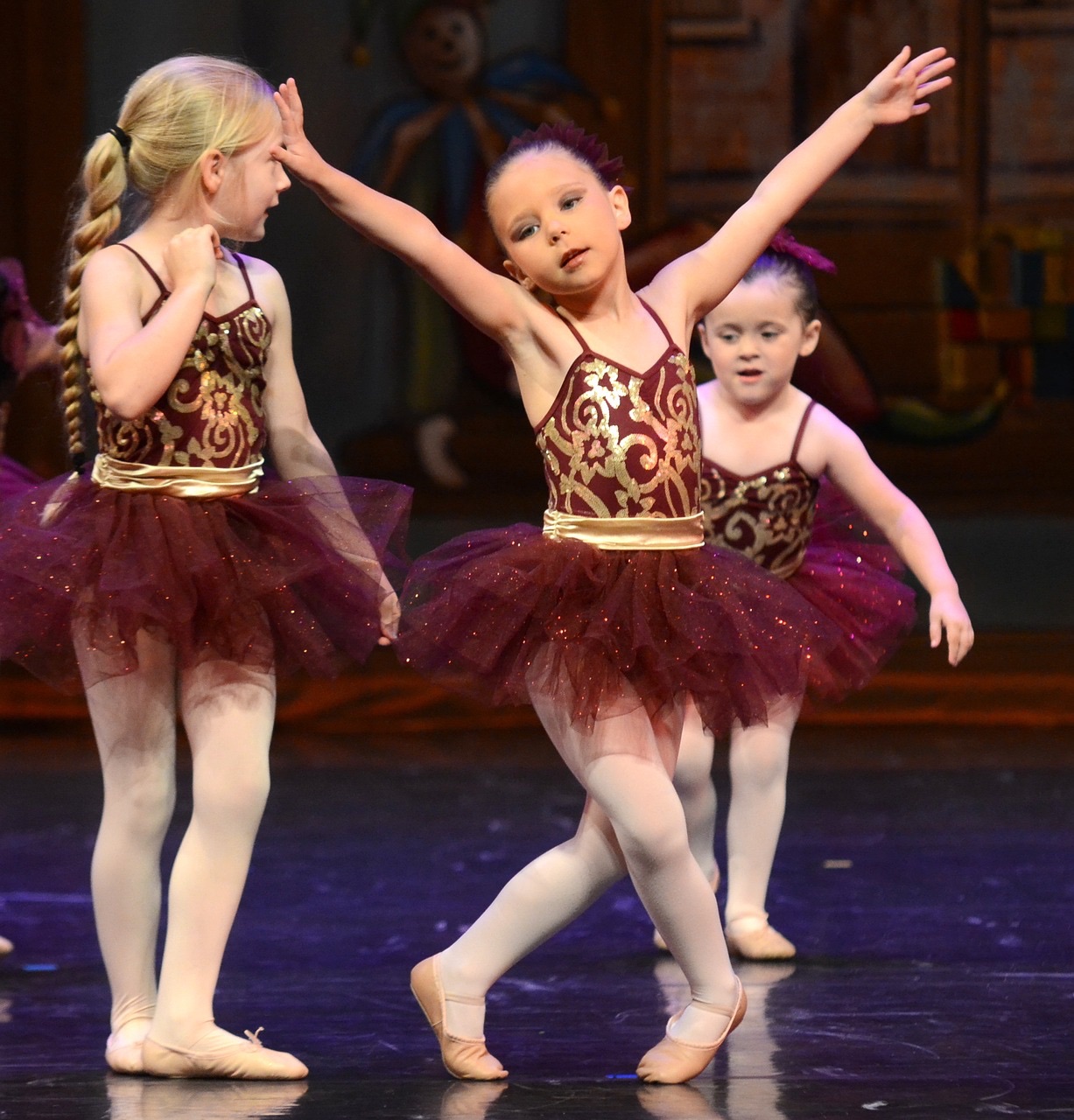
Three Ballerins
Photo Credit Pixbay.Com.
All Children, Including Those with Learning Disabilities, Benefit from the Arts by Lillian Brooks explains how all children can benefit from increased exposure to the arts. This article also contains a number of links to first-rate resources to help parents and educators bring more of the arts to homes and classrooms.

Introduction

  • Kids with learning disabilities often struggle with reading, writing, and math — their frustrations lead to feelings of inadequacy and defeat. Educators continually develop new methods and technologies to help their students master literacy and math skills, but the arts also play a very important role in helping kids learn and grow.
  • Drawing, painting, music, dance, crafts, and textile arts require complex thinking and problem-solving. Artistic activities build confidence and self-expression. Tools such as a paintbrush, sewing machine, guitar, or yarn allow kids to express themselves while providing innumerable chances to learn, practice, and master new skills.

Learning Styles

  • You know your child’s strengths, interests, and learning styles. And let’s face it: learning isn’t a one-size-fits-all proposition, so it’s important to know what works. Visual learners use charts, graphs, pictures to visualize relationships between ideas and concepts. These learners do well with the visual arts. However, it’s all about sound with auditory learners; they pick up knowledge by listening rather than learning through reading or visual displays. These kids love creating and listening to music.
  • Young authors and readers, meanwhile, love to interact with texts, employing writing and reading to work things out. Knowledge springs to life through words, rather than images or sound. Kids who learn by doing are all about hands-on, experiential learning. These perpetual motion kids thrive in drama, dance, and crafts.

Invite Your Child to Explore the Arts

  • While your student’s school probably uses a combination of technology, occupational therapy, classroom modifications, lesson adaptations and differentiation, multi-sensory teaching methods, and more to help students with learning disabilities to succeed, you can also foster a love of learning at home while also building up your child’s self-confidence.

Learn Through Art

  • Bring the arts into your home. Create a hobby room or space in a spare room. Visit art museums, go to the theater, or sign him up for music or dance lessons.
  • Drawing and painting teach about shapes, contracts, boundaries, spatial relationships, size, and other mathematical concepts. Break processes into small steps. Use YouTube to find drawing or painting tutorials for you and your children to try together. If your child also has ADD/ADHD, mix up the drawing or painting with time to get up and work the wiggles out.
  • Crafting allows kids to explore concepts, explore their ideas in two and three-dimensional ways, troubleshoot, and problem-solve. Create a hobby room or space stocked with supplies such as clay, chalk, paper, scissors, glue, and other items, then let your child channel her inner Picasso. If you like to sew, help your child create his own project, like a patchwork pillow for his bed or a simple new dress for her doll. Experts say that while kids can learn to sew any time, age 6 and 9 is the “sweet spot.” If you need help getting started, there are online guides to help you out.

Museums and More

  • Take your child to an art museum. Many museums also include galleries that invite children to interact with the art. Talk about the art, bring along sketchbooks and pencils, and try to recreate or draw inspiration from your favorite pictures.
  • Music teaches kids about rhythm, sound, pitch—great for improving phoneme recognition for reading or using repetitive, rhythmic and mnemonic songs to memorize academic facts more easily. Studies show that music helps with language skills, improves literacy, and even boosts a person’s IQ! Take your little person to hear an orchestra—many communities feature musical programming specifically targeted for kids and families.
  • Dancing develops motor control, counting, and directionality, which experts say, help kids better grasp reading and writing concepts. Experts say that less-verbal children can more easily express their opinions, emotions, and feelings through dance.

Get Them to the Stage and On Stage

  • Play-acting and theater allow kids to put themselves in someone else’s shoes, give them ownership of what they’re learning, and a way to express that knowledge. Take your children to the theater. Experts agree that theater “stimulates creative imagination. It doesn’t have to be Broadway; many local colleges have excellent (and less expensive) theater programs.
  • Use the arts to nurture your child’s strengths, grow curiosity, and cultivate a lifelong learner. The arts include a diverse world of learning styles and creative expression and often create a more level playing field for kids who learn equally well — just differently.

Lillian Brooks

  • Lillian is the founder of learningdissabilities.info. For years, Lillian worked as a special education teacher with a focus on teaching children with learning disabilities. She created learningdissabilities.info to offer information and understanding to parents of children with learning disabilities, as well as adults who are in need of continued support in order to succeed. She is located in Baltimore, Maryland.
Share this:
Share this page via Email Share this page via Stumble Upon Share this page via Digg this Share this page via Facebook Share this page via Twitter Share this page via Google Plus

The Obvious Match: Artificial Intelligence and Education by Lora Young

Tuesday, July 24th, 2018

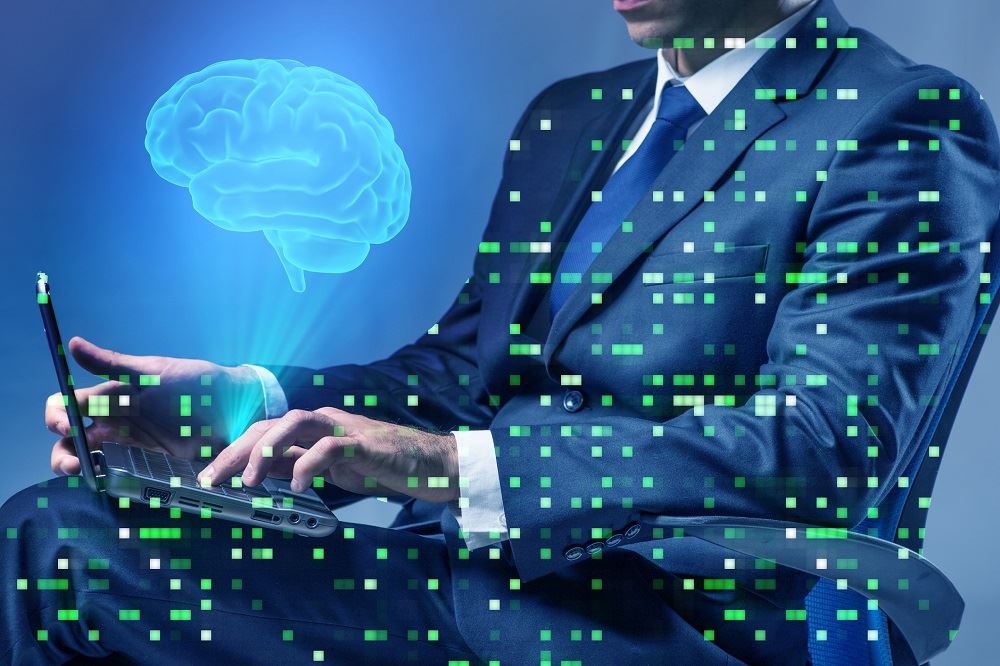
AI in education
The Obvious Match: Artificial Intelligence and Education by Lora Young deals with a topic that is likely to have a profound impact on education as we move forward. Educators and parents alike should be looking for AI applications that will promote learning for all children.

Introduction

  • With each year, technology seems to just keep getting better and better. As a species, we’ve always been able to survive and thrive in our environment because of our ability to innovate, create, and improve. There isn’t a single day in our lives that we aren’t using some form of technology for our benefit. There was a time when the Wright brothers were seen as crazy for thinking that it’s possible to create flying machines — today, millions of people travel by air on a daily basis.
  • Modern technology has seen an increased rate of development in the past ten years. Kickstarters are popping up all around like mushrooms in a rainforest, each with their own ideas on how to make our lives much more convenient. One of these technologies is Artificial Intelligence. But…

What Is Artificial Intelligence?

  • Artificial Intelligence? is a branch of Computer Science that aims to create machines that are able to process information and react to these pieces of information in a manner that humans would. Now you’re probably thinking: “Why would we want that?” The answer lies in one of the principles of psychology — learning. Learning is defined as the process by which experiences are able to permanently alter behavior. Now, if you really think about it, every living organism on Earth survives through the process of learning. Lions aren’t born as killing machines, nor are newborns able to speak coherently from the get-go.
  • This is where learning comes in. Through experiences, which also include a wide variety of interactions, organisms are able to store information that would, in turn, alter their behavior toward a certain scenario. We know that we shouldn’t touch hot stove tops because we remember that one time we did and we ended up with 3rd-degree burns.
  • Now, while a modern computer is great at performing complex calculations, it cannot alter its behavior. It is limited to user input. And while complex conditions can, in a way, simulate behavior or decision making, the computer itself cannot make sense of the experiences it encounters because these have to be manually inputted by someone else. Now, Artificial Intelligence seeks to give computers the capability to not only gather and process information but to assimilate and to act upon that information autonomously.
  • This opens up a wide variety of possibilities. Because AI enables machines to adapt to situations and grow smarter over time, these machines can only become better the more than they are put to use. It is, in a metaphorical sense, the maturation of machines. Machines will soon be able to account for their experiences and future decisions will be derived from that particular experience.

How Exactly Can AI Be Used in Education?

  • Because AI is able to adapt to its environment through the experiences it encounters and takes account of, AI will eventually become smart enough to determine the best course of action. Say, you’re in a Safety Training Scotland course. There are a wide variety of topics to discuss and each student has his or her own unique set of strengths and weaknesses, learning methods, language fluency levels, and cultural backgrounds. Artificial Intelligence, given enough experience, will be able to determine the best approach to each student to ensure that optimal learning is met.
  • Let’s say that your main language has always been Japanese. AI will easily be able to speak and translate concepts for you because it has been exposed to different cultures. Not only that, but AI will be able to tailor your course material to match your background and your learning preferences and capabilities. It will even create meaningful representations of concepts for you and will also be able to avoid topics that may offend you in any way.
  • AI can also be used in the assessment of each student’s performance, and by doing so it can alter the teaching material into something that helps students who are lagging behind catch up, and students who are performing, perform even better. There are a plethora of teaching methods that a single teacher can use, but a single teacher simply cannot teach each student according to each student’s preferred learning method. AI can do that for each student because it is capable of processing large amounts of information and determining actionable plans for each situation.

AI In Classroom Discussions

  • An even greater example of AI application in education that benefits students as much as teachers is when it is used in actual classroom discussions. Regardless of what your subject matter is, classroom discussions will always have a few questions thrown about. Now, every once in a while, a student asks a question that an instructor cannot answer, or explain in a manner that students are able to digest.
  • This is where AI comes in. Say, the exact scenario happened to a learning-disabled child. AI will be able to process, interpret, and present the information to the child in a manner that’s appropriate for his learning capacity, without hindering the pace of the discussion. And yes, there are always naysayers when it comes to innovation. Some people may even go as far as to say that if we decide to integrate artificial intelligence into our education systems, then what’s the point of having teachers around?
  • In Conclusion

    There are even those who are extremely paranoid about technology (or they may simply have watched too many Terminator movies as a child). And while it’s uncertain when artificial intelligence will be integrated into the educational system, what’s certain is that history, especially when it concerns new technology, will always repeat itself.

  • And whenever we see someone trying to create something new, we should always remember: There was a time that people thought the Wright brothers were crazy for thinking that they could create flying machines. Today, it’s commonplace.

Lora Young

  • Lora was born in January 1992. Today, she is a digital marketer who has several years of experience in working with non-profit organizations. She has extensive knowledge in the fields of Education, Computer Science, and Psychology. When she isn’t helping build brands, she practices Muay Thai and runs marathons. Thanks, Lora
Share this:
Share this page via Email Share this page via Stumble Upon Share this page via Digg this Share this page via Facebook Share this page via Twitter Share this page via Google Plus

The Importance of New Tech to Optimal Healthcare for Children by Rey Shimar

Friday, July 6th, 2018

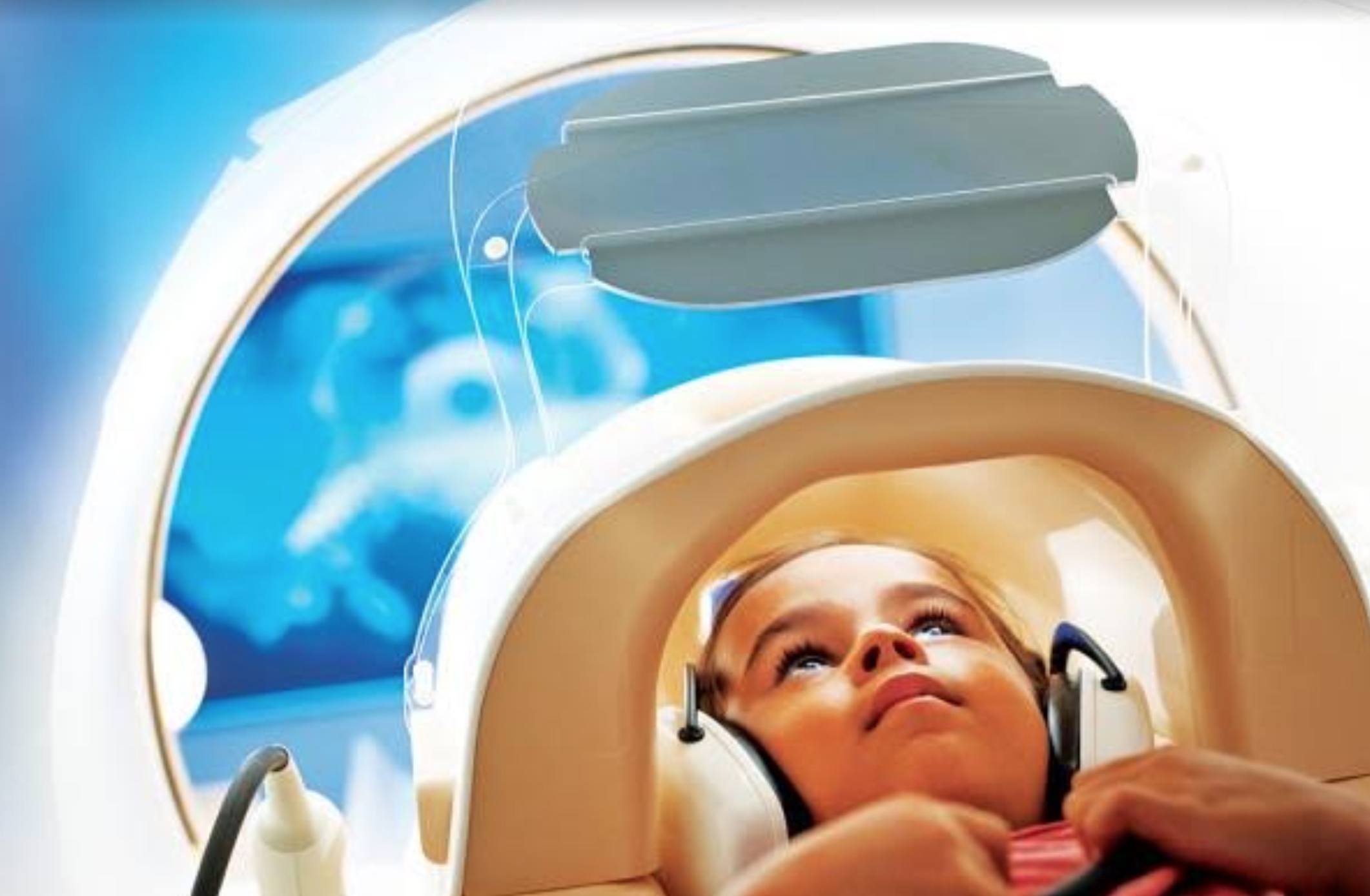
Kid in MRI
The Importance of New Tech to Optimal Healthcare for Children by Rey Shimar focuses on how technology is impacting the quality of our health care. Parents should use this to look for opportunities to improve health care for their children and themselves.

Introduction

  • Technology has come a long way in making life easier. From our shopping habits to planning a holiday destination, there are countless applications and software that help parents and teachers handle even the most mundane of tasks. With that being said, it shouldn’t come as a surprise to find technologies that promote better health. And as the demands for optimal health increase each year, the tech industry is investing considerably on innovation. As parents or healthcare professionals, it is always important to know about these innovations and bring out their full effectiveness.

An Environment of Innovation

  • In 2018, for instance, it is expected that IT acquisitions in the healthcare industry will rise. This demonstrates the fact that both patients and medical institutions are becoming very much aware of the need for better healthcare technologies. The benefits include shorter waiting times, more accurate diagnostics, and more importantly, lower healthcare costs across.
  • According to GetReferralMD.com, many of these innovations seek to streamline complex patient-physician interactions. Workflow management has to be one of the most tedious tasks that private practitioners and other healthcare professionals have to handle. With data management systems, professionals can manage their time more effectively. This will essentially improve outcomes and reduce diagnostic costs.

Keeping All Informed

  • Likewise, these new healthcare innovations can also help in terms of keeping both patients and doctors informed throughout their interactions. There are mobile apps that are focused on keeping patients up-to-date with their appointments as well as helping them take medication on time. Indeed, these innovations are being adopted by independent practitioners and healthcare providers, owing to wide-ranging benefits these technologies entail. In terms of childcare, we can already sense the advantages these technologies have towards improving the mental and physical aspects of children.

Innovative Solutions for Better Childcare

  • Innovations in the IT and tech sectors can improve developmental research into healthcare for children. What’s more, we can also see the positive impact they bring to both specialty and primary care, as well as localized models such as community healthcare systems which are becoming even more prominent. Along these lines, it is important for stakeholders in early childhood development to become more aware of the newest technologies that will make the experience much more rewarding.
  • School administrators in particular, will have to find ways to insert technology education when it comes to training their teachers. This would involve knowing how to use apps that are specifically designed for children with disabilities or with special needs. Teachers can access educational apps that will help such students progress with the rest of the class. They can also make use of mobile guides for certain emergencies.
Share this:
Share this page via Email Share this page via Stumble Upon Share this page via Digg this Share this page via Facebook Share this page via Twitter Share this page via Google Plus

The Obvious Match: Artificial Intelligence and Education by Lora Young

Tuesday, June 26th, 2018

What Is AI
The Obvious Match: Artificial Intelligence and Education by Lora Young posits the idea that it’s just a matter of time until artificial intelligence takes its place alongside teachers in the classroom. Her insightful post should be able to stimulate student thinking and be the basis for an engaging classroom conversation.

Introduction

  • With each year, technology seems to just keep getting better and better. As a species, we’ve always been able to survive and thrive in our environment because of our ability to innovate, create, and improve. There isn’t a single day in our lives that we aren’t using some form of technology for our benefit. There was a time when the Wright brothers were seen as crazy for thinking that it’s possible to create flying machines. Today, millions of people travel by air on a daily basis.
  • Modern technology has seen an increased rate of development in the past ten years. Kickstarters are popping up all around like mushrooms in a rainforest, each with their own ideas on how to make our lives much more convenient. One of these technologies is Artificial Intelligence. But…

What Is Artificial Intelligence?

  • Artificial Intelligence is a branch of Computer Science that aims to create machines that are able to process information and react to these pieces of information in a manner that humans would. Now you’re probably thinking: “Why would we want that?” The answer lies in one of the principles of psychology — learning.
  • Learning is defined as the process by which experiences are able to permanently alter behavior. Now, if you really think about it, every living organism on Earth survives through the process of learning. Lions aren’t born as killing machines, nor are newborns able to speak coherently from the get-go.

Enter Learning

  • This is where learning comes in. Through experiences, which also include a wide variety of interactions, organisms are able to store information that would, in turn, alter their behavior toward a certain scenario. We know that we shouldn’t touch hot stove tops because we remember that one time we did and we ended up getting burned. Now, while a modern computer is great at performing complex calculations, it cannot alter its behavior. It is limited to user input. And while complex conditions can, in a way, simulate behavior or decision making, the computer itself cannot make sense of the experiences it encounters because these have to be manually entered by someone else.
  • Now, Artificial Intelligence seeks to give computers the capability to not only gather and process information but to assimilate and to act upon that information autonomously. This opens up a wide variety of possibilities. Because AI enables machines to adapt to situations and grow smarter over time, these machines can only become better the more that they are put to use. It is, in a metaphorical sense, the maturation of machines. Machines will soon be able to account for their experiences and future decisions will be derived from that particular experience.

How Exactly Can AI Be Used in Education?

  • Now, because AI is able to adapt to its environment through the experiences it encounters and takes account of, AI will eventually become smart enough to determine the best course of action. Say, you’re in a Safety Training Scotland course. There are a wide variety of topics to discuss and each student has his or her own unique set of strengths and weaknesses, learning methods, language fluency levels, and cultural backgrounds. Artificial Intelligence, given enough experience, will be able to determine the best approach to each student to ensure that optimal learning is met.

Adapting to Each Learner

  • Let’s say that your main language has always been Japanese. AI will easily be able to speak and translate concepts for you because it has been exposed to different cultures. Not only that, but AI will be able to tailor your course material to match your background and your learning preferences and capabilities. It will even create meaningful representations of concepts for you and will also be able to avoid topics that may offend you in any way.
  • AI can also be used in the assessment of each student’s performance, and by doing so it can alter the teaching material into something that helps students who are lagging behind catch up, and students who are performing, perform even better. There are a plethora of teaching methods that a single teacher can use, but a single teacher simply cannot teach each student according to each student’s preferred learning method.

Final Thoughts

  • AI can do that for each student because it is capable of processing large amounts of information and determining actionable plans for each situation. An even greater example of AI application in education that benefits students as much as teachers is when it is used in actual classroom discussions. Regardless of what your subject matter is, classroom discussions will always have a few questions thrown about. Now, every once in a while, a student asks a question that an instructor cannot answer, or explain in a manner that students are able to digest.
  • This is where AI comes in. Say, the exact scenario happened to a learning-disabled child. AI will be able to process, interpret, and present the information to the child in a manner that’s appropriate for his learning capacity, without hindering the pace of the discussion. And yes, there are always naysayers when it comes to innovation. Some people may even go as far as to say that if we decide to integrate artificial intelligence into our education systems, then what’s the point of having teachers around? There are even those who are extremely paranoid about technology (or they may simply have watched too many Terminator movies as a child). And while it’s uncertain when artificial intelligence will be integrated into the educational system, what’s certain is that history, especially when it concerns new technology, will always repeat itself.
  • And whenever we see someone trying to create something new, we should always remember: There was a time that people thought the Wright brothers were crazy for thinking that they could create flying machines. Today, they are commonplace.

Lora Young

  • Lora was born in January 1992. Today, she is a digital marketer who has several years of experience in working with non-profit organizations. She has extensive knowledge in the fields of Education, Computer Science, and Psychology. When she isn’t helping build brands, she practices Muay Thai and runs marathons. If you are looking for someone that can write high quality copy you can contact her at . You can follow her on Twitter at @TheamazingLORA.
Share this:
Share this page via Email Share this page via Stumble Upon Share this page via Digg this Share this page via Facebook Share this page via Twitter Share this page via Google Plus