Archive for the ‘Guest Posts’ Category

Illustrating the Flexibility of ABAS-3 to Diagnose Individuals with Adaptive Skills Limitations by Patti Harrison, PhD and Thomas Oakland, PhD

Tuesday, May 22nd, 2018

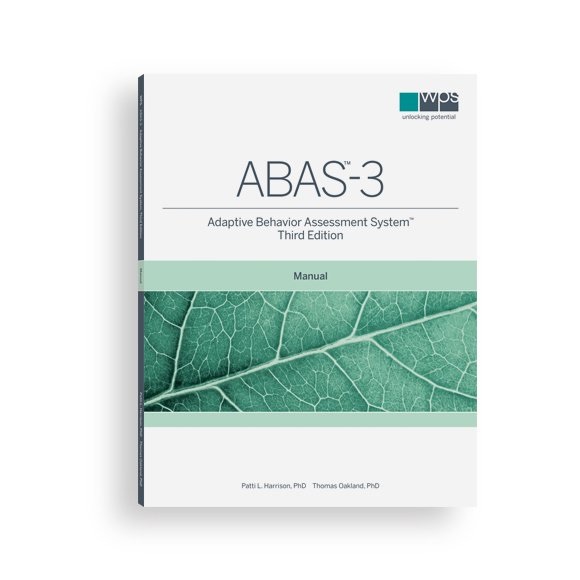
ABAS-3

Illustrating the Flexibility of ABAS-3 to Diagnose Individuals with Adaptive Skills Limitations by Patti Harrison, PhD and Thomas Oakland, PhD provides a complete assessment of adaptive skills across the lifespan from birth to 89 years. Please share this with the people at your skill who are responsible for doing this type of assessment. Parents who homeschool thier children should also take a look at this important product.

Introduction

  • By nature, humans have skills that enable them to adapt to their environment. However, because of learning disabilities, developmental delays, or other environmental factors, some people struggle to develop their adaptive skills and need intervention.
  • The ABAS-3, or the Adaptive Behavior Assessment System, enables professionals to identify these limitations and create intervention programs that assist children and adults with developing the adaptive skills necessary to function in their everyday environments.
  • The ABAS-3 can help increase an individual’s independence and improve social behaviors. Assessing a person’s ability to function independently enhances their quality of life and enables them to continue into adulthood with the skills they need to perform at work, school, and home.

Diagnosing Adaptive Skills Limitations

  • Clinicians, school psychologists, and other mental health professionals use the ABAS-3 to diagnose many different disorders. Included are cerebral palsy, emotional disturbance, autism spectrum disorder and intellectual disabilities.
  • The ABAS-3 uses tests to measure IQ, visual-spatial processing, knowledge, working memory, and fluid reasoning. From these scores, professionals can measure an individual’s achievement in specific areas and establish helpful interventions.
  • The ABAS-3 can identify strengths and weaknesses, document progress over time, determine eligibility for services like disability benefits, or evaluate the person’s ability to live and work independently. From this information, a clinician can make a diagnosis and establish a treatment plan.

The Flexibility of ABAS-3 to Diagnose

  • The ABAS-3 has the ability to help evaluate people with a wide range of disorders, and because it’s so versatile, it has a lot of flexibility to identify adaptive skills limitations. For instance, school psychologists can use the ABAS-3 to recognize and assess significant developmental delays in children who are not meeting developmental milestones. This enables psychologists to identify limitations and recommend treatment plans or interventions.
  • The ABAS-3 can also be used as an adaptive behavior assessment to plan and coordinate homeschool programs for children with special needs. With resources like the ABAS-3 at their disposal, parents who homeschool special needs children, along with a skilled professional, can now develop and follow programs benefiting their children’s development.

Other instances of the flexibility of the ABAS-3 and benefactors of intervention treatment plans include:

  • Dealing with emotional disturbances
  • Social and self-direction problems at home
  • Children with visual impairment who need home interventions
  • Problems with daily behaviors and practical skills
  • Monitoring the transition from school to work environments
  • Comprehensive assessments for people with ADHD who have diminished self-direction and self-care
  • Rehabilitation after traumatic injuries
  • Evaluating Alzheimer’s patients and improving functional behaviors
  • Assessing the effects of mental health on daily functioning
  • Monitoring change in daily routines due to medication
  • The list goes on. The flexibility of the ABAS-3 to help diagnose individuals with adaptive skills limitations is proven in how school psychologists, clinicians, and other mental health professionals use the tests to evaluate their subjects.

WPS Publishing

Share this:
Share this page via Email Share this page via Stumble Upon Share this page via Digg this Share this page via Facebook Share this page via Twitter Share this page via Google Plus

Save These Fun Indoor Activities for a Rainy Day by Charles Carpenter

Thursday, May 3rd, 2018

Fun Indoors
Save These Fun Indoor Activities for a Rainy Day by Charles Carpenter offers some great advice for keeping children active and involved when they can’t go outside. While many kids spend too much time indoors, it’s important that they have fun and learn something interesting when outside is not an option. Thanks, Charles.

Introduction

  • Spring outdoor fun is finally upon us. If you’re like many families, you’ve planned outdoor activities from now until the weather turns frosty once more. But what happens when rain interferes with those plans? If your kids have been forced to come back inside due to rainy weather, you’re probably looking for fun ways they can burn off some energy, especially if they just got an enticing dose of warm weather activity. Fortunately, there are plenty of indoor activities that can keep the kids engrossed and maybe even teach them a thing or two. The Internet is your best friend if you’re looking for activities that are wholesome and enriching. In the meantime, here are a few ideas to get you started.

Show Them Something New

  • Kids love learning something totally new as long as it doesn’t involve schoolwork. Use the time to show your children how to do something that’s new and interesting to them. These don’t have to be involved in complex projects, just easy things that are helpful for kids to know, like how to make scrambled eggs using the microwave, or how to whip up a kid favorite like a peanut butter and banana sandwich. Show them how to sing in harmony using a favorite old song like “Row, Row, Row Your Boat,” or get everyone together for a music circle. No instruments to speak of in the house? No problem – you just have to know where to look. Plexus suggests gathering a few items you won’t mind getting banged on (think: wooden spoons, pots and pans, plastic tubs, and metal spoons) and create your own.
  • If you have little ones who are still developing their manual dexterity, pull up a Youtube video on how to lace a pair of shoes. a pair of shoes. The blender is one of the easiest appliances for kids to learn, so why not use it to teach the little ones how to whip up a healthful and delicious smoothy, always a kid favorite. Challenge the group’s storytelling abilities by developing an impromptu story using contributions from everyone involved.

Indoor Gardening

  • It may be too cold and wet outside to plant all your favorite vegetables and flowers, but that doesn’t mean you can’t do some good old-fashioned indoor gardening with the kids. It’s still possible to plant a few herbs and vegetables and watch your kids giggle with glee as their very own patch of garden takes shape. You can do it with some potting soil, a few flower pots and some grow lights. Talk your kids through the process of planting and why it’s so important to keep plants watered and near a light.

Fun Indoor Exercise

  • Get the little ones up and moving with a Youtube exercise video. Check out this exercise routine, which allows your kids to get moving while learning about animals from around the world. Youtube is also a great source for teaching kids about music. There are many videos that teach children music essentials in a fun and engaging way. If you have a piano at home, you have a great opportunity to give your kids a hands-on music lesson.

Family Time Capsule

  • Have your children put together a family time capsule by writing down their favorite foods, television shows, movies, video games, favorite music and any instruments they may be learning. Take pictures of each, as well as a family picture, and put it all together in a box or large bag. Sock it away in a secure location (not too secure – you don’t want to lose or forget about it), and plan on breaking it open in five or ten years. Use this fun little project to encourage your kids to talk about what they’d like to be doing in the future, where they’d like to be going to school, and how they’ll keep in contact with their friends.

Get Your Art On

  • Nothing keeps kids busy quite like drawing, painting or making art using their favorite medium. Kick things up a notch by having your kids learn to create challenging and colorful patterns, which can help kids learn to solve problems, symmetry and improve their math skills. If cold and wet weather has your kids stuck inside again, fill the time with music, art, dancing, exercise and new skill activities. Children learn best when they’re having fun, so emphasize activities they’ll truly enjoy. Be sure to also look for opportunities to challenge children to come up with their own activities. You might learn something new, too.

Charles Carpenter

  • Charles created HealingSounds.info. He believes in the power of music and sound as a healing tool. He is based in San Antonio, Texas. Charles Carpenter can be reached at information@healingsounds.info.
Share this:
Share this page via Email Share this page via Stumble Upon Share this page via Digg this Share this page via Facebook Share this page via Twitter Share this page via Google Plus

5 Ways to Improve the Quality of Your Healthcare Facility by Jenna Smith

Friday, April 6th, 2018

5 Ways to Improve the Quality of Your Healthcare Facility by Jenna Smith spells out what state of the art healthcare facilities do to assure that they remain at the leading edge in terms of total quality in the profession. You should consider checking to see if your healthcare provider follows these five criteria.

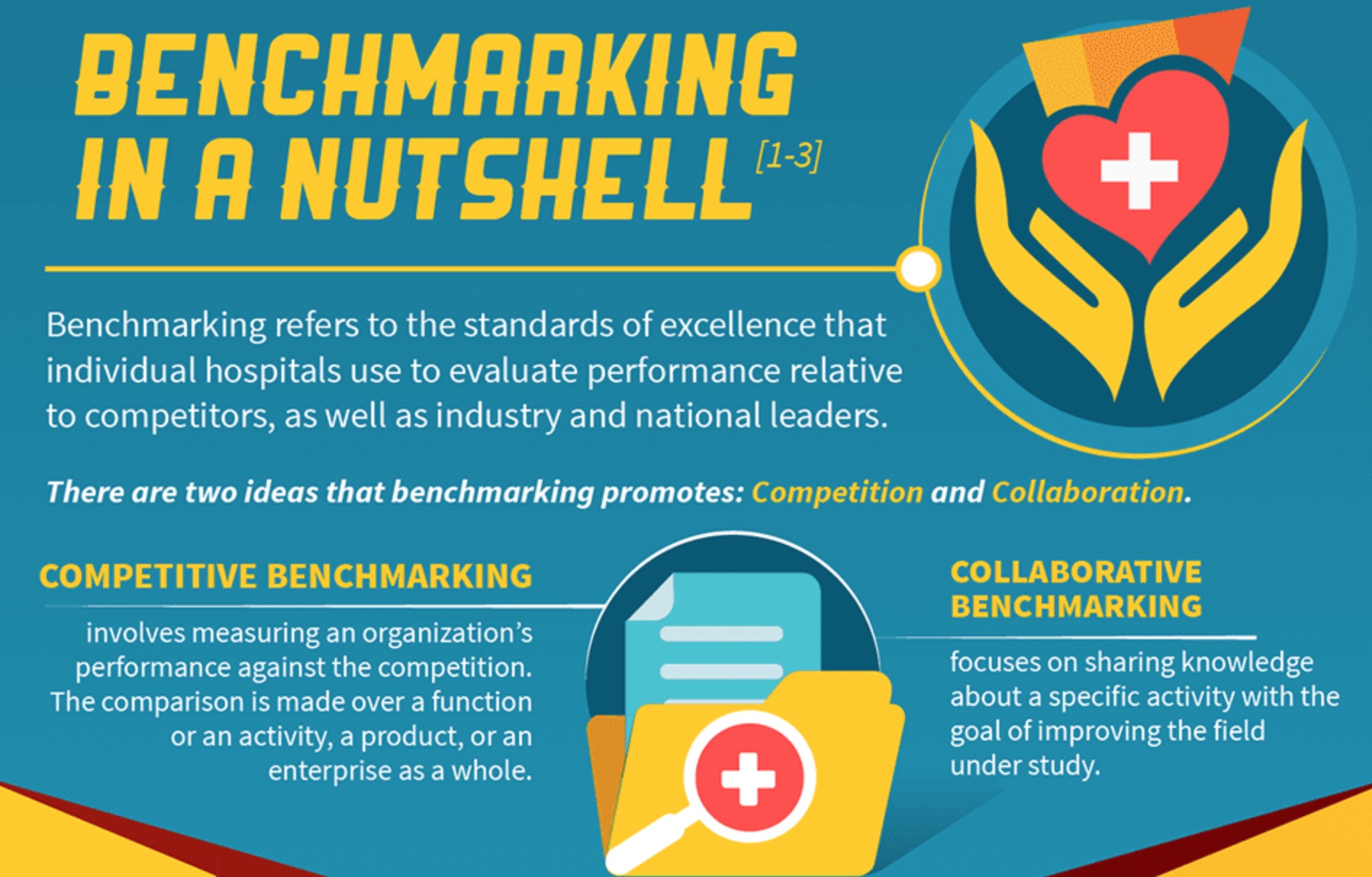
Benchmarking Hospitals

Introduction

  • Most healthcare facilities across the globe are beginning to put quality improvement at the top of their priorities list. And while communication breakdowns and certain medical errors are a source of frustration, efforts around patient care, clinical outcomes, care redesign, and cost-cutting can be evaluated to guide further improvement in quality standards. Below is a list of measures that any healthcare facility can take to raise their standard of patient care.

1. Benchmarking

  • Leaders of facilities can use healthcare benchmarking to evaluate their work against local hospitals, national bodies, and industry leaders. Example benchmarks include hospital rating, care provided by the emergency department, number of heart attack patients, and outpatients with potential heart attack symptoms who received attention within 24 hours of being admitted. The results from benchmarks will offer high-level insight on where a particular facility stands compared to its competitors and what it can do to improve the quality of its service.

2. Collaborating with Patient Advocates

  • Patient advocates often reside in outpatient-centered facilities. Their job is to ensure that appropriate care is being given to the patient, so they spend a lot of time with the sufferer listening to their concerns and ensuring they feel safe and comfortable. Collaborating with patient advocates is a great way to gather insight into sentiments and opinions of patients a healthcare provider may not be privy to. Applying the feedback into clinical procedures may also improve the quality of patient care as a whole.

3. Considering Human Factor Principles

  • Human factor refers to the information about human limitations, human strengths, and other traits that are related to the design of healthcare tools, systems, tasks, environments, machines, and jobs. When designing healthcare systems, inputting human factor has a plethora of benefits, including standardization of procedures, better communication between healthcare providers, reduced risk of IT-based errors, and improved care processes. Some human factor principles also include leveraging checklists and protocols, as well as avoiding dependence on memory.

4. Rewarding Top Performers

  • In addition to inputting human factor principles, rewards can be a great way to motivate top performers. When hardworking personnel receive empathy and recognition, he/she is compelled to perform even better. Also, others can be forced to work harder to achieve their recognition. Driving individual performance can help increase the quality of service throughout the organization. Therefore, if someone is consistently gaining accolades from regular patients, providing emotional support and ensuring people are sufficiently educated before they leave the facility, reward them in every possible way to set an example.

5. Adopting Characteristics of Industry Leaders

  • Healthcare business owners can make a list of industry leaders within their locality and analyze the healthcare procedures being carried out within the leading organizations. Then, they can simulate processes within their facilities to detect harm events and provide their team with a strong foundation for learning. Training sessions can also be arranged for employees to educate them about industry-leading procedures. With simulation exercises and training, the quality of clinical outcomes is likely to improve.
  • Enhancing the quality of care will ultimately boil down to research and innovation. However, healthcare companies can always review industry data to see which organizations lead in a particular domain which they’re looking to improve. Analysis of competitors can then be combined with the measures mentioned above for the greater good of patients.

Jenna Smith

  • Jenna is a freelance blogger & has been blogging since college where she studied marketing. She fell in love with traveling early in life and to this day makes it a priority to visit new destinations every year. Jenna has merged her love of keying stories into copywriting work as well as plenty of reading and writing for fun! You can reach her at jennaleesmith1@gmail.com.
Share this:
Share this page via Email Share this page via Stumble Upon Share this page via Digg this Share this page via Facebook Share this page via Twitter Share this page via Google Plus

Treating ADHD with Music Therapy by Charles Carpenter

Sunday, January 14th, 2018

Music Therapy

The Power of Music

  • Say it’s been a bad day. You had struggles at work or school. You were late to an important appointment or you had a falling out with a friend. What is one thing that can make it better? For most people, putting on the right music can help make things better no matter how hard a time they are having. That’s the power of music.
  • Music therapy harnesses that power as a way to use it as a therapeutic tool. It’s a non-invasive treatment used to stimulate parts of the brain to produce results. With the help of music, therapists can help people with issues such as chronic pain, mood disorders, and other serious conditions including autism, depression, and Alzheimer’s disease. For children with attention-deficit/hyperactivity disorder, or ADHD, music therapy can be a helpful tool to strengthen social skills, ease hyperactivity, increase focus, and reduce impulsiveness.

Music Therapy and ADHD

  • One of the theories behind music’s efficacy for treating ADHD is its inherent structure. Music is made of patterns, mostly its rhythm, but also in lyrical structure and repetition in melodies. Music has a clear beginning, middle, and end. Listening to it helps a brain with ADHD stick to a linear path. Doing that again and again trains the brain to be more comfortable sticking to an idea all the way through. The child with ADHD learns to plan, anticipate, and react.
  • Listening to music helps the ADHD patient become more collaborative and social as well. Listening to classical music, for instance, teaches a child that all contributing instruments in the orchestra are necessary to create a cohesive piece. Participating in band becomes a real life application where they take turns, anticipate changes, and become better at picking up other people’s cues.
  • When the brain hears music, synapses begin to fire. Neurochemicals such as dopamine increase, which helps regulate attention, increase motivation, and improve memory. This can help balance the ADHD brain without the use of drugs. Over time, the chemicals and synapses build up and activate to improve overall brain function.

How to Interest Your Child in Playing Music

  • If you think music therapy–in particular, learning to play an instrument– could be a helpful tool for helping manage your child’s ADHD, there are several ways you can increase his or her interest. The most important thing is picking the right instrument. Start with something basic as to not intimidate or overwhelm your child. If he or she is interested in brass instruments, they can start with a student trumpet to learn how to read music and improve their fingering. As their skills advance, you can trade up instruments.
  • You are the biggest source of structure in your child’s life. When it comes to encouraging a skill, it’s important to show your child that you are involved as well. The more actively engaged you are, the less likely they will lose interest and become distracted. While they will undoubtedly have to learn songs they are not interested in at school, encourage them to learn their favorite tunes as an extracurricular activity. This will make the experience more their own, and less a lesson plan, and will pique their interest.
  • Music has the power to change your mood and even alter your brain chemistry. Music therapy is the practice of using that power to help make life better for people with mood disorders, chronic pain, and other serious conditions. Children with attention-deficit/hyperactivity disorder (ADHD) benefit from the structure, social aspects, and brain chemistry boosting effects of music. To hold your child’s interest in playing music, start small with a simpler instrument that will not overwhelm them. Stay active and interested in their development and encourage them to have fun with music by learning to play songs they love outside of formal lessons.

Charles Carpenter

  • Charles is the father of a son with ADHD who loves to share the benefits of music therapy with other parents of children with ADHD. He created Healing Sounds because he believes in the healing therapeutic power of music, and wants to spread the word. He is located in San Antonio, TX and you can email him at information@healingsounds.info. Thanks Charles.
Share this:
Share this page via Email Share this page via Stumble Upon Share this page via Digg this Share this page via Facebook Share this page via Twitter Share this page via Google Plus

Ways To Prepare Students For Jobs That Don’t Exist Yet by Catrin Cooper

Friday, December 15th, 2017

Dream Job
Ways To Prepare Students For Jobs That Don’t Exist Yet by Catrin Cooper will help students, parents, and anyone with a job at risk of automation understand the type of skills and knowledge they need to develop as old jobs disappear and new ones take their place. Educators should also pay attention to these concepts as they develop future lessons.

Introduction

  • A decade ago, social media manager was just an imaginary job title to most of us, and so was mobile app developer. With the increasing popularity of social media and the accelerating pace of technology, most of the children today will have jobs that don’t exist yet. This makes it difficult for kids to know what to study when it comes to future careers. So, how can you prepare your kids for a future career that no one can predict yet? The answer is to give young people the vital skills to adapt.

Complex problem-solving skills

  • Scientific knowledge and literacy, as well as numeracy, are still vital. However, executives from world’s leading companies think that complex problem solving is the number one job skill in 2020 and beyond.
  • Kids with strong problem-solving skills can have a promising career. Problems are always the center of what people do at work each day. Being a problem solver is vital to your success. With this skill, you can solve a problem quickly and effectively.
  • Students must learn how to use tools and techniques that can enhance their approach to solving the problems faced by teams and organizations. If you are more successful at solving problems, you will be more successful at what you do. It’s vital to build a reputation as one who can handle tough situations in a positive way.

Critical thinking

  • Can you analyze how you think and present evidence for your ideas? Mastering this skill will give you better control of your learning and empathy for other points of view. It is self-directed and self-disciplined thinking. It can help you in communicating effectively and solving problems more efficiently. Critical thinking is a vital skill so that you can think clearly and rationally. This skill is vital in research, blockchain in real estate, finance, and the legal profession. However, it is not restricted to these areas. If you can think well and solve problems, then you have an asset that you can use for any career that you wish to follow.
  • This skill involves logic and reasoning. You need to use it to interrogate a problem, consider solutions to the problem, and weigh the pros and cons of every approach. A few years from now, organizations will see individuals with critical thinking skills as highly employable.
  • How can critical thinking be integrated into a curriculum? Essay writing is a tried-and-tested method to help students engage in the critical thought process. But there are other more tools available.

Collaborative skills

  • Humans could not have risen to prominence by working alone. That’s why students have to learn how to collaborate with others and develop that skill. In a modern workplace, teamwork is increasingly vital. Having social skills is also critical. Over the years, companies have put more emphasis on the interpersonal skills of their employees.
  • Learning how to collaborate with others is vital in any work environment, and it is a skill that humans are still better at than robots. Keep in mind that in a workplace, interaction is critical. Workers support one another’s strengths, and they adapt flexibly to various circumstances. This non-routine communication is always a human advantage.
  • But to coordinate with others, you need to have strong communication skills. It is a skill that requires awareness of people’s strengths and weaknesses. Furthermore, you need to practice working with different personalities.

Creativity

  • There are always new products and new technologies. Thus, employees will need to be more creative to benefit from those changes. Although robots can help us in getting what we want and put some at risk of losing their jobs, they are not as innovative as humans.
  • In the future, creativity is a key skill when looking for a job. Just because you consider yourself as a non-creative person, you should remember that it is not exclusive to musicians, artists, and writers. Creativity means that you can connect the dots using diverse information to pull ideas together to have a new idea.

People management

  • Even though most tasks in the future are automated and utilize advanced AI, employees will still be a critical part of a company. That’s because humans are more creative than robots. They are better at reading one another. Plus, they support each other’s ideas and energy. Unfortunately, humans get sick and distracted.
  • Hence, companies will need managers and team leaders who know how to motivate their teams and maximize their productivity. In that way, they can easily respond to their needs. To be a great manager, you need to enhance your emotional intelligence and learn how to delegate tasks. Furthermore, you should develop your management style. Consider taking a leadership course or two and pick up some leadership books.

Ability to help people

  • Having a service orientation is a skill that most companies will need today and in the future. If you have strong skills in this area, you can easily spot and anticipate the future needs of customers. Businesses in the energy department, for instance, would face consumer concerns about carbon footprints, food safety, and labor standards. Companies will have to learn to anticipate new consumer values so that they can translate these issues into product offers.
  • With a service orientation, you can step into the minds of users and know what they value, dislike and fear most. From there, you can develop new products or adapt a service to future proof your brand.

Being flexible

  • This is about being a mental gymnast. Cognitive flexibility is about how quick you can swing and twirl back and forth from one system to another. You need to be limber to see new patterns and make a unique association of ideas easily. To flex your cognitive muscles, you should learn new things every day and learn new ways to think. For example, you can learn an instrument or try an art class. Or you can read The Economist or The Economic Review to know about financial markets.
  • When you expand your interests and go outside your comfort zone, you are embracing people who are challenging your worldviews. Doing it every day will prepare you for a job that does not exist yet. And your brand will thank you for it.

Negotiation skills

  • Robots may be good at automating jobs, but they do not have social skills, which will be a more important skill in the future. Humans are better at social interaction. We’re also better at negotiations than robots. Even if you are in the technical department, you need to show better interpersonal skills and be able to negotiate with clients, teams, and managers.

Catrin Cooper

  • Catrin is blogger and freelance writer from New York. She’s always ready to cover topics related to personal development, marketing, and education. Feel free to contact Catrin at catrincooper99@gmail.com. Her guest posts are free so don’t miss an opportunity to add some value to your blog.
Share this:
Share this page via Email Share this page via Stumble Upon Share this page via Digg this Share this page via Facebook Share this page via Twitter Share this page via Google Plus