Archive for the ‘Guest Posts’ Category

Seven EdTech Tools That Make It Easy to Teach Writing Skills by Lucy Benton

Friday, April 14th, 2017

Seven EdTech Tools That Make It Easy to Teach Writing Skills by Lucy Benton offers great tools to advance the writing skills of your students. All you have to do is give them the links that are contained here.

Writing

Introduction

  • Writing skills are critical for students. They need them not only for English class but across different subject areas because these skills give an opportunity to express ideas clearly and concisely. Whether you have the time to teach writing skills in your class or not, your students should always continue to improve them. As a teacher, you can give an excellent opportunity to take advantage of various online resources for mastering writing. Each of them is unique and targets specific areas of writing to help the user become an expert. Let your students become the experts as well! Let’s see the tools right now!

1. MindMup – for Constructing ideas

  • Writing an academic essay without a clear idea of the structure should be avoided. At some point, you will get confused about what to write next and stumble into the wall of different ideas. As the result, it may take additional time and effort to complete the work. Teachers could advise their students to use MindMup to avoid these issues. It is a mind-mapping tool that allows creating an outline for the paper that helps students to stay focused on the topic.

2. Cliché Finder – for originality

  • As a teacher, you are always happy when your students submit original essays without all those cliché phrases. Of course, they may sound pretty cool but in many cases, they are used just to reach the word limit plus they undermine originality. To help your students always make original works, you can recommend this tool. It detects cliché phrases, so the user can think of other options to replace them. Also, be sure to advise your students to use it after the first draft of the paper in order to make it simpler to provide corrections.

3. Purdue Online Writing Lab – for academic writing skills

  • For everything related to academic writing this is the most comprehensive source of knowledge. Formatting, referencing, style, advice, templates, you name it – everything could be found there. Students from all over the world use this tool for guiding their academic writing effort. Purdue should also be used by your students as well, regardless if they are in a high school or college. This guide has all answers regarding academic writing.

4. Best Essay Tips – for individual writing coaching

  • In many cases, it is impossible for a teacher to provide every individual student with attention. This means that a remote help source should be used to play the role of an educator. This tool offers an individualized advice services regarding academic writing. It employs both recent graduates and professors to ensure that the writing advice is relevant and timely.

5. Thesis Generator – for creating thesis statements

  • All students should master the art of generating thesis statements that guide the composition of essays and research papers. This tool from Ashford is great for this task because it provides detailed instructions on creating a thesis.Furthermore, it provides examples and explanations of every detail to make sure the user understands everything. By using this tool, your students will become skillful in writing effective theses!

6. Citation Machine – for citations and references

  • Citing and referencing could be hard. There are so many rules and formats to follow, it’s easy to forget something. However, even a couple of silly mistakes could influence the grade, so this skill should be mastered. The good news is, it can be automated! When learning APA, MLA, and other formatting styles, recommend this tool to students to improve their skills. As a result, they will properly cite the sources plus learn the importance of citing works of others.

7. Word counter – for writing discipline

  • Do some of your students have the tendency to go over word limit when they write essays? If the answer is yes, you will definitely benefit from this tool. It is an online writing environment that shows the number of words as the user writes them. It is super easy to watch the progress and think ahead. Plus, it has some cool stats like speaking time, keyword density, and setting limits.

Lucy Benton

  • Lucy is an writing coach, editor who finds her passion in expressing her own thoughts as a blogger, who currently works at Admission service. She is constantly looking for the ways to improve her skills and expertise. If you’re interested in working with Lucy , you can find her on Facebook.
Share this:
Share this page via Email Share this page via Stumble Upon Share this page via Digg this Share this page via Facebook Share this page via Twitter Share this page via Google Plus

How to Stay Motivated in Online Education by Christina Battons

Tuesday, April 4th, 2017

Online
How to Stay Motivated in Online Education by Christina Battons gives great advice for anyone who is trying to get a degree online and anyone who just wants to be more productive. If you are looking for a good writer, give her a chance.

Introduction

  • Online education seems to be alluring to many people. On the one hand, it is a great way to get the desired degree without the need to go to another city or even another country, but on the other hand, online education requires a huge level of self-control and the ability to manage time effectively. That’s why many students give up the dream to study directly from home and choose traditional way of getting an education.
  • Motivation is what they lack. However, to build motivation, it is not enough just to want to study. There is a huge necessity to find something that will keep you motivated. And these things are not always connected to the process of studying itself. In this article, we are going to cover the things that are vital for preserving motivation for studying online.

Go to sleep at one and the same time

  • A schedule is the strongest tool to make your life less tense. When your body gets used to some algorithm, it becomes more productive. If you want to change your grades for the better, go to sleep at one and the same time every day. Of course, it is always better to go to sleep early in the evening as you will have more time to have some rest. Still, if you have no possibility to do that, just go to sleep at the same time, even if it’s late.

Wake up at the same time

  • Remember that oversleeping makes you too irritated and ruins the schedule that you created by going to sleep at the same time each day. Thus, you need to wake up at one and the same time as well. Keep in mind that you should also do it during your weekends!

Sleep at least 6 hours per day

  • Of course, it would be better if you sleep 7 or 8 hours but if you have no time for that, you should sleep at least 6 hours. It’s enough to have some rest and to restore your energy in order to be productive all day long.

Consume Omega 3s and Other Healthy Food

  • Even though you may hate fish and avocado, you need to make sure that your nutrition plan has enough Omega 3 in it. If you think that you don’t consume enough vitamins, just start to add to your nutrition some supplements. Thus, your body and mind will be stronger and you will be able to study hard. Also avoid suggary drinks.

Limit alcohol

  • Many students tend to consume too much alcohol and this affects their productivity. If you want to become an A-grade student, forget about alcohol or at least avoid binge drinking. It ruins your memory and your attention, and you will not be able to perceive the information and implement it in your studies.

Do some yoga

  • Or swimming. Or running. Any physical activity helps to strengthen your mental activity, normalize blood pleasure, and build your stamina. When your body feels comfortable, your mind feels comfortable as well.

Find the ways to reinforce your studies

  • Many students think that to get good grades, it is important to spend lots of time doing extra research and reading extra books. Of course, these things are important, but today you can reinforce your studies with modern technologies that can be used for any major. For example, you do not need to read dozens of books to define their main ideas as you can read brief overviews online. After writing an A-grade essay, you do not need to proofread it all day long as you may enjoy online proofreading websites. Their main service is proofreading an essay easily, so don’t hesitate to contact them. Also, you can always make use of applications that are aimed to educate users. For example, you may study languages or improve your knowledge of physics.

Remember your goals

  • The most important thing you need to remember about your online education is the goals that you have. If you do not understand why exactly you study, you may get lost and feel that motivation fades away. So revise your goals regularly so as not to forget about the end result you want to achieve. Online education is a perfect chance to make your dreams come true. You can study and find a part-time job where you will test acquired knowledge in practice. You can also take some additional courses to make your understanding of some things even more profound. We hope that these tips to stay motivated will be useful to you, so enjoy your studies and good luck!

Christina Battons

  • Christina is a web content writer and blogger from LA. She is a graduate of the University of Southern California. Currently, she writes for various blogs like Thriving Writer and others. She is interested in topics about education, writing, blogging, motivation, etc. She uses her writing as a tool to further the education of others. You can connect with her through @battonschristi on Twitter or Facebook She will be happy to hear you, just drop her a line!
Share this:
Share this page via Email Share this page via Stumble Upon Share this page via Digg this Share this page via Facebook Share this page via Twitter Share this page via Google Plus

Tested: The Movie by Curtis Chin – The Gap Widens

Saturday, January 7th, 2017

Tested: The Movie

Tested
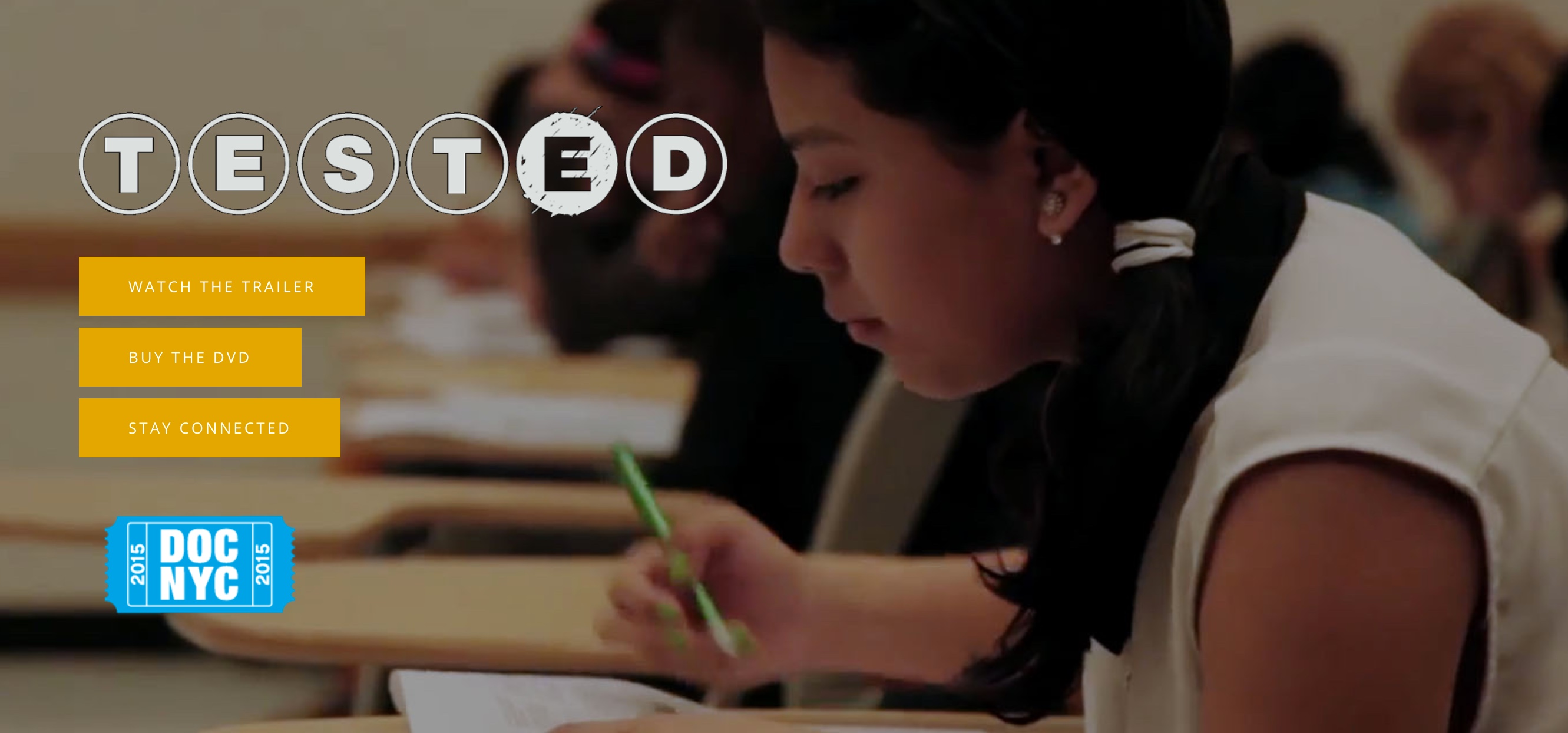
This award winning movie focuses on tests used in New York City schools to determine who gets into the elite high schools and how they increase the gap in educational opportunities for different races in the US. @Curtischin @testedfilm

Watch the Trailer. If you live in or near New York City you can see this film screened on Feb. 11th at 2 pm at the Chatham Square library, 33 E Broadway, New York, NY 10002. If you think you may qualify for a press screening as I did, contact Curtis Chin at ccurtis@testedfilm.com.

Film Summary

  • The gap in opportunities for different races in America remains extreme. Nowhere is this more evident than our nation’s top public schools. In New York City, where blacks and Hispanics make up 70% of the city’s school-aged population, they represent less than 5% at the city’s most elite public high schools. Meanwhile, Asian Americans make up as much as 73%. This documentary follows a dozen racially and socioeconomically diverse 8th graders as they fight for a seat at one of these schools. Their only way in: to ace a single standardized test. Tested includes the voices of such education experts as Pedro Noguera and Diane Ravitch as it explores such issues as access to a high-quality public education, affirmative action, and the model-minority myth.

Award Winner & Screenings So Far

  • The film premiered at the DOC NYC film festival in NYC where The Village Voice named it one of the best films in the festival. The film has since screened with Lincoln Center, the White House, the American Educational Research Association, the National Conference on Race and Ethnicity, the Southern Sociological Society, SXSWEdu and more. In total, we’ve had 100 screenings in 8 countries.

Purchase the DVD

  • The site says it’s accepting pre-orders but orders are now shipping click here for your copy.. Note that there is a much lower price for libraries and non-profits. They also plan on a consumer version later this year.

Curtis Chin Writer/Producer

  • Curtis Chin has written for shows on ABC, the Disney Channel and Nickelodeon, as well as projects for NBC and Fox. He has won awards from the National Endowment for the Arts, the New York Foundation for the Arts, and the San Diego Asian American Film Foundation, among others. His first documentary, Vincent Who?, has screened at over 400 colleges in four countries and won awards from the National Association for Multicultural Education and the Asian American Justice Center. As a community activist, he co-founded the Asian American Writers Workshop and Asian Pacific Americans for Progress. He has appeared on MSNBC, CNN, and NPR, and in Newsweek and other media outlets. He is currently a Visiting Scholar at New York University.
Share this:
Share this page via Email Share this page via Stumble Upon Share this page via Digg this Share this page via Facebook Share this page via Twitter Share this page via Google Plus

Why Blended Learning is Effective by Kevin Nelson

Thursday, November 3rd, 2016

Blended Learning
Why Blended Learning Is Effective by Kevin Nelson explains and extolls this type of learning which is trending, especially in schools where every student has a laptop or a tablet device. Be sure to share this with your network so everyone you know gets hip with this important innovation.

What is it?

  • What is blended learning and why do so many people claim that it is much better than other types of education including face to face teaching and e-learning? These are the questions this article aims to answer. First of all, for those of you who are not familiar with the concept of blended learning: this type of education is a mix of traditional classroom education and web-based learning with the aid of Internet and all kinds of courses available online. The creators of blending education aim to take the best out of each learning style and thus, boost students’ performance and desire to study. So, why should one consider blended learning as a better choice? There are several reasons.

1. Students Get Personalized Instruction

  • Since a part of blended learning is work in smaller groups, each student has a chance to receive the education that fits his needs. For instance, let’s say, Mr. Black is teaching Science. He creates video lectures and gives each of his students accesses. After student watch a video they take a test on the material. This will give Mr. Black a better understanding of difficulties each student faces even before they come to class. Preparing special personalized instruction for each student is what makes blended learning more efficient.

2. Students Can Study at Their Pace

  • There is absolutely no rush. Students do not have to learn everything within the course of a lesson. If they still have questions, considering that they study at home, in class, or elsewhere in school, they can go over the material again and again until they master the content. This is not possible with the fixed pace of face-to-face classroom education. This method has a positive effect on students’ performance. Knowing that they are in charge of their study process encourages them to take their time and review the material properly.

3. A Teacher Gets More Individual Time with Students

  • The idea of blended education is that once in the classroom students split up into small groups of up to eight people. And even though the class, in general, can be larger in size, teachers get more time with each group and students within these groups. The thing is that typically the class will be split up into four groups, two of which will work with computers, one will work with instructions and the last group will go to a “teacher’s station.” As groups rotate, each of them gets a chance to have individual time with a teacher, and a teacher has more chance to explain some difficult material in more detail to each and every student of the group.

4. This Education Saves You the Money

  • Think of it this way: how much money will you save not having to buy all the textbooks! You can get all the material in electronic version or through your teacher’s videos. It is faster, cheaper and time-efficient.

5. It Saves Students’ Time

  • Students can now save time, as they can study at home, at a coffee shop, on the school bus, elsewhere in school, or on their way to a family dinner. The only thing students need to have is Internet access and a mobile device to go to the class website, download instructions and get started. Students who learn fast no longer need to wait for the rest of the students to finish assignments. The pace is yours. So, it saves time.

6. Students Love It

  • Let’s face it: no matter how much you support the traditional style of education, blended learning is fun. Students find it engaging and are more willing to study hard. Assignments are not seen as a boring activity they just need to get through, but rather like a game, and this is exactly what will keep an inquisitive mind keep going and not give up when difficulties come along.

7. It Is Very Flexible

  • Usually when you think about education, somehow there is an image that immediately pops up in your head. It is an image of a thick tall wall that represents a system you cannot change or add a different shape to. It is you who has to adjust to it. Blended learning, however, allows you to study wherever you want and attend classes even if you are thousand of kilometers away from the school itself. This type of education is flexible.
  • Blended education is a perfect combination you are destined to enjoy once you give it a try. So, if you still have doubts, I hope that these reasons explaining why it is better than any other type of learning showed you why this statement is, in fact, true.

Kevin Nelson

  • Kevin from Los Angeles, California, started his career as a research analyst and has changed the sphere of activity to writing services and content marketing. Currently, Kevin works as a part-time writer at the OnlineWritingClass. In addition to writing, he spends a lot of time reading psychology and management literature searching for the keystones of motivation ideas. Feel free to connect with him on Facebook, Twitter (@Nelson81Kevin), Google+, Linkedin.
Share this:
Share this page via Email Share this page via Stumble Upon Share this page via Digg this Share this page via Facebook Share this page via Twitter Share this page via Google Plus

All Tech Minded Deans Should Read These 7 Books by Mary Walton

Friday, October 28th, 2016

All Tech Minded Deans Should Read These 7 Books – Being a Dean is no easy feat. There’s a lot of pressure put on you from all sides to make a difference in your role. It’s up to you how you go about defining yourself and that role at your school. If you want some help and guidance, these seven books reviewed by Mary Walton are a great place to start.
– Being a Dean is no easy feat. There’s a lot of pressure put on you from all sides to make a difference in your role. It’s up to you how you go about defining yourself and that role at your school. If you want some help and guidance, these seven books reviewed by Mary Walton from Santa Monica, CA are a great place to start. Follow her on Twitter at @marywalton27.

1. Positive Academic Leadership: How To Stop Putting Out Fires And Start Making A Difference, by Jeffrey L. Buller

  • As a Dean, you probably find that you’re often racing around trying to fix problems. Once you’ve put one fire out, there’s another one you have to contend with. It’s an exhausting process, but you don’t have to work like this. This book shows you how to look at your work in a different way, and become a coach and counselor for your staff. This way there will be far less crises to deal with on a day to day basis.

2. The College Administrator’s Survival Guide, by C. K. Gunsalus

  • If you become the head of a department, you’ve probably found that you’re deep in a situation that you’re really not trained for. You’re a professor, and you’re not equipped to deal with the thousands of problems that happen every day. This book uses real life examples to help you get to grips with this new role. “If I hadn’t read this book, I would have felt utterly lost. Thankfully, I now have the knowledge to approach any issue and solve it easily,” says Frank Muller, head of department at Assignment Help Service.

3. The Changing Nature Of The Academic Deanship: ASHE-ERIC Higher Education Research Report, by Mimi Wolverton et. al.

  • Becoming a Dean is a cause for celebration, but it comes with its own set of challenges. With resources ever strained and new problems being created by an ever evolving student body, how do you cope? This book offers six distinct strategies to get you through.

4. Seasons Of A Dean’s Life: Understanding The Role And Building Leadership Capacity, by Walt Gmelch, Dee Hopkins and Sandra Damico

  • This book draws on real life experiences of over 50 current Deans, to truly understand what the role entails and what is needed of any Dean. Linda Sanders, a Dean herself, says “I was impressed that they drew from the experiences of so many people in the same position as me. I felt the advice given was really genuine.”

5. Change Leadership In Higher Education: A Practical Guide To Academic Transformation, by Jeffrey L. Buller

  • A Dean often has to lead their school through changes, and that process can go one of two ways. If you want to enact positive changes that your staff can get behind, this is the book for you. “I felt that this book really understands the practicalities of being a Dean,” says Nina Davies, former dean.

6. Building The Academic Leadership: Strategies For Success, by Gary S. Krahenbuhl

  • No Dean can be fully prepared for their first day in their new role, but some prepping is highly useful. This book will lead you through what you need to know for your new job, and how to handle any challenges that are thrown at you.

7. The Essential Department Chair: A Comprehensive Desk Reference, by Jeffrey L. Buller

  • This book is the essential ‘how to’ guide for any department chair. “It’s helped me so much again and again,” says department head Roger Leaves from UK Admissions Service, “It has practical examples of almost any situation you’ll come across.” It’s a guide that you can dip into whenever the need arises, and you’re sure to use it again and again.
Share this:
Share this page via Email Share this page via Stumble Upon Share this page via Digg this Share this page via Facebook Share this page via Twitter Share this page via Google Plus